ROI in Digital Marketing Guide: Maximising Value in 2026

In 2026, UK companies are pouring more resources than ever into digital marketing, yet many still wonder if their investments truly pay off. As budgets climb, the risk of wasted spend grows, making it crucial to focus on measurable results.
This guide breaks down roi in digital marketing, giving you the clarity and confidence to optimise every pound. You will learn what ROI really means in a digital context, why it is vital for your business, how to calculate it accurately, which metrics to track, and which tools and strategies are driving results in 2026.
Get ready to discover actionable steps that will help you maximise value, cut inefficiency, and achieve real, sustainable growth.
Understanding ROI in Digital Marketing
Return on investment, or ROI in digital marketing, is the cornerstone of effective campaign management. At its core, ROI measures the profit or loss generated from your digital marketing activities relative to the amount you invest. While traditional marketing might focus on reach or impressions, ROI in digital marketing is about tying every pound spent to tangible business outcomes.
Defining ROI in a Digital Context
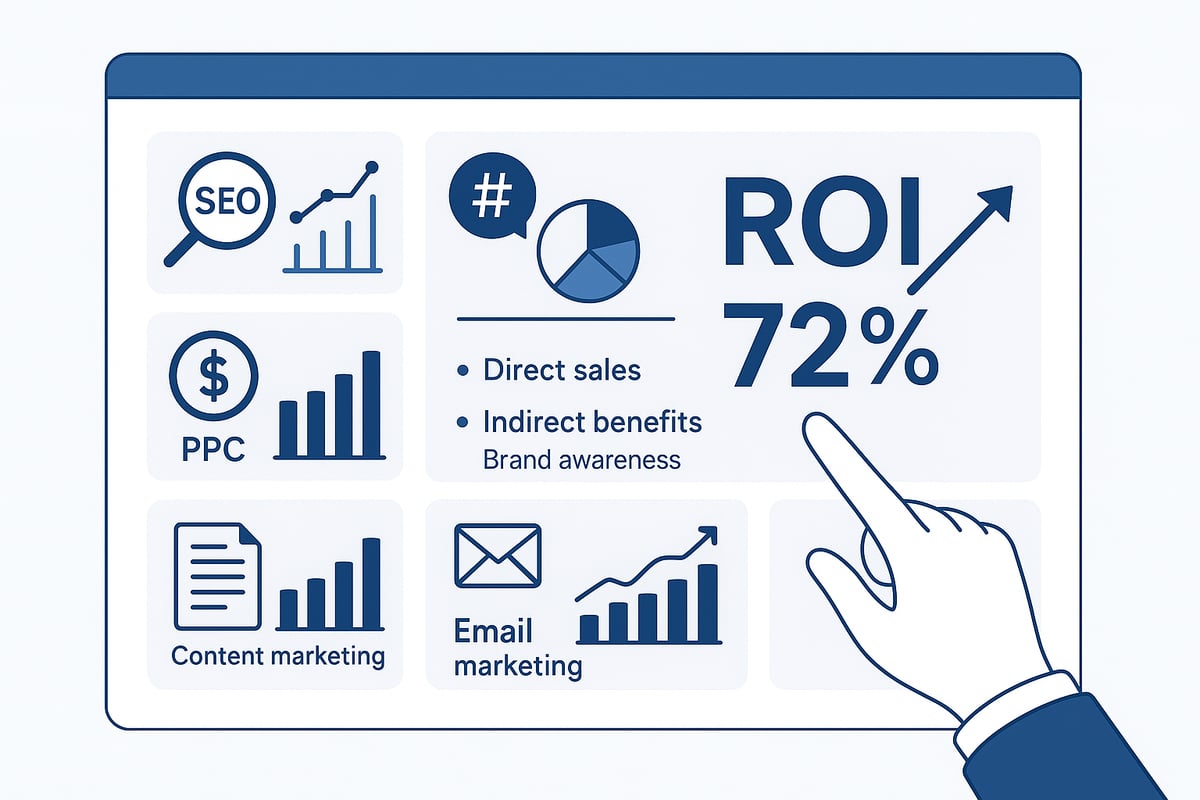
ROI in digital marketing is calculated using a straightforward formula:(Net Profit / Marketing Investment) × 100
For example, if you invest £1,000 in a paid social campaign and generate £3,000 in revenue, your ROI in digital marketing is 200%. This figure helps you assess whether your campaigns are truly driving profit, not just traffic or engagement.
Unlike traditional marketing, which can be harder to track, digital channels offer precise measurement. You can quantify both direct returns, like sales or leads, and indirect returns, such as increased brand awareness or customer loyalty. These softer metrics, while less tangible, play a significant role in long-term growth.
Digital marketing ROI encompasses a wide variety of channels, including:
- SEO
- Pay-per-click (PPC)
- Social media advertising
- Email marketing
- Content marketing
- Affiliate and influencer partnerships
By viewing ROI in digital marketing as a strategic tool, you can move beyond mere reporting. It becomes a foundation for continuous improvement, allowing you to test, learn, and optimise every aspect of your campaigns.
Why ROI Matters More Than Ever in 2026
In 2026, the stakes for ROI in digital marketing are higher than ever. Digital ad spend in the UK is projected to surpass £45 billion by 2026, reflecting not only bigger budgets but also greater pressure to prove value.
With rising competition and customer acquisition costs, businesses cannot afford wasted spend. The C-suite and stakeholders now demand clear accountability and transparent reporting, making ROI in digital marketing an essential metric for decision-making.
ROI enables smarter budget allocation. For instance, if a campaign underperforms, you can swiftly reallocate resources to higher-performing channels, often doubling conversions as a result. This data-driven approach ensures every pound works harder for your business.
Ultimately, prioritising ROI in digital marketing fuels sustainable growth and innovation. Companies that embed ROI thinking into their culture are better equipped to adapt, scale, and thrive in an increasingly complex digital landscape.
Key Metrics and KPIs for Measuring Digital Marketing ROI
Understanding which metrics to track is crucial for unlocking the true potential of roi in digital marketing. With so many channels and data points, it is easy to get lost in the numbers. Focusing on the right metrics ensures every pound spent moves the needle toward measurable growth.
Core ROI Metrics Explained
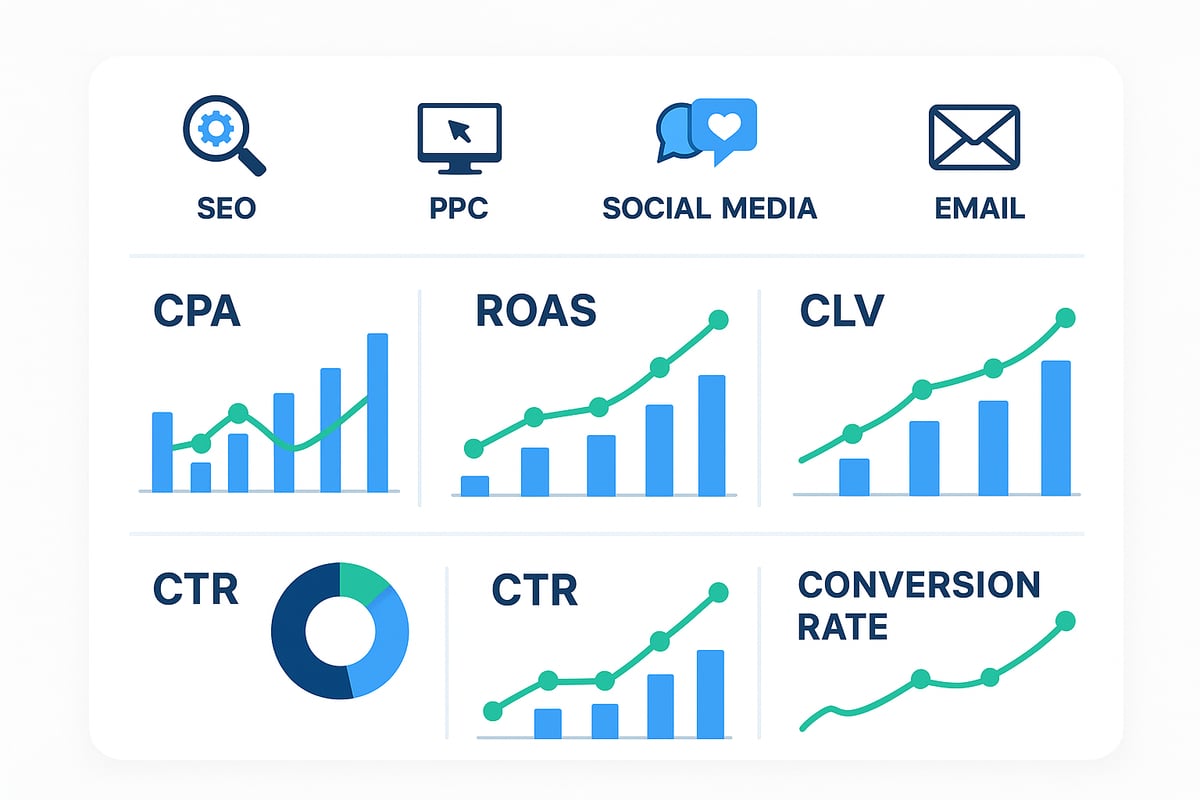
At the heart of roi in digital marketing are a handful of core metrics. Let us break down the essentials:
- Net Profit: The total earnings after subtracting all marketing costs.
- Revenue: Total income generated from digital campaigns.
- Total Marketing Cost: Includes ad spend, creative, tools, and staff.
- Cost Per Acquisition (CPA): Total spend divided by the number of conversions. Lower CPA means better efficiency.
- Return on Ad Spend (ROAS): Revenue from ads divided by ad cost. A 5:1 ratio is often considered strong.
- Customer Lifetime Value (CLV): Predicts the total value a customer brings over time, not just from a single purchase.
- Conversion Rate: The percentage of users who complete a desired action, such as making a purchase or signing up.
- Click-Through Rate (CTR): Measures how many users click on your ads or content.
- Average Order Value (AOV): The average spend per transaction, which impacts overall profitability.
Each metric plays a distinct role in evaluating roi in digital marketing. For instance, a high ROAS might look impressive, but if CLV is low, long-term value could suffer. Using a combination of these metrics provides a holistic view of your campaign’s effectiveness.
Supplementary KPIs for Holistic Measurement
Beyond the basics, supplementary KPIs help paint a full picture of roi in digital marketing. Here are key elements to consider:
- Impressions and Page Views: Indicate brand reach and awareness, even if they do not directly drive conversions.
- Engagement Metrics: Includes shares, comments, and dwell time. They reflect audience interest and content resonance.
- Attribution Models: Multi-touch models show the impact of every channel in the customer journey, while last-click models credit only the final interaction. Multi-touch is vital for modern campaigns.
- Offline Conversion Tracking: Links in-store or phone sales to digital campaigns, closing the loop between online and offline.
- CRM Data Integration: Especially important for B2B, connecting lead sources to closed deals for true end-to-end roi in digital marketing measurement.
By tracking these KPIs, marketers can see which touchpoints drive value at every stage. For example, combining CRM data and attribution models may reveal that email nurtures leads who later convert via paid search.
Interpreting “Good” ROI in 2026
So, what qualifies as “good” roi in digital marketing in 2026? Industry benchmarks provide guidance, with a 5:1 ratio considered strong, 2:1 as break-even, and 10:1 as exceptional. However, context matters. E-commerce brands may achieve higher ROI on paid search, while B2B firms might see lower ratios but bigger deals.
It is important to avoid chasing vanity metrics. High impressions or clicks might look impressive, but only true ROI reflects business impact. Each sector and channel will have its own standards, so set realistic, channel-specific targets.
For deeper insight into how your results compare, consult Digital marketing ROI benchmarks 2026 for up-to-date channel performance data. By grounding your expectations in real-world figures, you can focus on what truly drives growth, not just what looks good on a dashboard.
The Step-by-Step Process to Calculate and Analyse ROI
Understanding the process behind calculating and analysing ROI in digital marketing is essential for data-driven success. By following these structured steps, you can ensure your campaigns deliver measurable value and actionable insights.

Step 1: Set Clear Campaign Objectives and KPIs
Begin by aligning your campaign goals with overall business outcomes. Are you aiming for increased sales, qualified leads, or brand visibility? Define specific KPIs and set a target ROI in digital marketing before launching any activity.
For example, an e-commerce business might target a 300% ROI with a £5,000 campaign budget. By doing so, you create a measurable benchmark for success and a clear direction for your team.
Step 2: Track All Relevant Data Points
Robust tracking is the foundation of accurate ROI in digital marketing analysis. Implement tools like Google Analytics 4, Meta Pixel, and CRM integrations to capture every conversion and revenue event.
Ensure all digital touchpoints are monitored, from website visits to social interactions. For instance, setting up a TikTok Pixel allows you to track purchase events directly from your ads, closing the attribution loop and ensuring no data is missed.
Step 3: Calculate Revenue Attributable to Each Channel
Segment revenue by channel, campaign, or creative to identify where your returns originate. Use attribution tools to assign value across the customer journey, recognising the impact of both first and last interactions.
For example, compare revenue from Google Ads and Meta campaigns to see which delivers better ROI in digital marketing. For channels like SEO, understanding long-term value is crucial. Learn more about SEO services and ROI impact to maximise your organic returns and track their contribution accurately.
Step 4: Calculate Total Investment and Costs
List every cost associated with your marketing efforts. This includes direct ad spend, creative production, software, and staff time. Do not overlook hidden expenses such as agency fees or landing page development.
A comprehensive cost breakdown ensures your ROI in digital marketing calculations are precise. For instance, a £10,000 campaign might include £7,000 for ads, £2,000 for creatives, and £1,000 for software and staff.
- Ad spend
- Creative production
- Software/tools
- Staff and agency fees
Step 5: Apply the ROI Formula and Analyse Results
With revenue and costs at hand, apply the standard formula:
ROI = (Revenue – Cost) / Cost × 100
| Revenue | Cost | ROI Calculation | ROI (%) |
|---|---|---|---|
| £30,000 | £10,000 | (30,000 – 10,000) / 10,000 × 100 | 200% |
Interpret the ROI in digital marketing by comparing different campaigns, channels, or audiences. Identify which elements outperform and which require adjustment.
Step 6: Segment and Compare for Deeper Insights
Go beyond top-level analysis by segmenting ROI in digital marketing by device, audience, or creative. Use multi-touch attribution models for complex journeys, assigning value to each touchpoint.
For example, comparing ROAS by device might reveal that mobile users deliver double the return of desktop users. This insight enables smarter budget allocation and future optimisation.
Step 7: Report and Communicate ROI Effectively
Create clear, visual reports that highlight key ROI in digital marketing metrics for stakeholders. Focus on insights that drive action, such as top-performing channels and underperformers.
- Use dashboards for real-time updates
- Highlight actionable recommendations
- Tailor reports for different audiences
Effective communication ensures your findings lead to better decisions and ongoing campaign improvement.
The Most Common ROI Pitfalls and How to Avoid Them
Achieving strong roi in digital marketing requires more than just tracking conversions. Many brands fall into common traps, leading to missed opportunities and wasted spend. By recognising these pitfalls, you can take proactive steps to ensure your digital marketing delivers measurable results.
Overlooking Long-Term Value and CLV
One of the most frequent mistakes in roi in digital marketing is focusing solely on immediate sales. Brands that ignore customer lifetime value (CLV) risk undervaluing campaigns that actually drive long-term profitability. For example, subscription or membership businesses often see the highest returns from repeat buyers and referrals.
To avoid this pitfall, always factor in the projected value of a customer over time, not just their first purchase. This approach ensures your campaigns are assessed on their true impact. For more on connecting digital activity to real business growth, see Business growth through digital.
Ignoring Multi-Touch Attribution
Another common challenge in roi in digital marketing is relying on last-click attribution. Studies show that 70 percent of conversions involve several digital touchpoints. When you attribute all value to the final click, you risk underestimating the contribution of earlier channels like social or display.
Implementing multi-touch attribution models gives a fuller picture of the customer journey. This allows you to recognise the role each channel plays in driving conversions and to allocate budgets more effectively.
Failing to Track Offline or Cross-Channel Conversions
Many businesses overlook the connection between online campaigns and offline actions. If you do not track in-store purchases or phone enquiries, your view of roi in digital marketing will be incomplete.
Integrating CRM systems, using unique promo codes, or employing call tracking solutions can bridge this gap. This ensures that all conversions, whether online or offline, are attributed to the right campaigns for accurate ROI measurement.
Relying Too Heavily on AI and Automation
AI and automation tools can be powerful for optimising bids and targeting, but they are not infallible. Over-reliance on automated solutions in roi in digital marketing may lead to errors if conversion tracking is not accurate or if data is misinterpreted.
Regular human oversight is essential. Schedule audits and validate your data to ensure AI-driven decisions are based on reliable information, helping you avoid costly mistakes and maintain campaign performance.
Chasing Vanity Metrics Over Real Value
High impressions or click-through rates may look impressive, but they do not guarantee roi in digital marketing. Focusing on metrics that do not tie directly to business outcomes can steer your strategy off course.
Prioritise KPIs that reflect true value, such as conversions, revenue, and CLV. This focus ensures your marketing activity drives meaningful growth rather than just surface-level engagement.
Tools, Platforms, and Technologies for Tracking ROI in 2026
Accurate tracking is the cornerstone of roi in digital marketing. With evolving customer journeys and new touchpoints emerging, businesses need robust technologies to capture, analyse, and act on performance data. In 2026, the landscape is more sophisticated, demanding an integrated approach to ensure every pound spent is accounted for and optimised.
Essential Analytics and Attribution Tools
Selecting the right analytics and attribution platforms is crucial for measuring roi in digital marketing. Google Analytics 4 remains the industry standard for unified web and app tracking, offering deep insights into user behaviour and revenue attribution. Meta Ads Manager and TikTok Ads Manager provide detailed ROAS, creative performance, and audience segmentation for social campaigns.
For businesses focused on paid media, platforms like Paid media marketing insights offer guidance on optimising channel selection and campaign measurement. Advanced attribution solutions such as Segment and Triple Whale enable multi-channel journey mapping, while CRM systems like HubSpot and Salesforce link conversions to long-term customer value.
Integrating Data Sources for Unified ROI Analysis
To achieve a holistic view of roi in digital marketing, integrating data from multiple platforms is essential. By connecting ad channels, analytics, and CRM, marketers can trace customer journeys from first touch to final sale. For example, using GA4’s predictive metrics alongside CRM data enables more accurate ROI forecasting and segmentation.
A unified data approach reduces blind spots and ensures every conversion is correctly attributed. Integration also streamlines reporting, making it easier to identify which touchpoints deliver the highest returns and where investment should be focused.
Advanced Automation and AI for ROI Optimisation
AI-driven solutions are transforming roi in digital marketing by automating bid strategies, audience targeting, and creative testing. Smart bidding on platforms like Google and Microsoft uses machine learning to maximise conversions while optimising spend. AI tools analyse vast datasets in real-time, identifying trends and adjusting campaigns for peak efficiency.
However, the most effective results come from combining automation with human oversight. Marketers must regularly audit AI recommendations, validate data, and ensure strategies align with business objectives. This partnership between technology and expertise drives sustainable ROI improvements.
Reporting Dashboards and Visualisation Tools
Transparent, actionable reporting is vital for communicating roi in digital marketing to stakeholders. Custom dashboards aggregate data from all channels, highlighting top-performing campaigns, audiences, and creatives. Visualisation tools make complex metrics accessible, enabling faster decision-making and clearer budget allocation.
Automated reports can be tailored by channel, campaign, or objective, ensuring teams stay informed and agile. Strong reporting practices foster a culture of accountability, where every marketing pound is measured against tangible business outcomes.
Data Privacy and Compliance Considerations
As privacy laws evolve, tracking roi in digital marketing requires careful attention to data compliance. GDPR and similar regulations demand transparent consent management and secure handling of user data. Marketers are adopting server-side tracking and privacy-focused analytics to maintain accurate measurement while respecting user rights.
Implementing robust compliance processes protects brand reputation and ensures uninterrupted access to essential performance data. Staying ahead of regulatory changes enables marketers to continue optimising ROI without compromising trust or legality.
Strategies to Maximise ROI in Digital Marketing for 2026
Maximising your roi in digital marketing requires more than simply increasing spend. In 2026, brands must adopt a strategic, data-driven approach that blends creativity, technology, and continuous optimisation. These proven strategies will help you achieve measurable growth while making every pound count.
Set SMART Goals and Continuously Refine KPIs
Start with clear, SMART goals: Specific, Measurable, Achievable, Relevant, and Time-bound. Define what success looks like for your roi in digital marketing before launching any campaign. For instance, set a target such as increasing qualified leads by 20% within six months, or achieving a 300% ROI on a new product launch.
Regularly review your KPIs to ensure they remain aligned with evolving business objectives. Use performance data to adjust goals as market conditions change. This agile mindset enables you to capitalise on new opportunities and eliminate underperforming tactics quickly.
Focus Investment on High-Performing Channels and Audiences
Analyse historic data to identify which channels consistently deliver strong roi in digital marketing. Double down on high-performing platforms, such as paid search or high-converting social campaigns. Consider reallocating budget from low-ROI sources to those with proven results.
Use advanced analytics to segment your audience, focusing investment on profiles with the highest conversion rates. For a deeper dive into channel performance and optimisation, explore these digital marketing strategies for 2025 to stay ahead of the curve.
Optimise Creative, Messaging, and Landing Pages
Continuous testing is key to improving roi in digital marketing. Use A/B testing to compare headlines, images, and calls to action. Even small creative tweaks can result in significant uplift in engagement and conversions.
Optimise landing pages for clarity, speed, and relevance. Ensure each page delivers a seamless user experience with persuasive messaging that matches your audience’s intent. Regularly monitor bounce rates and conversion data to inform further improvements.
Implement Advanced Audience Targeting and Segmentation
Refining your targeting is essential for maximising roi in digital marketing. Leverage tools like lookalike audiences, custom intent segments, and behavioural targeting to reach those most likely to convert.
Personalise content and offers based on user behaviour, demographics, and previous interactions. The more tailored your messaging, the higher the engagement and return. Test different audience segments to uncover new pockets of profitability within your marketing mix.
Leverage Remarketing and Customer Retention Campaigns
Remarketing is a powerful way to boost roi in digital marketing by re-engaging users who have interacted with your brand. Implement remarketing across Google, Meta, and email to recapture lost prospects and nurture existing customers.
Prioritise retention campaigns, as returning customers typically convert at a much lower cost. Use loyalty programmes, exclusive offers, and personalised follow-ups to encourage repeat purchases and referrals, driving sustainable growth for your business.
Monitor, Test, and Optimise Bids and Budgets Regularly
Effective bid management is crucial for sustaining roi in digital marketing. Use a mix of manual adjustments and automated bidding strategies to respond to real-time performance data. Regularly test budget allocations across campaigns to maximise results.
Monitor cost per acquisition and return on ad spend closely. When you spot underperforming ads or keywords, reallocate spend to those with better returns. This disciplined approach ensures your investment is always working as hard as possible.
Embrace Multi-Touch Attribution and Full-Funnel Measurement
Modern customer journeys are complex, involving multiple touchpoints before conversion. Adopt multi-touch attribution models to accurately assign value across each step of the funnel, improving visibility into your roi in digital marketing.
Track interactions from first click to final sale, using analytics and CRM integrations to map the entire journey. This approach uncovers hidden contributors to success and helps optimise every stage, from awareness to retention.
Stay Ahead with Emerging Channels and Technologies
The digital landscape is evolving rapidly. To future-proof your roi in digital marketing, experiment with new channels such as AR ads, shoppable video, or voice search. Stay informed about the latest trends and tools to maintain your competitive edge.
Adopt predictive analytics and AI-powered solutions for smarter campaign optimisation. Test emerging platforms and formats, but always measure performance against clear ROI targets to ensure sustainable value for your brand.
How a Digital Marketing Partner Can Accelerate Your ROI
Achieving consistent roi in digital marketing can be challenging as it requires seamless integration of strategy, creative execution, analytics, and technology. Many brands face obstacles when trying to unify these elements in-house, which can limit campaign effectiveness and value.

Partnering with a comprehensive agency like OxD PR gives you access to expert web design, SEO, branding, and multi-channel campaign management, all under one roof. Their data-driven approach ensures every campaign is tailored to your unique goals, with ongoing optimisation and platform integration for clear, measurable growth.
OxD PR’s deep industry experience allows them to quickly identify high-ROI opportunities and make agile adjustments as market conditions shift. For businesses determined to maximise their roi in digital marketing in 2026, working with a specialist partner like OxD PR provides the expertise and support needed to stay ahead of the competition.
Now that you understand how to maximise ROI in digital marketing for 2026, it’s clear that having the right strategy and support can make all the difference. If you want to see measurable growth and unlock the full value of every pound you invest, we’re here to help. Let’s have a conversation about your goals and how OxD PR’s tailored approach—combining expert web design, smart SEO, and seamless campaign management—can drive real results for your business. Ready to take the next step towards stronger returns?
Get a Quote