Advertising Agency Advertisement Guide: Your 2026 Success Blueprint
In 2026, the advertising world is moving faster than ever. Agencies are facing intense competition, shifting consumer expectations, and a constant wave of new technologies. Standing out now demands more than just creativity.
This guide provides a clear, actionable framework for the modern advertising agency advertisement. You will discover proven strategies, industry insights, and step-by-step approaches to help your campaigns thrive in this challenging environment.
Ready to boost your agency's results? Explore expert advice on market analysis, creative development, channel selection, campaign execution, measurement, and future-proofing in the sections ahead.
The 2026 Advertising Landscape: Trends, Challenges & Opportunities
The landscape for any advertising agency advertisement in 2026 is a complex tapestry of shifting trends, heightened expectations, and unprecedented opportunities. Agencies must adapt to rapid changes in consumer behaviour, technology, and regulation, all while carving out a unique identity in a saturated market.
Evolving Consumer Behaviour and Expectations
Today’s consumers demand more from every advertising agency advertisement. Hyper-personalisation is at the forefront, with brands required to tailor messages to individual preferences and behaviours. Authenticity is also essential, as audiences grow wary of traditional, overly polished ads.
Transparency now shapes purchasing decisions. In fact, 74% of consumers prefer brands that personalise experiences, making genuine engagement vital. Agencies that build campaigns around trust and relevance will stand out.
Technology Shaping the Industry
Technology is transforming the very foundation of advertising agency advertisement strategies. Artificial intelligence now powers everything from ad targeting to creative generation, allowing for more precise audience segmentation and real-time content adjustments.
Programmatic advertising and real-time bidding streamline media buying, while voice and visual search are changing how ads are formatted and discovered. For deeper insights into this shift, AI’s Impact on Advertising Strategies highlights both the promise and challenges of AI-driven campaigns, especially regarding transparency and trust.
Regulatory Shifts and Data Privacy
Advertising agency advertisement campaigns must now navigate a maze of global privacy regulations. Updates to GDPR and similar laws worldwide are making data protection stricter than ever.
The move towards a cookieless future means agencies need to rethink tracking and targeting strategies. First-party data and privacy-first approaches are no longer optional, but essential for compliance and effective campaign execution.
Omnichannel Advertising and Integration
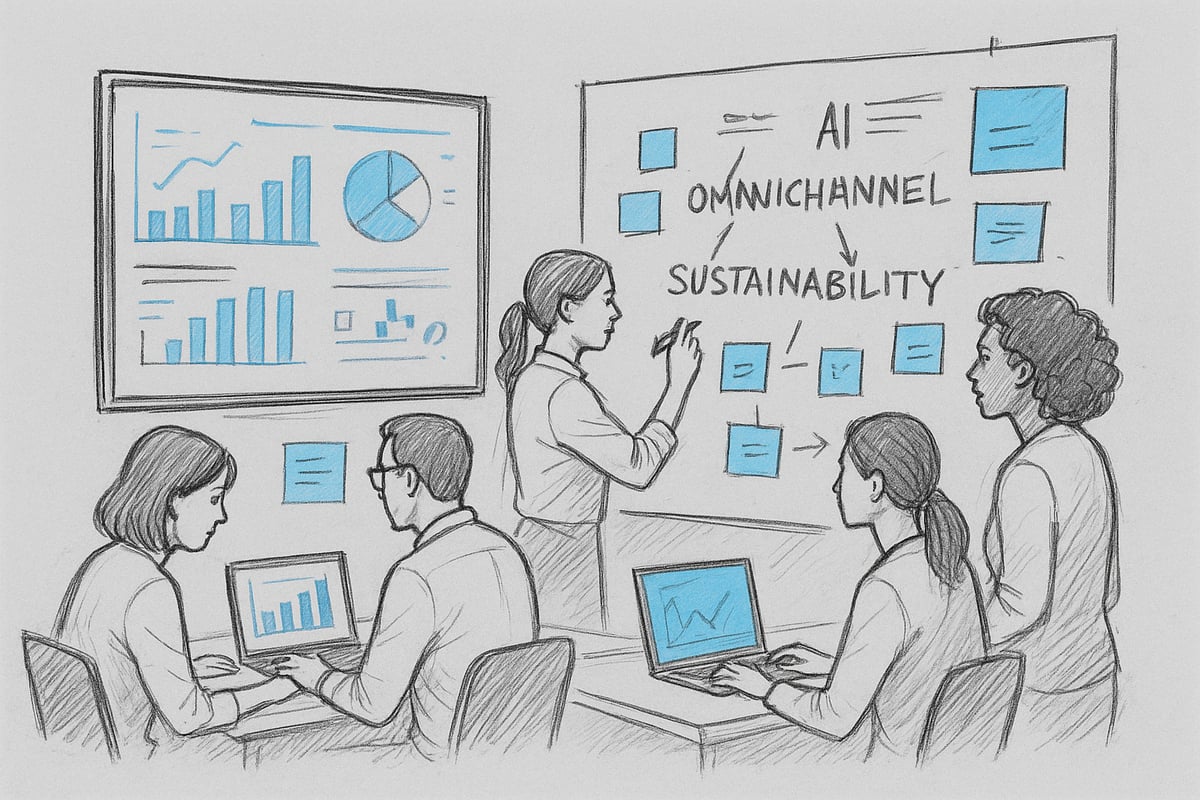
Modern consumers interact with brands across numerous platforms, making omnichannel strategies critical for every advertising agency advertisement. Agencies now coordinate campaigns across digital, traditional, and emerging channels to ensure a unified message.
Integrated dashboards are increasingly used for cross-channel reporting, enabling real-time performance insights. Those who can seamlessly blend social, search, TV, and new platforms will hold a distinct competitive edge.
Competition and Agency Differentiation
The market is flooded with niche and boutique agencies, each vying for attention with specialised offerings. To ensure their advertising agency advertisement is effective, agencies must develop a unique value proposition.
Differentiation can be achieved through innovation in creative strategy, speed of delivery, or by focusing on measurable results. Those who clearly communicate their strengths will attract and retain valuable clients.
Sustainability and Social Responsibility
Sustainability and purpose-driven campaigns are now central to the advertising agency advertisement landscape. Brands and agencies alike are expected to champion environmental and social causes.
Purposeful messaging leads to higher engagement and loyalty. For example, brands that prioritise sustainability in their ads are seeing measurable increases in consumer trust and interaction.
Key 2026 Statistics
To understand the scale and direction of the advertising agency advertisement sector, consider these figures:
| Statistic | Value | Source |
|---|---|---|
| Projected digital ad spend (Europe) | £170bn | Statista, 2026 |
| Share of video & mobile ad usage | 65% of total ad consumption | Industry Reports |
| Personalisation preference | 74% of consumers | Salesforce, 2024 |
| Engagement uplift with sustainability messaging | Notable increase | Brand Reports |
These numbers paint a clear picture: adapting to digital, prioritising personalisation, and embracing responsible messaging are all crucial for 2026 success.
Building a Winning Agency Advertisement Strategy
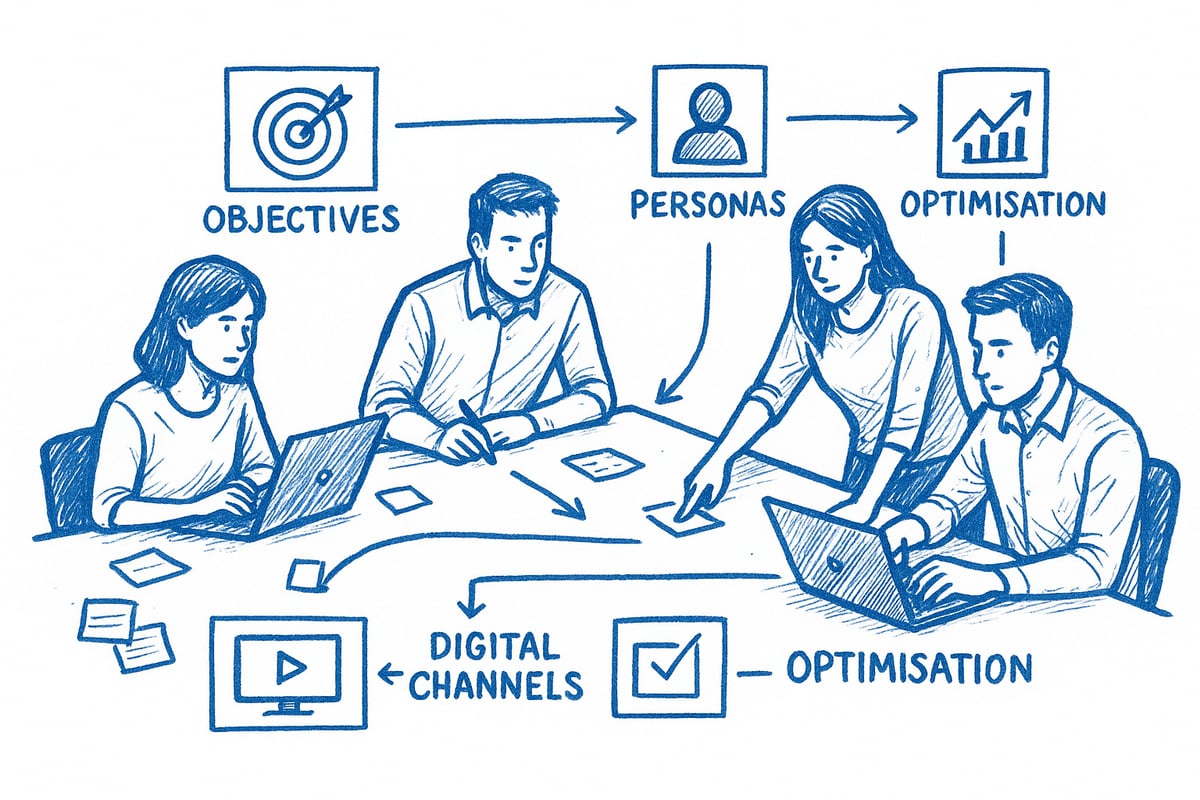
In today's fast-evolving market, a robust advertising agency advertisement strategy is essential for campaign success. Agencies must blend creativity with data-driven decisions to consistently deliver measurable results for clients. The following step-by-step framework outlines how to build a winning approach in 2026.
Step 1: Defining Clear Objectives
The foundation of any successful advertising agency advertisement is a well-defined objective. Start by setting SMART goals that align with your client's business outcomes. For example, the aim might be to boost qualified lead generation by 30% in Q2.
Clarify what success looks like early on. Objectives should be specific, measurable, achievable, relevant, and time-bound. This structure ensures every team member remains focused and accountable throughout the campaign.
Step 2: Deep Audience Research
Understanding your audience is critical for an effective advertising agency advertisement. Use data analytics, social listening tools, and psychographic profiling to uncover audience needs, motivations, and behaviours.
Develop detailed buyer personas based on real insights. This step allows for more precise targeting and messaging, ensuring your ads resonate with the right people at the right time.
Step 3: Competitive Analysis
Analysing the competition gives your advertising agency advertisement a strategic edge. Review competitors' creative assets, media placements, and messaging to identify trends and gaps in the market.
Look for whitespace opportunities where your client can stand out. Document findings in a structured format and use these insights to inform both creative and media strategies.
Step 4: Crafting a Unique Value Proposition
A compelling value proposition is essential for agency differentiation. Your advertising agency advertisement must clearly communicate what sets your client apart, whether that's speed, creativity, innovation, or results.
Work with stakeholders to define this proposition early. For more detailed frameworks on positioning and creative development, see Effective ad agency strategies.
Step 5: Selecting the Right Advertising Channels
Channel selection is a pivotal step in the advertising agency advertisement process. Evaluate the strengths and weaknesses of digital (social, search, programmatic) and traditional (TV, print, out-of-home) media.
Consider emerging platforms such as podcasts, AR, VR, and connected TV. Use a mix that matches audience habits and campaign objectives, ensuring maximum reach and impact.
| Channel Type | Strengths | Examples |
|---|---|---|
| Digital | Precision, scalability | Social, Search |
| Traditional | Credibility, broad reach | TV, Print, OOH |
| Emerging | Innovation, engagement | AR, VR, CTV |
Step 6: Budget Allocation and Resource Planning
Allocate budgets based on expected ROI from each channel. A data-driven approach ensures your advertising agency advertisement delivers value for every pound spent.
Balance investment between proven platforms and new opportunities. For instance, recent data shows agencies allocating up to 40% of spend on digital video, reflecting shifting consumption trends.
Step 7: Compliance and Ethical Considerations
Every advertising agency advertisement must comply with legal and ethical standards. Stay updated on industry codes, GDPR updates, and global data privacy regulations.
Incorporate regular compliance checks into your workflow. This step protects both your agency and clients from reputational and financial risks, ensuring campaigns run smoothly and ethically.
Creative Development: Crafting Compelling Agency Advertisements
Creating an effective advertising agency advertisement in 2026 requires more than creativity alone. Agencies must combine strategic thinking, innovation, and a deep understanding of what resonates with audiences. In this section, we break down the essential steps to craft agency advertisements that truly stand out.

Ideation and Concept Development
Every successful advertising agency advertisement starts with a strong concept. Begin with collaborative brainstorming sessions, encouraging input from diverse team members. Use trend analysis and cultural insights to identify themes that will engage audiences in 2026.
Stay ahead by exploring emerging formats and storytelling techniques. Adopting frameworks from resources like Creative strategy for agencies can help structure ideation and ensure concepts align with client goals. Remember, the best ideas blend creativity with strategic intent, setting the foundation for a memorable advertising agency advertisement.
Copywriting and Visual Storytelling
Persuasive copy is at the heart of every effective advertising agency advertisement. Craft headlines that spark curiosity, followed by clear, actionable calls-to-action. Focus on emotional triggers and concise language to capture attention quickly.
Visuals must reinforce your message and appeal to the intended audience. Use data-driven design choices, such as colour psychology and layout best practices, to drive conversions. A table summarising headline styles and their typical impact can support your team’s creative decision-making:
| Headline Style | Impact |
|---|---|
| Question | Increases engagement |
| Benefit-led | Drives action |
| Urgency-based | Boosts response rates |
Pairing compelling copy with strategic visuals transforms an ordinary advertising agency advertisement into a powerful brand asset.
Personalisation and Dynamic Content
Personalisation is now expected in every advertising agency advertisement. Use AI-powered tools to deliver dynamic content that adapts in real time to user behaviour, preferences, and location.
For example, dynamic banner ads can display tailored offers or messages based on audience segments. This approach not only increases relevance but also drives higher engagement and conversion rates. Integrating personalisation at every stage of creative development ensures your advertising agency advertisement resonates on a deeper level with each viewer.
Testing and Creative Optimisation
Continuous testing is essential for refining any advertising agency advertisement. Employ A/B and multivariate testing to evaluate different versions of copy, visuals, and formats. Analyse performance data to identify which elements drive the strongest results.
Agencies that adopt iterative creative testing have reported up to a 25% increase in click-through rates. Use project management tools to document test results and streamline optimisation cycles. By embedding testing into your process, you ensure each advertising agency advertisement delivers maximum impact.
Inclusive and Diverse Representation
Modern audiences expect advertising agency advertisement content to reflect the world around them. Prioritise diversity in casting, imagery, and messaging to avoid stereotypes and foster genuine connection.
Brands that embrace inclusive advertising see notably higher brand perception and engagement. During creative development, review all concepts and assets for representation gaps. This commitment not only enhances campaign effectiveness but also strengthens your agency’s reputation.
Collaboration and Feedback Loops
Developing a standout advertising agency advertisement is a team effort. Foster open communication between creative teams, clients, and stakeholders from the start. Establish clear approval workflows and feedback mechanisms to keep projects on track and aligned with objectives.
Regular check-ins allow for timely adjustments and ensure the final advertisement meets both client standards and audience expectations. A collaborative approach leads to stronger outcomes and more successful campaigns.
Channel Selection & Media Planning for Maximum Impact
Selecting the right channels and crafting a robust media plan is the backbone of any successful advertising agency advertisement strategy. In 2026, the landscape is vast, and precision is key to maximising impact and ROI. Let us explore how to navigate this complex environment for campaign excellence.

Digital Channels: Social, Search, Programmatic, and Beyond
Digital channels remain the cornerstone of any advertising agency advertisement in 2026. Social media platforms like TikTok, Instagram Reels, and LinkedIn continue to evolve, offering advanced targeting and creative formats. Programmatic advertising and automation drive efficiency, allowing agencies to reach precise audiences in real time.
To stay ahead, agencies must understand audience habits across each channel. For deeper insights on optimising social media, see Social media for marketing agencies. Leveraging these channels ensures your advertising agency advertisement is both relevant and impactful.
Traditional Channels: TV, Print, Outdoor, Radio
Despite the digital surge, traditional platforms still hold significant value in an advertising agency advertisement plan. TV, print, outdoor, and radio offer unmatched reach and credibility, especially among audiences less active online. TV ads, for example, deliver up to 50 percent higher recall for certain demographics.
When should you use traditional media? Consider brand-building campaigns, launches targeting broad demographics, or reinforcing digital messaging. Integrating traditional with digital ensures your advertising agency advertisement captures attention across every touchpoint.
Integrating Emerging Platforms
Emerging platforms are reshaping the advertising agency advertisement landscape. Augmented reality (AR) and virtual reality (VR) create immersive experiences, while connected TV (CTV) and voice-activated ads reach audiences in new contexts. AR ad engagement rates have climbed by 30 percent year on year.
Agencies that experiment with these channels gain a competitive edge. Assess your client’s audience and campaign goals to determine where emerging technology fits within your advertising agency advertisement mix.
Cross-Channel Coordination
Effective cross-channel coordination is crucial for a cohesive advertising agency advertisement. Consistency in messaging and creative assets builds trust and recognition. Utilising attribution models helps measure performance across multiple touchpoints, revealing which channels drive the most value.
Agencies use integrated dashboards to streamline reporting, ensuring real-time insights and agile adjustments. A unified approach maximises the results of every advertising agency advertisement, making campaigns more resilient and adaptive.
Media Buying and Negotiation
Smart media buying is vital for an efficient advertising agency advertisement. Agencies negotiate placements to secure premium inventory at the best rates, balancing cost with reach and relevance. Building strong relationships with publishers and networks unlocks exclusive opportunities and added value.
Techniques such as programmatic buying enhance flexibility, while direct deals can guarantee placement in high-impact slots. A well-negotiated media plan amplifies the impact of every advertising agency advertisement.
Scheduling and Flighting
Timing is everything in advertising agency advertisement planning. Scheduling campaigns around key seasons or events, such as Black Friday or major sporting occasions, can dramatically boost engagement. Flighting strategies allow for bursts of activity when audiences are most receptive.
Effective scheduling ensures your advertising agency advertisement is always in front of the right people at the right time, driving measurable results and maximising your client’s investment.
Campaign Execution, Measurement & Optimisation
Executing a successful advertising agency advertisement campaign in 2026 demands meticulous planning, agile management, and sharp analytical skills. Each phase, from launch to optimisation, requires a blend of technology, creativity, and data-driven decision-making. Let us explore the essential steps and best practices for turning strategy into measurable results.
Launching and Managing Campaigns
The foundation of any effective advertising agency advertisement is seamless campaign setup and management. Begin by integrating tracking pixels, conversion tags, and analytics tools across all platforms. This ensures every user interaction is captured for later analysis.
Adopt project management solutions to streamline task assignments, deadlines, and approval workflows. Clear communication between creative, media, and client teams helps minimise errors and accelerates campaign launch. By building robust infrastructure from the outset, agencies set themselves up for ongoing optimisation and measurable impact.
Real-Time Monitoring and Reporting
Once live, your advertising agency advertisement requires vigilant, real-time monitoring. Use unified dashboards to aggregate performance data across channels, allowing for instant visibility into key metrics. AI-powered tools can automatically flag underperforming ads or detect anomalies.
According to the 2026 Advertising Outlook Report, agencies leveraging AI for campaign monitoring are better equipped to react swiftly to market changes and client demands. This approach minimises wasted spend and ensures campaigns remain on track to achieve objectives.
Key Performance Indicators (KPIs)
Tracking the right KPIs is critical for any advertising agency advertisement. Common metrics include click-through rate (CTR), cost per acquisition (CPA), return on ad spend (ROAS), and brand lift. Set clear benchmarks based on industry standards and client goals.
Regularly compare your performance against up-to-date market data, such as the insights found in Digital Advertising Spend Statistics 2026. This enables agencies to identify areas for improvement and demonstrate value to clients through transparent reporting.
Attribution and ROI Analysis
Understanding the true impact of your advertising agency advertisement involves robust attribution modelling. Multi-touch attribution reveals how each channel contributes to conversions, allowing for smarter budget allocation.
Agencies that implement data-driven attribution often achieve higher ROI, as they can pinpoint the most effective touchpoints. Use advanced analytics to evaluate performance holistically, considering both direct and indirect influences on campaign outcomes. This clarity supports evidence-based decision-making and continuous growth.
Continuous Optimisation
Optimisation is an ongoing process for every advertising agency advertisement. Analyse performance data regularly to refine creative assets, adjust targeting parameters, and reallocate budget to top-performing channels.
Adopt an iterative approach—test new variations, review results, and implement changes swiftly. Maintain open communication with stakeholders, sharing insights and recommendations. Consistent optimisation not only boosts ROI but also strengthens client trust and satisfaction.
Troubleshooting and Crisis Management
Even the most carefully planned advertising agency advertisement can encounter challenges. Negative feedback, technical issues, or shifting market conditions may require rapid response.
Establish clear escalation protocols and monitor sentiment closely. Be prepared to pause or pivot campaigns if needed, adjusting messaging or creative to address concerns. Proactive management helps protect brand reputation and ensures campaigns deliver long-term results.
Future-Proofing Your Agency’s Advertisement Approach
Staying ahead in the advertising agency advertisement space means more than just adapting to new trends. It requires a proactive approach to innovation, skill-building, sustainability, and data. Agencies that future-proof their strategies now will be best positioned for success in 2026 and beyond.
Embracing Innovation and Emerging Technologies
Innovation is the engine that drives every successful advertising agency advertisement strategy. The rapid rise of AI, automation, and predictive analytics is transforming how agencies target, create, and deliver campaigns.
AI-driven creative tools are now essential for agencies seeking efficiency and personalisation at scale. Early adopters report up to double the efficiency gains compared to traditional workflows. Automation handles repetitive tasks, freeing creative teams to focus on high-impact work. Predictive analytics, meanwhile, empower agencies to anticipate market shifts and optimise campaigns in real time.
For those seeking deeper insights into these developments, the forthcoming publication on AI in Advertising and Service Research provides a comprehensive overview of the latest advances and their implications for the sector. Embracing these technologies is no longer optional for any advertising agency advertisement approach aiming for longevity.
Upskilling Teams for 2026 and Beyond
The skillsets required for effective advertising agency advertisement work are evolving fast. Agencies must invest in ongoing training to keep teams proficient in creative, data, and technology disciplines.
Practical steps include:
- Arranging workshops on AI tools, data analytics, and emerging platforms
- Offering access to industry certifications and online learning platforms
- Encouraging collaborative learning through peer-led knowledge sharing
Upskilling not only improves campaign outcomes but also boosts staff retention and agency reputation. Agencies that prioritise learning are better equipped to adapt to client needs and market changes in the dynamic advertising agency advertisement landscape.
Building Resilient Client Relationships
Resilient client relationships are at the heart of every thriving advertising agency advertisement practice. Transparent communication, regular performance reviews, and strategic consultancy all contribute to client loyalty and satisfaction.
Agencies should schedule frequent check-ins, share live campaign dashboards, and provide actionable insights beyond standard reporting. By positioning themselves as strategic partners, agencies can offer more value, increase retention, and secure long-term contracts.
In a competitive market, trust and proactive support set an advertising agency advertisement apart from the rest, ensuring clients see the agency as indispensable to their business growth.
Sustainability and Ethical Advertising
Sustainability is no longer a buzzword for the advertising agency advertisement sector. Brands and consumers alike expect agencies to integrate eco-friendly practices and responsible messaging into campaigns.
Eco-conscious ad tech solutions, such as carbon-neutral servers and green media buying, are becoming standard. Agencies should also review creative for social responsibility, ensuring messages reflect positive values and avoid harmful stereotypes.
Purpose-driven campaigns resonate with audiences and strengthen brand equity. Making sustainability a core pillar of your advertising agency advertisement strategy not only meets stakeholder expectations but also drives measurable engagement and loyalty.
Leveraging Data for Strategic Advantage
Data is the foundation of any future-proof advertising agency advertisement strategy. As third-party tracking becomes more challenging, agencies must focus on building proprietary data assets and leveraging first-party insights.
Key tactics include:
- Developing in-house analytics systems tailored to client needs
- Collecting and activating first-party data for precise targeting
- Using data visualisation tools to uncover actionable trends
By turning data into a strategic asset, agencies can deliver more relevant, impactful advertising agency advertisement campaigns while navigating a cookieless future with confidence.
Agency Positioning and Brand Building
Standing out in a crowded market demands a strong, differentiated brand. Agencies should invest in thought leadership, content creation, and industry events to build authority and attract new clients.
Publishing annual trend reports, hosting webinars, and engaging with local business communities signal expertise and reliability. For insights into how agencies in one of the world's most competitive markets achieve this, see Advertising firms in London insights.
A compelling positioning strategy reinforces the value of your advertising agency advertisement services, ensuring your agency remains top-of-mind for clients looking for innovation and results.
As we’ve explored, thriving in the ever-evolving advertising landscape of 2026 means staying innovative, data-driven, and genuinely connected to your audience. If you’re ready to take your agency’s campaigns to the next level with strategies tailored for measurable success, why not see how our expertise can help you stand out? At OxD PR, we specialise in creating integrated solutions that drive real growth and boost online visibility for brands like yours. Let’s talk about your goals and how we can support your journey—start by requesting a personalised proposal today: Get a Quote