All About Digital Marketing: A Complete 2026 Guide

Digital transformation has fundamentally altered how businesses connect with their audiences, making it essential to understand all about digital marketing in today's competitive landscape. Whether you're a startup exploring your first campaign or an established enterprise refining your approach, the breadth and depth of digital marketing channels, strategies, and technologies can feel overwhelming. This comprehensive guide breaks down the core components, emerging trends, and actionable tactics that define successful digital marketing in 2026, providing clarity for businesses ready to strengthen their online presence and drive measurable results.
Understanding the Digital Marketing Landscape
Digital marketing encompasses all marketing efforts that use electronic devices or the internet to reach consumers. Unlike traditional marketing methods, digital channels offer unprecedented targeting capabilities, real-time performance tracking, and the ability to adjust campaigns dynamically based on data insights.
The core disciplines within digital marketing include search engine optimisation (SEO), pay-per-click advertising (PPC), content marketing, social media marketing, email marketing, and conversion rate optimisation. Each channel serves distinct purposes whilst working together to create cohesive customer journeys that guide prospects from awareness through to conversion and advocacy.
Key advantages of digital marketing include:
- Measurability: Track every click, view, conversion, and pound spent with precision
- Targeting: Reach specific demographics, interests, behaviours, and geographical locations
- Flexibility: Adjust campaigns in real-time based on performance data
- Cost-effectiveness: Scale budgets from minimal spend to enterprise-level investment
- Global reach: Connect with audiences anywhere in the world
Modern businesses must recognise that digital marketing is not a single tactic but an integrated ecosystem. Success requires understanding how different channels complement each other and contribute to overall business objectives.
Essential Digital Marketing Channels
Search Engine Optimisation
SEO remains foundational to any comprehensive digital strategy. Organic search drives sustainable traffic by improving your website's visibility in search engine results pages for relevant queries. Unlike paid advertising, SEO builds long-term equity through content quality, technical excellence, and authoritative backlinks.
On-page SEO focuses on optimising individual pages through strategic keyword placement, compelling meta descriptions, proper heading structure, and user-focused content. Technical SEO addresses site speed, mobile responsiveness, crawlability, and structured data implementation. Off-page SEO builds authority through quality backlinks, brand mentions, and digital PR efforts.
The algorithm updates in 2026 have placed even greater emphasis on user experience signals, with page speed, mobile usability, and engagement metrics playing crucial roles in rankings. Google's helpful content system rewards websites that demonstrate expertise, authoritativeness, and trustworthiness whilst penalising thin, AI-generated content lacking genuine value.
Pay-Per-Click Advertising
PPC campaigns deliver immediate visibility by placing your message in front of actively searching prospects. Google Ads, Microsoft Advertising, and social media advertising platforms offer sophisticated targeting options that reach users based on search intent, demographics, interests, and previous interactions with your brand.
| Platform | Best For | Average CPC | Primary Benefit |
|---|---|---|---|
| Google Search | High-intent queries | £1.50-£5.00 | Capture active searchers |
| Facebook/Instagram | Brand awareness | £0.50-£2.50 | Visual storytelling |
| B2B targeting | £3.00-£8.00 | Professional audiences | |
| YouTube | Video engagement | £0.10-£0.30 | Scalable reach |
Successful PPC requires continuous testing, bid optimisation, and landing page refinement. The most effective campaigns align ad messaging with searcher intent whilst delivering landing experiences that seamlessly continue the conversation started in the ad.

Content Marketing
Content marketing attracts, engages, and converts audiences by providing valuable information that addresses their needs, questions, and challenges. Rather than explicitly promoting products, content marketing builds trust and authority by educating and empowering your target audience.
Blog articles, whitepapers, case studies, videos, podcasts, and infographics each serve different purposes within the buyer's journey. Top-of-funnel content raises awareness and attracts new audiences, whilst middle and bottom-funnel content nurtures consideration and drives conversion decisions.
According to digital marketing best practices for 2026, the 3-3-3 rule has emerged as a guiding principle: create three pieces of educational content, three pieces of entertaining content, and three pieces of promotional content for every nine posts. This balanced approach maintains audience engagement whilst advancing business objectives.
Social Media Marketing
Social platforms have evolved beyond networking spaces into sophisticated marketing channels with robust advertising capabilities, e-commerce integration, and community-building features. Each platform attracts distinct demographics and supports different content formats.
Platform-specific strategies include:
- LinkedIn: Thought leadership, B2B networking, professional content
- Instagram: Visual storytelling, product showcases, influencer partnerships
- TikTok: Short-form video, trend participation, younger demographics
- Facebook: Community building, event promotion, diverse demographics
- Twitter/X: Real-time engagement, news commentary, customer service
The shift towards video-first content continues accelerating, with alternative channels and video content dominating user attention and platform algorithms. Brands that invest in authentic, engaging video content consistently outperform those relying solely on static posts.
Email Marketing
Despite predictions of its demise, email marketing delivers the highest return on investment among digital channels, averaging £42 for every £1 spent. Email remains the most direct, permission-based communication channel, allowing personalised messaging to segmented audiences at scale.
Effective email programmes combine automated workflows with strategic broadcast campaigns. Welcome sequences nurture new subscribers, abandoned cart emails recover lost revenue, and behavioural triggers respond to specific user actions with relevant messaging.
Emerging Trends Shaping Digital Marketing
The digital marketing landscape continuously evolves as technologies mature and consumer behaviours shift. Understanding all about digital marketing requires staying current with these transformative trends reshaping the industry.
Artificial Intelligence and Automation
AI has moved from experimental technology to essential infrastructure. Machine learning algorithms optimise bid strategies, predict customer lifetime value, personalise content recommendations, and generate initial content drafts. Marketing automation platforms orchestrate complex, multi-channel campaigns triggered by user behaviour and lifecycle stage.
However, protecting creative storytelling in an AI-first world remains crucial. Whilst AI excels at data processing and pattern recognition, human creativity, emotional intelligence, and strategic thinking differentiate memorable brands from forgettable ones.
Practical AI applications include:
- Chatbots handling initial customer enquiries
- Predictive analytics identifying high-value prospects
- Dynamic content personalisation based on user behaviour
- Automated A/B testing across marketing assets
- Sentiment analysis monitoring brand reputation
The most successful implementations combine AI efficiency with human oversight, using technology to handle repetitive tasks whilst preserving the authentic voice and strategic direction only humans can provide.

Privacy-First Marketing
The deprecation of third-party cookies, stricter data regulations, and growing consumer privacy concerns have fundamentally altered digital tracking and targeting. Marketers must now prioritise first-party data collection through owned channels whilst respecting user privacy preferences.
Contextual advertising has re-emerged as cookies fade, with ads served based on page content rather than individual tracking. Building direct relationships through email lists, loyalty programmes, and community platforms provides valuable zero-party data voluntarily shared by engaged customers.
Transparency builds trust. Clear privacy policies, explicit consent mechanisms, and genuine value exchange for data sharing create ethical foundations that comply with regulations whilst strengthening customer relationships.
Personalisation at Scale
Generic, one-size-fits-all messaging no longer resonates with audiences expecting relevant, personalised experiences. Advanced segmentation, dynamic content, and behavioural triggers enable individualised messaging delivered automatically based on user characteristics and actions.
| Personalisation Level | Description | Example |
|---|---|---|
| Segment | Group-based targeting | Industry-specific messaging |
| Individual | Person-level customisation | Name, company, recent activity |
| Predictive | AI-driven recommendations | Next likely purchase |
| Real-time | Contextual adaptation | Location, device, time of day |
Effective personalisation balances relevance with privacy, using customer data to enhance experiences without crossing into invasive territory. According to emerging digital marketing trends, customers increasingly expect personalised interactions whilst simultaneously demanding stronger privacy protections.
Building an Effective Digital Marketing Strategy
Understanding all about digital marketing theory means little without strategic implementation. Successful campaigns begin with clear objectives, defined audiences, and systematic planning that aligns tactics with business goals.
Setting SMART Objectives
Effective digital marketing goals follow the SMART framework: Specific, Measurable, Achievable, Relevant, and Time-bound. Rather than vague aspirations like "increase traffic," set precise targets such as "increase organic traffic by 35% within six months through expanded content marketing and technical SEO improvements."
Common digital marketing objectives include:
- Brand awareness expansion
- Lead generation and nurturing
- Customer acquisition and conversion
- Customer retention and loyalty
- Revenue and profitability growth
Each objective requires different tactics, metrics, and timelines. Lead generation campaigns prioritise form completions and qualified enquiries, whilst brand awareness focuses on reach, impressions, and engagement metrics.
Understanding Your Audience
Deep audience understanding separates effective marketing from wasted spend. Develop detailed buyer personas representing your ideal customers, including demographics, psychographics, challenges, goals, and preferred information sources.
Research methodologies include customer interviews, survey data, website analytics, social listening, and competitive analysis. These insights inform content topics, messaging angles, channel selection, and creative approaches that resonate with target audiences.
Creating empathy and building trust requires seeing your market through their eyes rather than your own assumptions. The most powerful marketing messages address genuine customer needs whilst aligning with business objectives.
Channel Selection and Budget Allocation
Not every channel suits every business. B2B software companies find LinkedIn more valuable than TikTok, whilst consumer fashion brands thrive on Instagram and Pinterest. Channel selection should align with audience preferences, business objectives, and available resources.
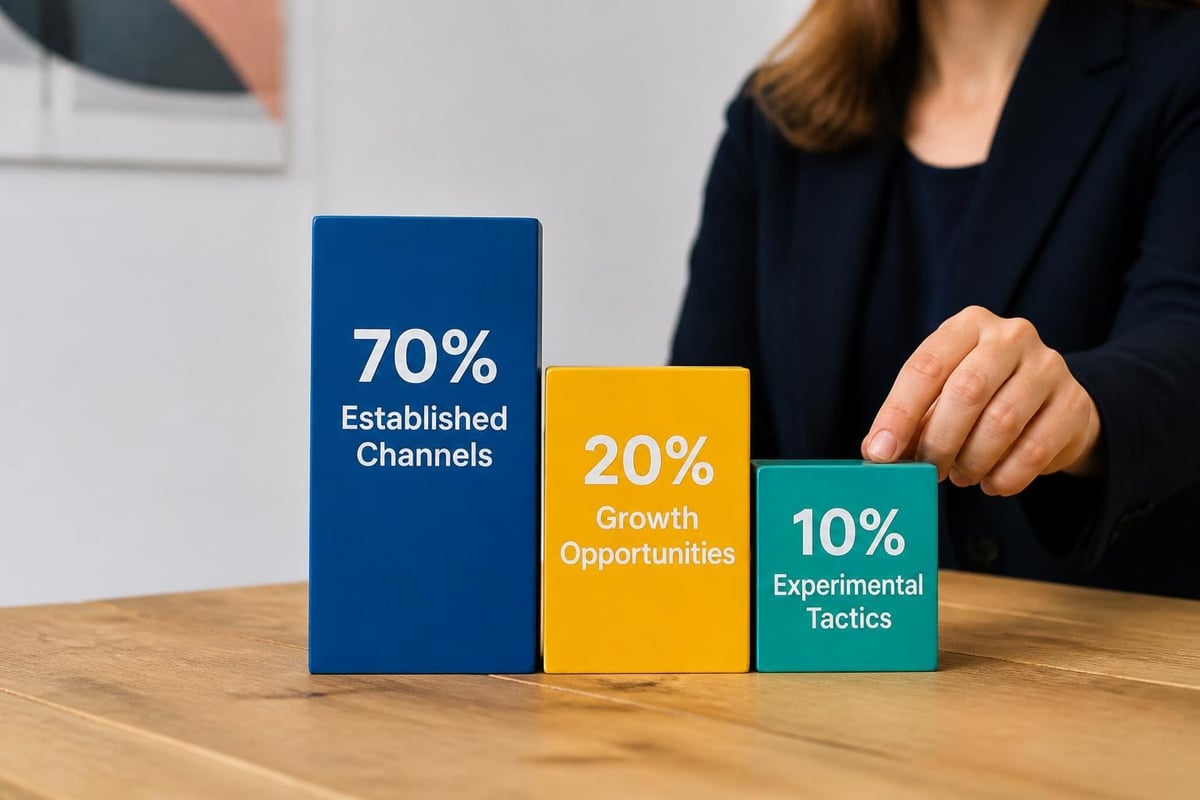
Budget allocation balances proven performers with experimental initiatives. The 70-20-10 rule allocates 70% to reliable channels delivering consistent results, 20% to promising tactics with growth potential, and 10% to experimental approaches testing new opportunities.
Measuring Success and Optimising Performance
Data-driven decision-making distinguishes sophisticated marketers from those guessing in the dark. Comprehensive analytics platforms track user behaviour, campaign performance, and business outcomes, providing insights that inform strategic adjustments.
Key Performance Indicators
Different campaigns require different metrics. Top digital marketing trends emphasise outcome-focused measurement over vanity metrics. Traffic numbers mean little if visitors don't convert; social followers matter only when they engage and purchase.
| Objective | Primary KPIs | Supporting Metrics |
|---|---|---|
| Brand Awareness | Reach, impressions, share of voice | Brand search volume, social followers |
| Lead Generation | MQLs, form completions, cost per lead | Landing page conversion rate, form abandonment |
| Customer Acquisition | New customers, CAC, conversion rate | Sales cycle length, channel attribution |
| Customer Retention | Retention rate, LTV, repeat purchase | Engagement frequency, NPS score |
Attribution modelling reveals which touchpoints contribute to conversions throughout complex, multi-channel journeys. First-click attribution credits initial discovery, last-click credits final conversion, whilst multi-touch models acknowledge every interaction's contribution.
Continuous Testing and Refinement
The most successful digital marketers embrace experimentation. A/B testing compares variations to identify higher-performing headlines, images, calls-to-action, and page layouts. Multivariate testing examines multiple element combinations simultaneously for complex optimisation.
Testing should be systematic rather than random. Develop hypotheses based on data insights, design tests with statistical rigour, and implement winning variations whilst documenting learnings for future reference.
Incremental improvements compound over time. A 2% conversion rate increase might seem modest, but sustained across all campaigns, these gains deliver substantial revenue growth whilst reducing customer acquisition costs.
Integration with Traditional Marketing
Whilst this guide focuses on all about digital marketing, the most effective strategies integrate online and offline efforts into cohesive brand experiences. Digital tactics amplify traditional campaigns, whilst offline touchpoints drive online engagement.
Print advertisements can direct audiences to custom landing pages, QR codes bridge physical and digital worlds, and events generate content for social sharing. Conversely, digital remarketing keeps brands top-of-mind following offline interactions, and targeted advertising reaches prospects researched through digital channels.
Professional web design serves as the foundation for integrated campaigns, providing the digital destination where all marketing efforts converge. Whether prospects discover you through search, social, advertising, or word-of-mouth, your website must deliver experiences that validate their decision to engage whilst guiding them toward conversion.
The line between digital and traditional continues blurring as technologies like augmented reality, voice assistants, and connected devices create new hybrid touchpoints. Forward-thinking marketers develop channel-agnostic strategies focused on customer journeys rather than rigid channel silos.
Common Pitfalls and How to Avoid Them
Even experienced marketers encounter obstacles when implementing digital strategies. Recognising these common mistakes helps businesses navigate challenges more effectively whilst maximising return on marketing investment.
Frequent digital marketing mistakes include:
- Lacking clear strategy: Tactical execution without strategic direction wastes resources on disconnected activities
- Ignoring mobile users: Over half of web traffic originates from mobile devices requiring optimised experiences
- Neglecting analytics: Data-driven insights separate guesswork from informed decision-making
- Inconsistent branding: Fragmented messaging across channels confuses audiences and dilutes brand identity
- Chasing trends blindly: Not every platform or tactic suits every business objective
Building sustainable success requires patience and persistence. Digital marketing delivers compounding returns over time as content libraries expand, domain authority grows, and customer relationships deepen. Quick-win mentalities often sacrifice long-term value for short-term gains.
According to recent state of digital marketing insights, businesses investing in foundational capabilities like quality content, technical excellence, and customer-centric experiences consistently outperform those chasing algorithmic shortcuts or manipulative tactics.
The Role of Expertise and Partnership
Understanding all about digital marketing provides valuable context, but execution requires specialised skills, dedicated resources, and ongoing commitment. Many businesses find strategic partnerships with experienced agencies deliver superior results compared to under-resourced internal teams or inexperienced freelancers.
Expert partners bring established processes, proven methodologies, and diverse experience across industries and challenges. Exploring digital marketing solutions with specialists accelerates results whilst avoiding costly mistakes that plague trial-and-error approaches.
The ideal partnership combines strategic guidance with tactical execution, transparent reporting with proactive communication, and flexibility to adapt as business needs evolve. Whether supplementing internal capabilities or outsourcing entire functions, select partners aligned with your values, objectives, and growth ambitions.
Mastering digital marketing requires understanding diverse channels, emerging technologies, and evolving consumer behaviours whilst maintaining strategic focus on business objectives. As the landscape continues shifting with new platforms, privacy regulations, and AI capabilities, businesses that stay informed and adaptable will capture opportunities whilst competitors struggle with outdated approaches. OxD PR combines technical expertise with creative strategy to help businesses navigate this complex environment, delivering integrated campaigns that enhance visibility, engage audiences, and drive measurable growth across all digital channels.