Guide to Digital Web Services: What You Need to Know in 2026
In 2026, digital web services are the driving force behind business growth and resilience. The online world is evolving rapidly. Is your business ready to adapt and thrive?
This guide is designed to demystify digital web services, equipping you with the knowledge needed to make smart decisions in a competitive digital landscape. We will cover essential platforms, integration strategies, security best practices, and expert tips for choosing the right partner.
Stay ahead of the curve, discover the latest advancements, and learn how to leverage digital web services for a true competitive advantage. Prepare your business for success in 2026.
The Digital Web Services Landscape in 2026
Understanding the digital web services landscape in 2026 is crucial for any business aiming to stay ahead. The sector has evolved far beyond simple website creation, now encompassing a suite of integrated solutions that drive growth, efficiency, and customer engagement.
Defining Digital Web Services Today
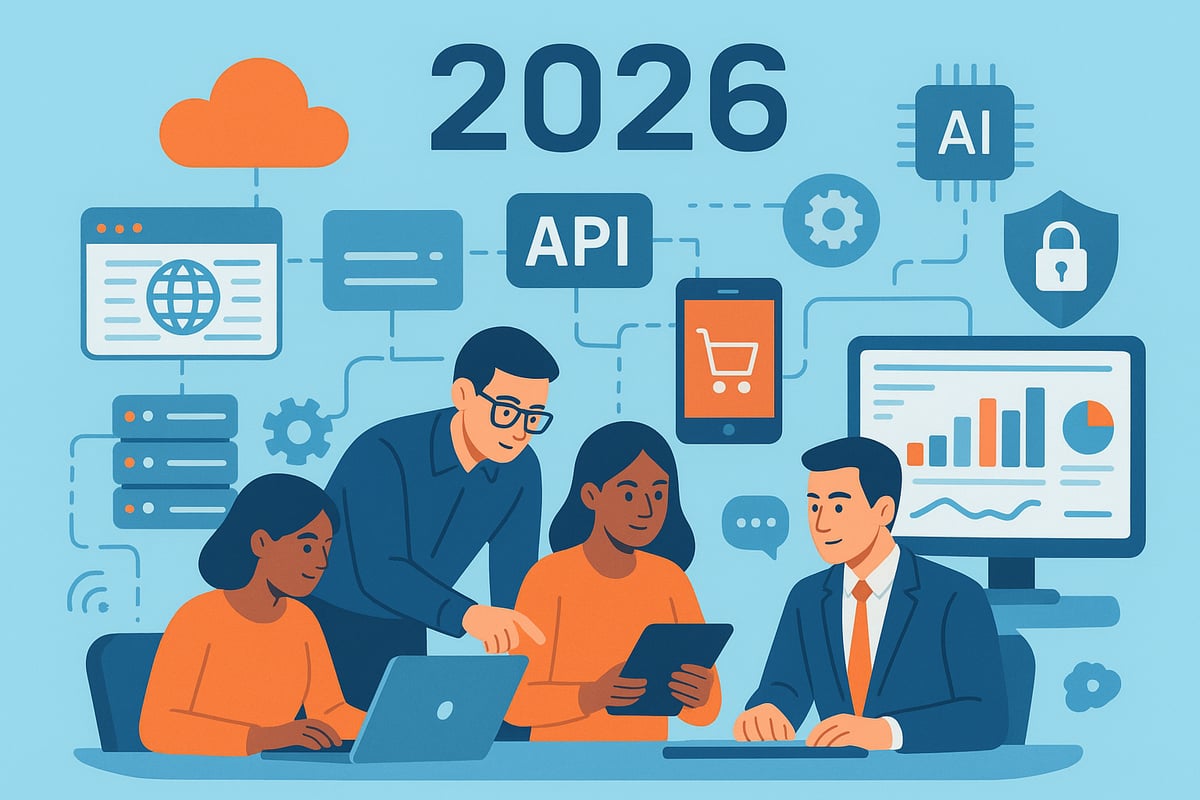
In 2026, digital web services cover a vast spectrum of solutions. These range from web design and hosting to integrated marketing, e-commerce, and sophisticated automation tools. Businesses now require more than just a digital presence. They need end-to-end solutions, including cloud-based platforms, APIs, and SaaS products that enable seamless operations at scale.
Unified platforms are gaining traction, merging design, hosting, marketing, and analytics into one ecosystem. This convergence extends to web, mobile, and app services, making it easier for businesses to manage their digital footprint. Scalability and flexibility are no longer optional. Companies must adapt rapidly as they grow and diversify.
For instance, over 1.7 million businesses globally rely on platforms like Shopify for digital commerce. Magento, another industry leader, processes over $155 billion in transactions annually. These figures highlight just how central digital web services have become to modern business infrastructure.
With this expansion, digital web services now form the backbone of business operations, supporting everything from customer engagement to backend logistics.
Key Trends Shaping the Industry
Several trends are driving the transformation of digital web services. AI-powered personalisation and automation are at the forefront, enabling businesses to deliver tailored experiences at scale. The adoption of headless CMS and decoupled architectures is accelerating, providing greater flexibility and performance.
User experience and accessibility have taken centre stage. Companies are investing heavily in inclusive design and seamless navigation. Demand for integration is rising, with businesses seeking unified solutions that connect e-commerce, CRM, and analytics tools. Cloud-native and serverless technologies are also becoming standard, ensuring reliability and scalability.
A standout example is the rapid growth of integrated solutions that empower businesses to launch, manage, and optimise their entire digital ecosystem efficiently. For a deeper dive into these developments, explore the top web development trends for 2026.
These innovations are setting new benchmarks for digital web services, making it essential to stay informed and agile.
The Role of Digital Agencies and Partners
The way businesses approach digital web services has shifted significantly. Many now turn to specialist digital agencies and partners rather than relying solely on in-house teams. This change brings substantial benefits, such as cost savings, access to a wider range of expertise, and improved scalability.
Agencies often operate under white-label or partnership models, allowing businesses to expand their offerings without increasing overheads. The trend towards flexible contracts and seamless team integration is growing, with many agencies boasting a minimum of seven years' experience and the ability to scale with client needs.
Consider BigCommerce: more than 60,000 stores worldwide are powered by this platform, with agencies playing a critical role in facilitating growth and innovation. By leveraging digital web services through expert partners, businesses can reduce downtime and unlock new opportunities.
In summary, digital web services in 2026 are defined by integration, innovation, and collaboration, making them essential for business success in a rapidly changing landscape.
Core Categories of Digital Web Services
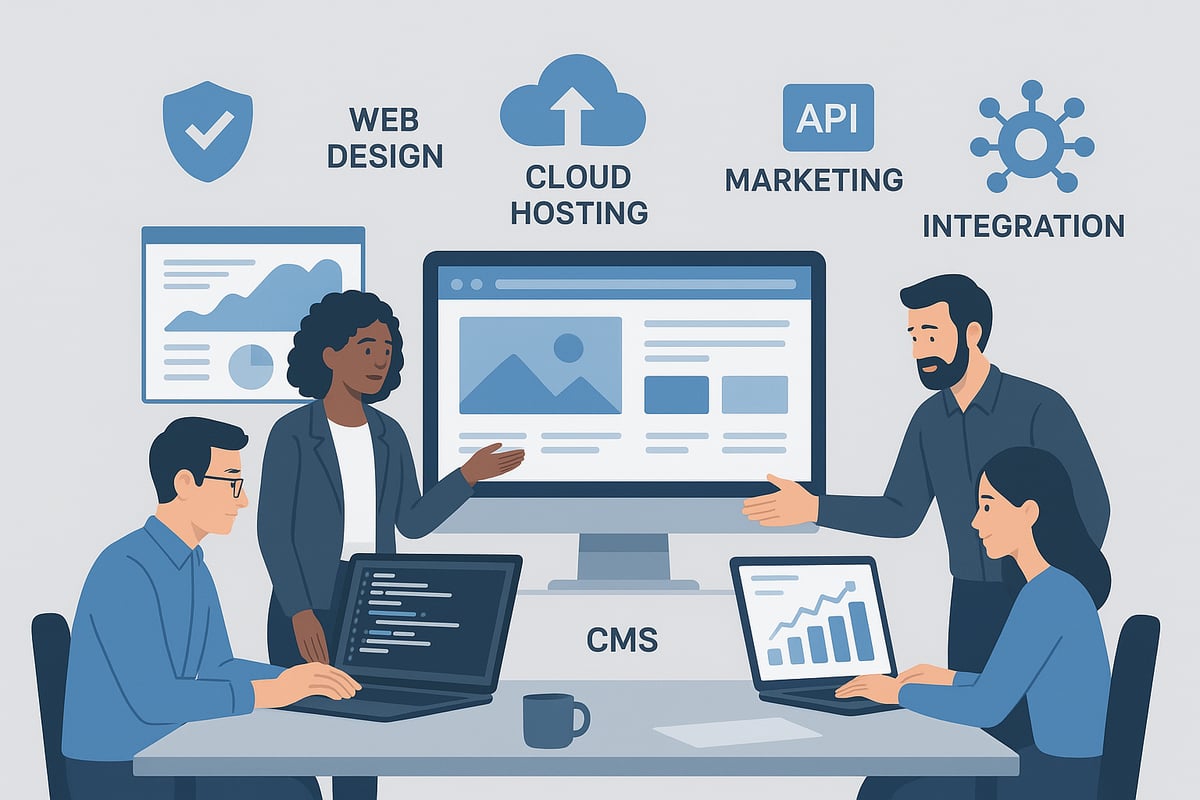
Navigating the world of digital web services in 2026 requires a clear understanding of the main categories that underpin modern business success. Each area plays a unique role in building a powerful, integrated digital presence.
Web Design & Development
Web design and development remain at the heart of digital web services. In 2026, businesses demand custom, responsive websites that adapt seamlessly to every device and screen size. Conversion-focused design and intuitive user interfaces are essential for keeping visitors engaged and driving results.
Modern web design combines the latest UX/UI practices with technology that supports accessibility and fast load times. Platforms like Magento, Shopify, and WooCommerce continue to lead in e-commerce web design, offering robust flexibility and scalability. For those seeking inspiration, Web design trends for 2025 highlights key innovations shaping the industry.
- Custom builds tailored to brand needs
- Responsive layouts for any device
- Focus on user journey and conversion
With WooCommerce now powering over 4 million online stores, accounting for 23% of all e-commerce sites, the importance of professional web design within digital web services is undeniable.
E-Commerce Solutions
E-commerce sits at the core of digital web services, enabling businesses to reach customers globally and streamline online sales. Choosing the right platform is essential for growth, scalability, and operational efficiency.
Here’s a comparison of leading e-commerce platforms:
| Platform | Strengths | Ideal For |
|---|---|---|
| Magento | Security, scalability | Large, complex stores |
| Shopify | User-friendly, fast | SMEs, rapid launch |
| WooCommerce | Flexible, plugin-rich | WordPress users |
| BigCommerce | Global reach, APIs | Multi-channel sellers |
| Adobe Commerce | Personalisation, B2B | Enterprise solutions |
Key features in digital web services e-commerce include payment integration, inventory management, and marketing tools. Headless commerce and API-driven approaches support flexibility for unique business models. Adobe Commerce, for example, handles complex product ranges and high-traffic environments with ease.
Content Management Systems (CMS)
A reliable content management system is a pillar of digital web services. The right CMS empowers businesses to update content easily, optimise for SEO, and extend functionality with plugins or custom modules.
Popular options in 2026 include WordPress, custom-built systems, and SaaS platforms. WordPress, combined with WooCommerce, offers a flexible e-commerce solution that is easy to manage and highly customisable.
Key benefits of modern CMS solutions:
- User-friendly admin panels
- Strong SEO capabilities
- Vast plugin ecosystems
Custom bolt-ons and plugins can further enhance digital web services, ensuring each website meets specific business requirements and adapts as needs evolve.
Digital Marketing & SEO Services
Digital marketing and SEO are inseparable from digital web services. Integrating SEO best practices from the outset ensures sites rank well and attract organic traffic. Agencies now offer comprehensive services, from technical SEO and content creation to conversion rate optimisation and social media marketing.
Analytics tools play a crucial role in measuring success and informing strategy adjustments. Many agencies provide full-service digital marketing alongside web design, creating a cohesive approach to growth.
- Technical SEO audits and fixes
- Content and copywriting expertise
- Conversion rate and UX optimisation
With data-driven decision-making at the forefront, digital web services help businesses achieve measurable improvements in visibility and conversions.
Hosting, Security & Maintenance
Secure, reliable hosting is fundamental to all digital web services. Businesses can choose from cloud hosting, dedicated servers, managed WordPress, or specialised Magento hosting to match their needs.
Ongoing support, regular updates, and proactive maintenance keep websites running smoothly. Implementing security best practices like SSL certificates, frequent updates, and monitoring protects both business and customer data.
- Monthly maintenance for uptime and security
- Automated backups and recovery
- Performance monitoring and optimisation
Agencies specialising in digital web services ensure that hosting and maintenance are stress-free, allowing businesses to focus on growth.
Integration & Custom Solutions
Integration and custom development are the final cornerstones of digital web services. Modern businesses need seamless connections between their websites, e-commerce platforms, CRMs, and analytics tools.
API/data feeds and third-party integrations with systems like SAP, NetSuite, Amazon, and eBay are now standard. Custom development addresses unique business needs, whether syncing inventory or connecting with external marketplaces.
- API-driven solutions for flexibility
- Custom features to meet business goals
- Magento integrations with marketplaces and ERP systems
By embracing integration within digital web services, companies create cohesive, scalable ecosystems that support ongoing innovation and operational efficiency.
Comparing Leading Platforms and Tools
Selecting the right platform is a pivotal decision for any business investing in digital web services. The landscape in 2026 is more sophisticated than ever, with each leading solution offering unique advantages for different needs.
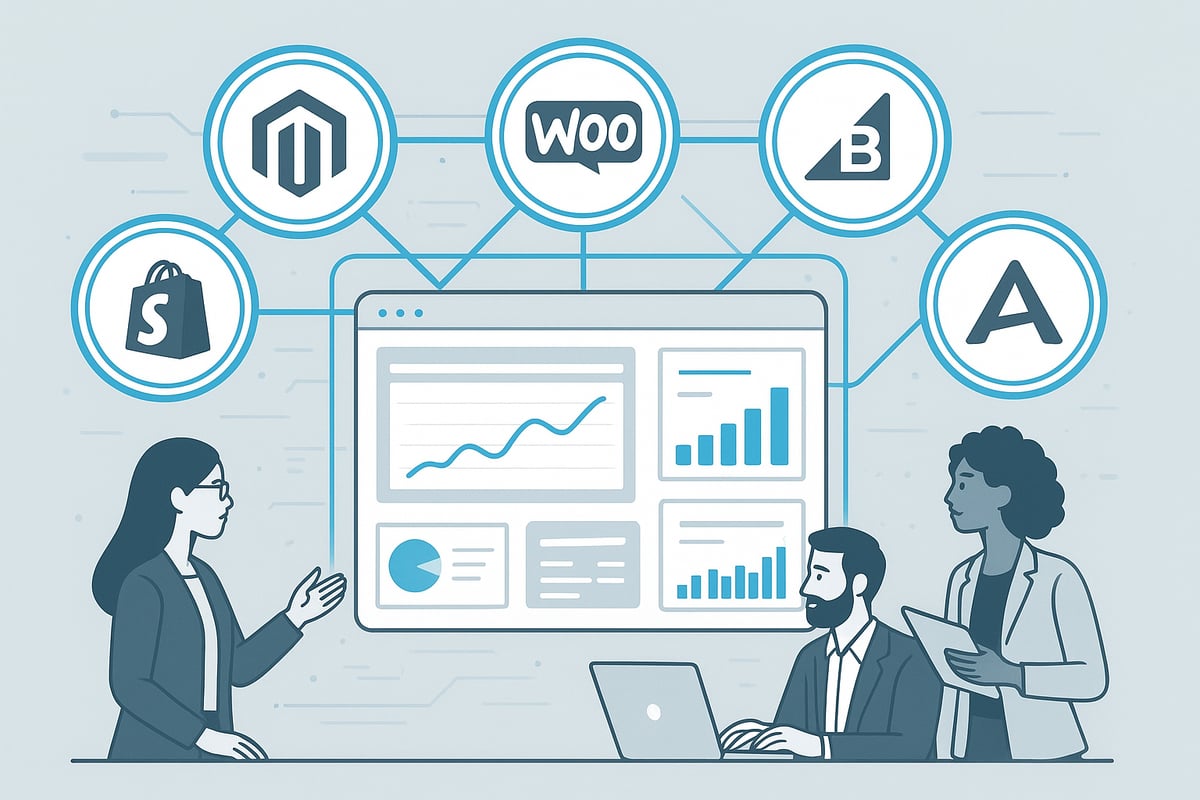
Magento, Shopify, WooCommerce, BigCommerce, and Adobe Commerce
Digital web services rely on robust platforms to deliver seamless online experiences. Magento stands out for its advanced security, scalability, and comprehensive B2B features, making it ideal for complex and high-volume businesses. Shopify, on the other hand, is celebrated for its user-friendly interface, rapid setup, and vast app marketplace, which supports both startups and established brands.
WooCommerce seamlessly integrates with WordPress, offering flexibility and a wide plugin library for businesses seeking custom solutions. BigCommerce caters to global ambitions, excelling in marketplace integrations and international reach. Adobe Commerce, built on Magento, brings advanced personalisation, marketing automation, and cloud support to the table.
Here’s a snapshot comparison:
| Platform | Strengths | Weaknesses | Best For |
|---|---|---|---|
| Magento | Security, scalability, B2B, customisation | Higher technical demands | Large, complex businesses |
| Shopify | Ease of use, quick launch, apps | Less flexibility for custom | SMEs, fast-growing brands |
| WooCommerce | WordPress integration, plugins | Requires more management | Content-focused, flexible sites |
| BigCommerce | Global reach, integration | Limited design flexibility | Multi-channel retailers |
| Adobe Commerce | Personalisation, automation, cloud | Cost, complexity | Enterprise, high-traffic sites |
Global e-commerce continues to accelerate, with platforms like Shopify supporting over $400 billion in gross merchandise volume. For more on this surge, see Global e-commerce surpasses $5 trillion.
Choosing the Right Platform for Your Business
The choice of platform for digital web services should align with your business goals, size, and technical resources. Small to mid-sized companies may favour Shopify or WooCommerce for their ease of use and cost-effectiveness. Larger enterprises or those with specific B2B requirements often benefit from Magento or Adobe Commerce.
Key factors include:
- Scalability to support growth.
- Integration capabilities with CRM, ERP, or analytics.
- Customisation options to match branding and workflows.
- Budget for ongoing development and support.
Evaluate your in-house expertise as well. Platforms like Shopify minimise the need for technical maintenance, while Magento and Adobe Commerce demand specialist knowledge. Future-proofing your digital web services starts with matching platform strengths to your business ambitions.
Case Studies & Success Stories
Many businesses in the UK have transformed their operations with the right digital web services platform. For example, Wetsuit Centre leveraged Magento to manage a complex product catalogue and scale online sales. Cladco Profiles adopted WooCommerce to enhance flexibility and content integration, resulting in higher engagement.
Tangerine Fields, a festival accommodation provider, chose Shopify for its rapid deployment and seamless e-commerce tools. Each case highlights how aligning business needs with platform capabilities delivers measurable results in sales, user experience, and operational efficiency.
Digital web services are most effective when tailored to your unique context. Reviewing agency portfolios and real-world examples gives valuable insight into what works best for businesses in 2026.
Integrating Digital Web Services for Business Growth
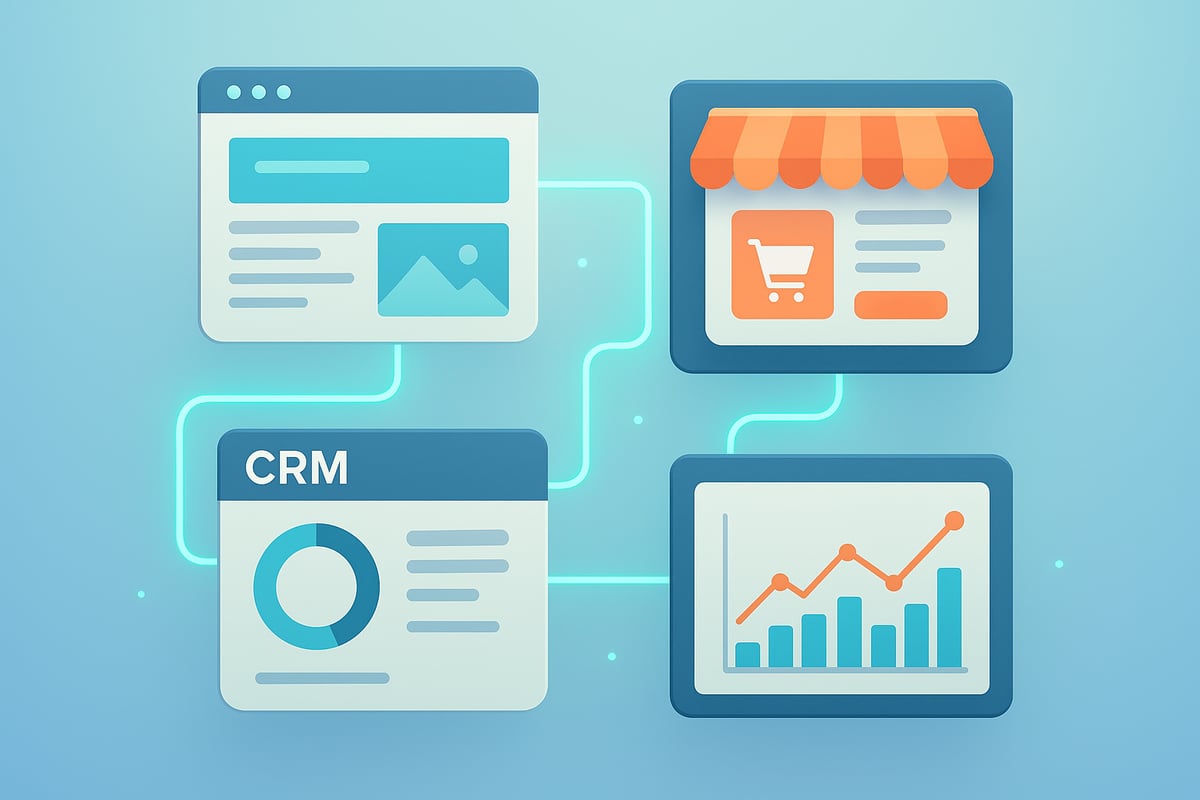
In 2026, integrating digital web services is essential for businesses seeking sustainable growth. The ability to connect your website, e-commerce, CRM, and analytics platforms creates a seamless digital ecosystem. This unified approach not only streamlines operations but also provides the agility needed to thrive in a rapidly evolving digital landscape.
Building a Seamless Digital Ecosystem
A seamless digital ecosystem connects every aspect of your online presence. By integrating digital web services, businesses can unify their web, e-commerce, CRM, and analytics tools. This connectivity ensures customer data flows smoothly between platforms, supporting a consistent experience across every channel.
The benefits are clear:
- Improved customer journey, from first click to repeat purchase
- Centralised data for real-time insights and decision-making
- Automation of routine tasks, saving time and reducing errors
For instance, using API-driven integrations enables real-time syncing of inventory and sales channels, which is vital for omnichannel retailers. Businesses are increasingly adopting such strategies to stay ahead, as highlighted in recent discussions on the future of enterprise digital experiences. By leveraging integrated digital web services, organisations can adapt quickly to market shifts and customer demands.
Workflow Integration and Communication
Successful integration of digital web services goes beyond technology. It requires aligning with existing client workflows and fostering transparent communication. Digital agencies today prioritise adapting to clients’ project management tools and processes, ensuring smooth collaboration from the outset.
Key practices include:
- Embedding agency teams within the client’s workflow
- Regular updates and feedback loops for clarity
- Flexibility to adjust as business needs evolve
This approach reduces friction, accelerates project delivery, and builds trust. By integrating digital web services into daily operations, businesses can respond swiftly to new opportunities and challenges.
Measuring Success: KPIs and Analytics
To maximise the impact of digital web services, businesses must track the right metrics. Key performance indicators (KPIs) provide a clear view of progress and reveal areas for improvement. Common KPIs include website traffic, conversion rates, online sales, and user engagement.
Using analytics platforms such as Google Analytics or platform-specific dashboards allows for real-time monitoring. By analysing these metrics, businesses can:
- Identify successful marketing campaigns
- Optimise user journeys for higher conversion
- Make data-driven decisions to enhance performance
Continuous measurement ensures that digital web services deliver tangible value and support ongoing business growth.
OxD PR: Your Digital Growth Partner
OxD PR specialises in delivering integrated digital web services tailored to your business goals. Their expertise spans web design, e-commerce, SEO, and omnichannel marketing, providing a comprehensive solution for modern businesses.
With a focus on responsive design, conversion optimisation, and seamless integration, OxD PR ensures your digital platforms work together harmoniously. Their team collaborates closely with clients, offering flexible communication and transparent project management, which is key for long-term success.
Clients trust OxD PR for measurable results, from increased website traffic to higher sales and improved customer engagement. By choosing OxD PR as your digital web services partner, you gain a dedicated ally committed to driving your business growth in 2026 and beyond.
Security, Compliance, and Future-Proofing Your Web Presence
In 2026, protecting your digital web services is more critical than ever. Cyber threats are evolving rapidly, targeting businesses of all sizes. To safeguard your web presence, robust security measures are essential. This includes deploying SSL certificates, advanced firewalls, and scheduling regular security audits. These steps help protect sensitive data and customer information.
Compliance with data privacy laws, such as GDPR and new regulations emerging across regions, is non-negotiable. Businesses must ensure their digital web services adhere to these standards, reducing the risk of costly breaches and penalties. Tools like Cloudflare and Google Recaptcha are widely used for bot and spam protection. The adoption of managed hosting and automated security updates is rising, reflecting a proactive approach to online safety.
Regular monitoring and prompt responses to threats are now standard practice. By prioritising security, businesses maintain trust and uphold their reputation in a competitive market.
Accessibility and User Experience
Accessibility is a cornerstone of modern digital web services. Ensuring websites are usable by everyone, regardless of ability or device, is both a legal and ethical requirement. Adhering to WCAG standards guarantees inclusivity and broadens your audience reach.
Responsive design is crucial for delivering seamless experiences across smartphones, tablets, and desktops. Regular UX audits help identify and address barriers, ensuring your digital web services remain user-friendly. Many agencies now offer accessibility checks as part of their core offerings.
For deeper insights, explore responsive website design insights to understand how adaptability enhances user satisfaction and compliance. By prioritising accessibility, your business not only fulfils obligations but also builds lasting customer loyalty.
Future-Proofing Your Digital Investment
Staying ahead in the digital landscape requires ongoing investment in your digital web services. The pace of innovation is accelerating, with AI, automation, and emerging platforms reshaping how businesses operate. Planning for scalability and flexibility ensures your web presence can adapt to market changes.
Regular updates, performance audits, and optimisation are vital for maintaining a competitive edge. Businesses that keep pace with top technology trends for 2025 position themselves to leverage new opportunities as they arise. Adopting cloud-native solutions and modular architectures makes it easier to integrate future tools and services.
A future-proof approach to digital web services means proactively addressing challenges, investing in staff training, and embracing innovation. This mindset ensures your business remains resilient, secure, and ready for whatever comes next.
How to Choose the Right Digital Web Services Partner
Selecting the ideal digital web services partner is a pivotal decision that can define your business’s success for years to come. With a rapidly expanding market and new providers emerging, knowing what to look for will help you secure a partnership that drives real results.
Key Criteria for Selecting a Provider
When evaluating digital web services providers, focus on their experience and proven expertise. Review their portfolio for similar projects in your industry and assess the breadth of services offered, from web design to ongoing support. Flexibility and scalability are essential, especially if your business plans to grow or adapt to changing technologies.
Key criteria include:
- Years of relevant industry experience
- Comprehensive service range (design, development, marketing, support)
- Flexible contract options and scalability
- Transparent pricing and deliverables
With the tech consulting market forecast to exceed $400 billion globally by 2026, as highlighted in expert industry analysis, choosing a partner with a robust track record in digital web services is more important than ever.
Questions to Ask Before Committing
Before finalising your choice, ask targeted questions to ensure the provider aligns with your digital web services needs.
Consider asking:
- Which platforms and technologies do you specialise in?
- How do you handle support, maintenance, and security?
- Can you provide proven results and client testimonials?
- What is your process for ongoing updates and performance optimisation?
A reliable partner should answer these queries with clarity, demonstrating a commitment to transparency and measurable outcomes for your digital web services investment.
Red Flags and What to Avoid
Be vigilant for warning signs during your search for digital web services partners. Avoid providers who lack transparency regarding pricing or deliverables, or those who overpromise without a substantiated track record. Limited support options or rigid, inflexible processes can indicate future challenges.
Common red flags include:
- Unclear or hidden pricing structures
- Vague service descriptions
- No verifiable client portfolio
- Poor communication or delayed responses
Identifying these issues early will help protect your business from costly setbacks and ensure your digital web services partner is reliable.
The Value of Long-Term Partnerships
A strong relationship with your digital web services provider can fuel ongoing innovation and business growth. Long-term collaboration allows both teams to align on values, communication styles, and goals, ensuring your digital presence evolves with market trends.
Benefits include:
- Consistent performance improvements
- Proactive strategy updates
- Enhanced support and problem-solving
- Deeper understanding of your brand
Many successful businesses thrive with dedicated digital web services partners who function as an extension of their own team, driving continuous improvement and measurable results.