7 Ways Managed Marketing Can Transform Your Business in 2026
Marketing is evolving faster than ever, and 2026 is set to challenge even the most seasoned business leaders. As competition intensifies and consumer behaviours shift, many owners and decision-makers are searching for new strategies to drive sustainable growth. If you are facing rising costs, fragmented campaigns, or difficulty achieving measurable results, you are not alone. This article explores how managed marketing offers a powerful solution, providing the expertise, scalability, and innovation needed to stay ahead. Discover seven key ways managed marketing can transform your business, delivering efficiency, clarity, and a true competitive edge.
Understanding Managed Marketing in 2026
Businesses face a rapidly evolving marketing landscape in 2026, and many are seeking more effective, scalable solutions. Managed marketing has become a leading approach, offering a comprehensive and flexible way to manage all aspects of marketing. In this section, we explore what managed marketing means, its core components, why 2026 is a turning point, who benefits most, and how it surpasses traditional models.

What is Managed Marketing?
Managed marketing is a holistic, outsourced solution where a specialised provider oversees all or part of a company's marketing activities. Unlike traditional agencies that may focus on specific campaigns, or in-house teams with limited resources, managed marketing integrates both digital and traditional channels under one roof. This model offers businesses access to a broader skill set and the flexibility to adapt quickly. As marketing grows more complex and costly, many organisations are shifting towards managed marketing for its blend of expertise and efficiency.
Key Components of Managed Marketing Services
A managed marketing provider delivers a complete suite of services, including strategy development, content creation, SEO, paid advertising, analytics, branding, and social media management. These services are powered by enterprise-level tools and marketing automation platforms, ensuring campaigns are both efficient and data-driven. Regular reporting and analytics inform every decision, while tactics span both digital and traditional channels. Managed marketing teams offer advanced technology and a range of expertise that is often out of reach for standalone teams.
Why 2026 is a Pivotal Year
The landscape in 2026 is marked by rapid advances in technology and changing consumer expectations. Businesses must be agile, adapting their marketing quickly to stay competitive. Market research shows a surge in digital transformation and increased marketing spend as companies prioritise measurable returns. According to recent analysis, the managed services market is projected to reach new heights, reflecting the growing adoption of managed marketing for business transformation (Managed Services Market Size to Hit USD 1272.95 Billion by 2035). Companies that embrace flexible, accountable marketing models are set to lead the field.
Who Benefits Most from Managed Marketing?
Managed marketing is ideal for small and medium-sized businesses, startups, and established brands seeking transformation. It is particularly valuable for companies with limited in-house expertise, stagnant sales, or the need for strict cost control. Both B2B and B2C sectors benefit from unified campaigns and measurable outcomes. Competitor data highlights common pain points, such as limited resources and fragmented marketing efforts, which managed marketing directly addresses. Businesses using managed marketing often report greater efficiency and higher growth rates.
The Managed Marketing Advantage over Traditional Models
When compared to in-house, agency, or freelance models, managed marketing stands out for its expertise, flexibility, and transparent processes. Managed marketing teams offer access to advanced tools and a wider skill set, all while remaining cost-effective. Flexible contracts and guarantees set this model apart, providing a true strategic partnership rather than just a service provider relationship. The result is a scalable, results-driven approach that adapts as your business evolves.
7 Ways Managed Marketing Can Transform Your Business in 2026
The business landscape in 2026 is more competitive and complex than ever before. Managed marketing is emerging as a transformative force, helping companies adapt, grow, and outperform their rivals. By leveraging a managed marketing approach, your business can unlock strategic advantages, harness expert talent, optimise budgets, and achieve measurable results that drive sustainable growth.

1. Strategic Focus and Proactive Planning
Managed marketing brings a dedicated team that crafts and executes strategies aligned with your business objectives. Rather than reacting to market shifts, these teams anticipate trends and consumer needs, ensuring your campaigns remain relevant.
Regular audits and market research underpin every campaign. This proactive approach allows for continual refinement, so your business stays ahead of the curve. For example, a competitor case study highlighted a brand that revitalised its market presence by adopting a managed marketing strategy, resulting in increased engagement and revenue.
Data shows that companies with strategic marketing plans experience up to 60 percent higher ROI compared to those without. Managed marketing teams provide invaluable industry insights and cross-sector experience, drawing on best practices and analytics to inform every decision.
Continuous optimisation, based on real-time feedback, reduces wasted time and resources spent on trial-and-error campaigns. This strategic focus ensures that your marketing efforts are always targeted and effective, leading to sustainable growth and a stronger competitive position.
2. Access to Specialist Expertise and Advanced Technology
With managed marketing, you gain instant access to a team of specialists—SEO, PPC, content, design, and analytics experts—who stay at the forefront of industry trends. This breadth of expertise would be challenging and costly to replicate in-house.
Managed marketing providers leverage enterprise-level tools, from CRM systems to automation and analytics platforms. These technologies, often out of reach for SMEs, come standard as part of your service package. Competitors note that managed providers frequently offer technology and skills that businesses could not otherwise afford.
Ongoing professional development ensures your campaigns benefit from the latest algorithms and best practices. According to industry data, 70 percent of companies cite lack of in-house expertise as a significant barrier to success.
Managed marketing bridges this gap, enabling faster campaign execution and more precise performance tracking. The result is a smarter, more agile approach that delivers better outcomes for your business.
3. Cost Efficiency and Budget Optimisation
One of the most compelling advantages of managed marketing is its cost efficiency. By partnering with a managed marketing provider, businesses avoid the expense of hiring, training, and retaining a full in-house team.
Flexible pricing models and tailored service plans mean you pay only for what you need. Competitor infographics reveal that managed marketing can yield significant savings compared to the cumulative costs of salaries, benefits, and turnover in traditional teams.
Transparent reporting ensures every pound is spent wisely, with clear accountability for results. Managed marketing eliminates wasted spend on ineffective channels or redundant tools, optimising your budget for maximum impact.
Services can be scaled up or down in response to growth or seasonal demand, providing financial agility. Industry comparisons consistently show that managed marketing delivers higher value for the same or lower investment, reducing overhead while maintaining quality and effectiveness.
4. Enhanced ROI and Measurable Results
Managed marketing is grounded in data-driven strategies that prioritise measurable outcomes—leads, conversions, sales, and brand growth. Regular performance tracking and transparent reporting give you full visibility into what’s working.
A competitor case study demonstrated a significant uplift in campaign performance after adopting managed marketing, with leads and revenue doubling in a single quarter. Advanced analytics identify the most effective tactics, allowing for continuous optimisation and improved ROI.
Data indicates that businesses using managed marketing report two times higher returns on average. The focus on key performance indicators ensures your marketing activities are always aligned with your business objectives.
Eliminating guesswork, managed marketing empowers you to make evidence-based decisions. For more on maximising returns, explore this guide to ROI in digital marketing.
5. Scalability and Flexibility for Growth
Managed marketing is designed to scale with your business. Whether you’re launching new campaigns, entering new markets, or adjusting to shifting market conditions, managed marketing adapts seamlessly.
Providers offer flexible resource allocation, supporting one-off projects, seasonal spikes, or long-term growth initiatives. Competitors highlight features like hourly resource rollover and integrated support for internal teams or other partners.
Eighty percent of businesses choose managed marketing for its scalability, according to industry insights. This approach reduces the risk of overstaffing during quiet periods and ensures you’re never under-resourced during peak times.
With managed marketing, you can focus on your core business, knowing your marketing adapts in real time to support your growth ambitions.
6. Unified Brand Presence Across Channels
A unified brand message is essential for building trust and recognition. Managed marketing ensures your branding and messaging remain consistent across digital and traditional platforms, from web and social media to print and outdoor campaigns.
Integrated campaigns deliver a seamless customer journey. For example, a competitor outlined services that span web design, content, direct mail, and reputation management, resulting in stronger brand visibility.
Industry data reveals that brands with unified messaging see 23 percent higher average revenue. Managed marketing reduces the fragmentation and confusion that can occur with siloed efforts, enabling a rapid response to market changes.
This cohesive approach enhances customer experience, fosters loyalty, and positions your business as a market leader.
7. Transparent Reporting and Continuous Improvement
Transparency is at the heart of managed marketing. Providers offer regular updates, detailed reports, and open communication channels, so you’re always informed about progress and results.
Competitor highlights show transparent resource allocation and clear breakdowns of time spent on each activity. Real-time dashboards and analytics provide instant access to campaign performance metrics.
Ninety percent of businesses cite transparency as a critical factor in marketing partnerships. Managed marketing providers embrace accountability, enabling informed decisions at every stage.
Ongoing optimisation, based on performance data and stakeholder feedback, ensures campaigns are always improving. This transparency builds trust, strengthens strategic partnerships, and drives long-term success.
Real-World Examples: Managed Marketing Success Stories
Businesses across sectors are turning to managed marketing to overcome challenges and unlock growth. The following real-world examples show how strategic partnerships and expert solutions deliver measurable results at every stage of the journey.
Case Study 1: Transforming Stagnant Sales with Managed Marketing
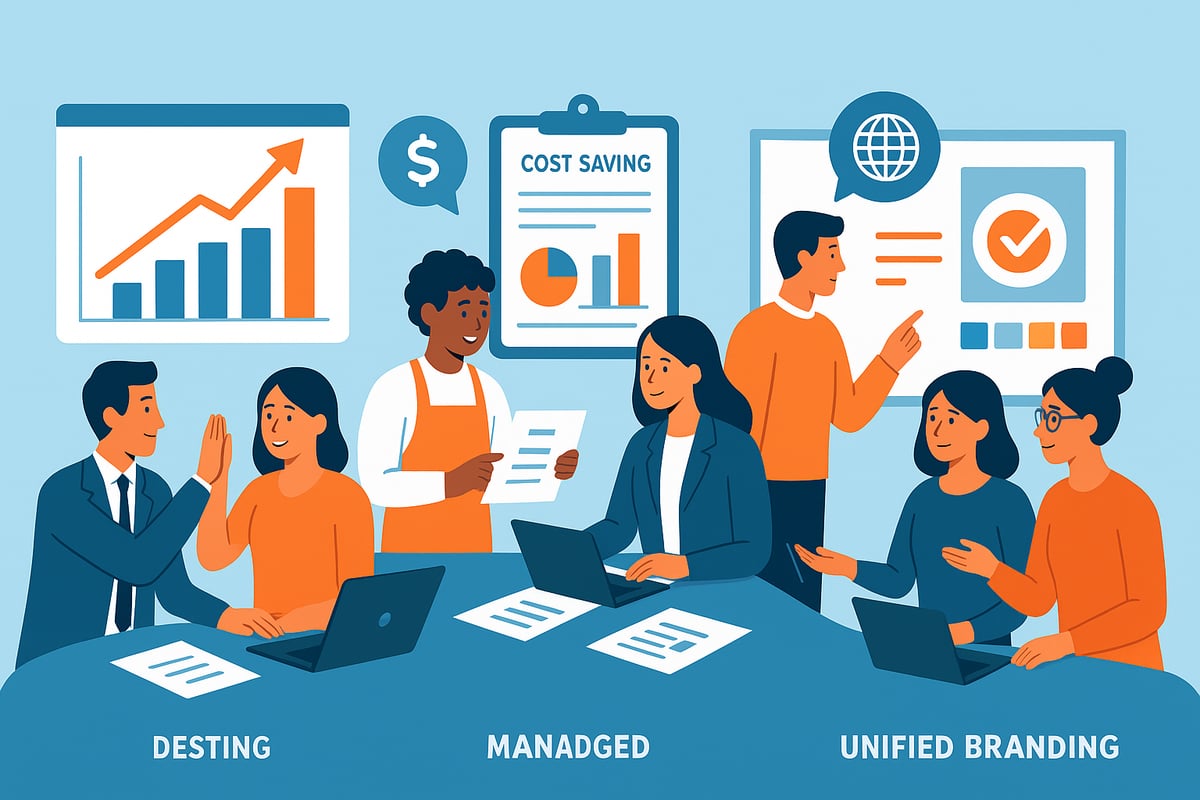
A mid-sized retailer faced declining sales and fragmented campaigns, lacking the in-house expertise needed to adapt. By partnering with a managed marketing provider, they gained access to a comprehensive team and advanced analytics. The provider conducted a full strategy overhaul, aligning digital and traditional channels to reach new audiences. Multi-channel campaigns, powered by digital marketing services online, revitalised their brand presence. Within six months, leads increased by 40 percent and conversions nearly doubled. The managed marketing approach delivered a clear, sustained uplift in revenue and market share.
Case Study 2: Cost Savings and Efficiency Gains for SMEs
An SME struggling with rising marketing costs and limited resources turned to managed marketing for support. Instead of hiring multiple specialists, they accessed a full suite of services—including content, SEO, and paid ads—through a single partner. This shift enabled them to reduce overheads and launch campaigns faster. Transparent reporting and flexible plans ensured every investment was tracked and optimised. Compared to previous in-house efforts, the business achieved better results with lower spend. Over the first year, cost savings reached 25 percent, while campaign efficiency and output improved significantly through managed marketing.
Case Study 3: Building a Unified Brand for Market Expansion
A company aiming to expand into new regions struggled with inconsistent branding and disconnected campaigns. Managed marketing delivered integrated solutions across web, social, print, and outdoor channels, ensuring a unified message. The provider coordinated branding, creative assets, and reputation management, creating a seamless customer experience. As a result, the business saw a 30 percent increase in brand recognition and higher engagement rates in new markets. Market penetration improved as managed marketing enabled rapid adaptation to local trends and consumer preferences, supporting successful expansion and long-term growth.
Lessons Learned and Key Takeaways
These examples highlight the replicable power of managed marketing. Whether revitalising sales, reducing costs, or building a unified brand, the approach delivers strategic expertise and adaptability. Key lessons include the value of partnership, measurable results, and access to advanced tools. Businesses benefit from streamlined processes and data-driven decision-making. To realise similar outcomes, organisations should assess their current marketing challenges and explore managed marketing solutions with trusted providers. Success is achievable through collaboration, transparency, and a focus on continuous improvement.
How to Choose the Right Managed Marketing Partner in 2026
Selecting the right managed marketing partner can be the catalyst for business transformation in 2026. The landscape is crowded, so knowing what to look for and how to assess providers is essential. Let us guide you through the key criteria, questions to ask, warning signs, and onboarding steps to ensure your managed marketing journey starts on solid ground.

Essential Criteria for Selection
When evaluating managed marketing providers, start by examining their expertise and industry experience. Look for a wide service range, from strategy to analytics, and check the depth of their technology stack. Proven results and positive client testimonials are clear indicators of reliability.
Transparency in reporting and communication is critical. Flexible service plans and contract terms allow your business to scale as needed. Consult resources like top digital marketing services to compare leading providers and their offerings.
Prioritise partners who demonstrate a clear understanding of your sector, offer measurable outcomes, and have a reputation for innovation. The right managed marketing team will feel like an extension of your own business.
Questions to Ask Potential Providers
To make an informed decision, prepare targeted questions for potential managed marketing partners. Consider asking:
- What specific services are included in your managed marketing packages?
- How do you measure and report campaign success?
- Which technology platforms and tools do you use?
- How do you customise strategies for unique business needs?
- What is your approach to ongoing optimisation and feedback?
These questions help reveal how well each provider aligns with your objectives. Clear, detailed answers indicate a partner who is invested in your growth and understands the complexities of managed marketing.
Red Flags and Common Pitfalls to Avoid
Some warning signs can signal a poor fit when choosing managed marketing services. Be wary of providers who lack transparency or cannot provide clear deliverables. Avoid one-size-fits-all solutions that do not allow for customisation.
Watch for hidden fees or inflexible contract terms, which can limit your ability to adapt as your business evolves. Low-cost providers may offer limited support or subpar quality. Prioritise ongoing support and strategic input to avoid stagnation.
Competitor insights suggest that the best managed marketing providers are proactive, transparent, and committed to your long-term success, not just short-term wins.
Making the Transition: Steps for a Smooth Onboarding
A smooth onboarding process sets the tone for a successful managed marketing partnership. Begin by preparing your internal teams for collaboration and knowledge sharing. Set clear goals, KPIs, and communication protocols from the outset.
Establish regular review and optimisation cycles to maintain accountability and momentum. Reference the onboarding best practices of top providers for guidance. Early achievements help build trust and demonstrate the value of managed marketing quickly.
By following these steps, your business can maximise the benefits of managed marketing while minimising disruption and ensuring alignment across all stakeholders.
As you look ahead to 2026 and consider how your business can adapt to the ever changing marketing landscape, it’s clear that having the right support makes all the difference. Managed marketing brings together expertise, technology, and a strategic approach to help you achieve measurable growth, streamline your campaigns, and stay ahead of competitors. If you’re ready to see how these seven transformative strategies could work for your business, let’s take the next step together. Discover tailored solutions and get clear, expert guidance by requesting your Get a Quote today.