Online Marketing Marketing Guide: Strategies for Success 2026
In 2026, the digital world is evolving at lightning speed. For businesses, simply being present online is no longer enough. The ability to stand out through effective online marketing marketing is essential for survival and growth.
This guide brings you the most up-to-date strategies, tools, and trends you need to succeed. We will explore the foundations of digital marketing, cutting-edge technologies, step-by-step frameworks, key channels, measurement techniques, and actionable tips for measurable progress.
Ready to navigate digital change, unlock new growth, and future-proof your business? Dive in to discover how to build a winning strategy for 2026.
Understanding the Foundations of Online Marketing in 2026
In 2026, the world of online marketing marketing is shaped by rapid innovation, evolving consumer expectations, and new regulatory demands. To succeed, businesses must understand not only the tools and tactics, but also the underlying foundations that drive digital growth. Let’s explore how these foundations have developed and what they mean for your next campaign.
Evolution of Online Marketing
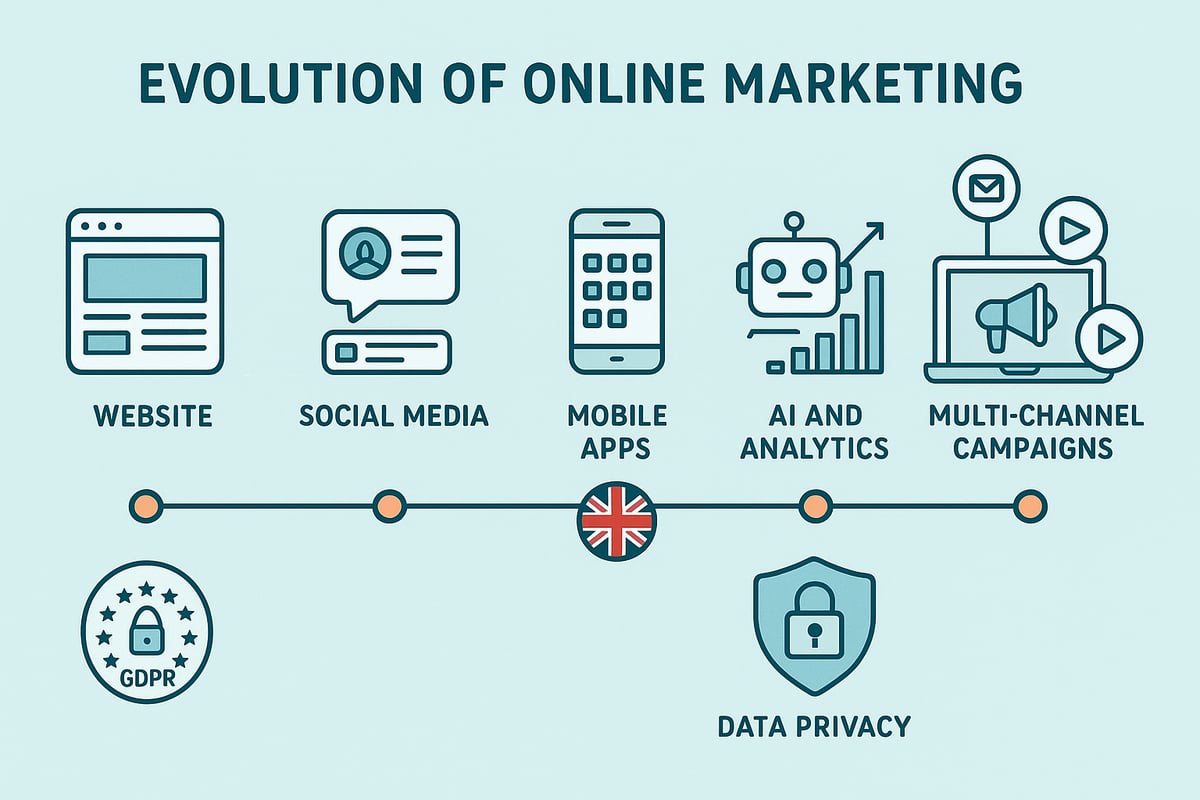
Online marketing marketing has transformed dramatically over the past two decades. What started as simple websites and email blasts has grown into a complex ecosystem powered by artificial intelligence, automation, and real-time analytics.
Key milestones include the rise of social media platforms, the shift to mobile-first strategies, and the adoption of automation tools. Today, data privacy and personalisation are at the forefront, with businesses integrating channels for a seamless, omnichannel experience. For example, UK digital ad spend reached £35.5bn in 2024, underlining the scale and importance of digital marketing investment.
Core Components of Modern Online Marketing
The core components of online marketing marketing include search engine optimisation (SEO), content marketing, social media, email campaigns, and paid advertising. Success relies on integrating these channels to create seamless user journeys and reinforce brand messaging at every touchpoint.
Consistent branding and messaging are essential, no matter which channel the customer uses. Recent data shows that 65% of UK businesses now employ multi-channel marketing strategies, reflecting the importance of this integrated approach. By unifying efforts, brands can maximise reach and build lasting loyalty.
The Role of Data and Analytics
Data and analytics are at the heart of effective online marketing marketing. Big data and AI-driven insights enable marketers to predict customer behaviour, segment audiences, and personalise campaigns for higher engagement.
Predictive analytics helps brands target the right customers with the right message at the right time. Data-driven decisions are now standard, with 80% of marketers relying on analytics to optimise campaigns and boost performance. This analytical approach ensures resources are allocated efficiently for measurable results.
Consumer Behaviour Trends in 2026
Consumer behaviour is changing rapidly, and online marketing marketing strategies must keep pace. Mobile devices dominate online interactions, while voice search is becoming increasingly common as users seek quick, hands-free answers.
Personalisation and instant gratification are no longer optional—70% of users expect tailored experiences from brands. At the same time, privacy concerns are rising, making ethical marketing and transparent data practices more important than ever.
Regulatory and Ethical Considerations
The regulatory landscape is shaping every aspect of online marketing marketing. Compliance with GDPR, updated cookie policies, and robust consent management are now fundamental for building trust and protecting customer data.
Transparency in data collection and usage is essential, as 60% of UK consumers value clear information about how their data is handled. Brands that prioritise ethical practices and open communication will stand out in an increasingly competitive digital environment.
Building a Winning Online Marketing Strategy: Step-by-Step
Creating a successful online marketing marketing strategy in 2026 requires clear direction, audience understanding, and continuous improvement. Let us break down the process into manageable steps, guiding you from goal setting through to optimisation.
Step 1: Setting SMART Objectives
The foundation of any online marketing marketing plan is setting SMART objectives. These goals should be:
- Specific
- Measurable
- Achievable
- Relevant
- Time-bound
For instance, you might aim to increase online sales by 20% within 12 months. Align each marketing goal with your broader business ambitions. This clarity helps you prioritise resources and track progress effectively.
If you are unsure where to start, a Full-service online marketing guide offers a detailed roadmap for structuring your objectives and aligning them with your overall strategy.
Step 2: Audience Research & Persona Development
Knowing your audience is critical for effective online marketing marketing. Begin by segmenting your target market based on key factors:
- Age and location
- Purchasing behaviour
- Interests and online habits
Create detailed buyer personas using tools like Google Analytics and Facebook Insights. Personas help you tailor messages and identify the best channels for engagement. For example, segmenting by online behaviour allows you to deliver content that resonates with each group.
Regularly update your personas to reflect shifting trends and expectations. This ensures your campaigns remain relevant and engaging.
Step 3: Competitor and Market Analysis
A robust online marketing marketing strategy involves understanding your competition. Identify both direct and indirect competitors in your field. Conduct a SWOT analysis to evaluate their strengths, weaknesses, opportunities, and threats.
Benchmark your digital presence against industry leaders. Pay special attention to competitors’ keyword strategies, content quality, and social media activity. Analysing what works for top-ranking sites can reveal valuable opportunities for differentiation.
Use these insights to refine your own tactics and stay ahead in a crowded market.
Step 4: Channel Selection & Budget Allocation
Choosing the right channels is essential for online marketing marketing success. Consider options such as SEO, PPC, social media, email, and content marketing. Select channels that align with your objectives and audience preferences.
Allocate your budget strategically to maximise ROI. For example, many UK SMEs have recently increased their social ad spend, recognising the power of targeted campaigns. Use data to guide your investments, and remain flexible to adjust as performance data comes in.
A balanced approach across multiple channels supports greater reach and engagement.
Step 5: Content Planning & Creation
Effective content drives online marketing marketing results. Start with a content calendar to plan regular output. Include diverse formats such as blogs, videos, podcasts, and infographics.
Prioritise storytelling and value-driven content. Engaging stories build brand loyalty and encourage sharing. For example, video content can generate up to 120% more engagement than static posts.
Repurpose high-performing content across different platforms to extend its reach and impact.
Step 6: Implementation & Campaign Launch
Bringing your online marketing marketing strategy to life requires careful coordination. Launch cross-channel campaigns with clear timelines and responsibilities for each team member.
Set up tracking and automation tools to monitor results and streamline repetitive tasks. For instance, use marketing automation for email drip campaigns to nurture leads over time.
Monitor your campaigns closely during the initial phase, making quick adjustments to optimise performance.
Step 7: Measurement, Optimisation & Scaling
Measuring success is at the heart of online marketing marketing. Track key metrics such as website traffic, conversions, customer acquisition cost, and ROI. Use A/B testing to refine your landing pages and ads.
Iteratively improve campaigns based on real data. Scale up the tactics that deliver the best results, reallocating budget as needed for maximum impact.
Regularly review your strategy, updating it to reflect new trends and business goals.
Key Online Marketing Channels and Tactics for 2026
In 2026, the online marketing marketing landscape is more vibrant and multifaceted than ever. Businesses must master a range of digital channels and tactics to stand out and achieve sustained growth. Below, we explore the essential strategies and innovations driving results for organisations that want to thrive in the digital age.
Search Engine Optimisation (SEO)
SEO remains a cornerstone of online marketing marketing, evolving rapidly to match user behaviour and technological advances. On-page strategies such as keyword optimisation and rich snippets are vital, while off-page tactics like link building maintain authority. Technical SEO ensures sites are fast and mobile-friendly, which is essential for user experience.
Voice search and AI-powered search are changing the way consumers find information. Businesses must optimise for conversational queries and leverage structured data to appear in smart results. With 92% of UK online experiences starting with a search engine (Smart Insights), investing in comprehensive SEO is non-negotiable for visibility and growth.
Content Marketing
Content marketing continues to drive engagement and lead generation in online marketing marketing. Brands should produce long-form articles, interactive guides, and visually rich assets to capture attention. Repurposing content across formats—such as turning blogs into infographics or podcasts—maximises reach and ROI.
Distribution strategies are just as important as creation. Sharing content across social, email, and partner platforms extends your message to new audiences. Notably, companies with blogs generate 67% more leads (Demand Metric), highlighting the value of consistent, high-quality content in any digital strategy.
Social Media Marketing
Social media is a dynamic force in online marketing marketing, offering both paid and organic opportunities. Platform selection is crucial—TikTok and Instagram appeal to younger audiences, while LinkedIn targets B2B sectors. Brands should balance organic engagement with paid campaigns for maximum impact.
Social commerce and influencer partnerships are on the rise, enabling seamless shopping and authentic endorsements. For deeper insights and strategies, explore social media marketing agency insights. With 85% of UK internet users active on social media (Statista), this channel is integral for brand growth and customer connection.
Email Marketing & Automation
Email marketing remains a high-ROI tactic in online marketing marketing, especially when combined with automation and personalisation. Segmenting audiences and tailoring content to their preferences increases relevance and open rates. Automated flows, such as welcome or re-engagement sequences, nurture prospects efficiently.
GDPR-compliant practices are essential for trust and deliverability. Marketers should focus on clear consent and privacy-first messaging. With an average ROI of £42 for every £1 spent (DMA UK), email is a reliable channel for nurturing leads and driving conversions.
Paid Advertising (PPC & Display)
Paid advertising is a powerful lever in online marketing marketing, offering immediate visibility and scalable growth. Google Ads and social PPC campaigns can target users with precision, while retargeting keeps your brand top-of-mind. Programmatic and AI-driven ad placements optimise spend and improve performance.
As digital ad budgets grow, businesses must measure ROI and adjust campaigns based on data. In 2025, UK businesses spent over £15bn on digital ads (IAB UK), reflecting the channel’s importance in capturing market share and driving measurable outcomes.
Video & Interactive Media
Video content is dominating online marketing marketing strategies, with live streaming, webinars, and shoppable videos delivering immersive experiences. Interactive elements, like polls and Q&A sessions, boost engagement and foster community.
Augmented reality (AR) and virtual reality (VR) integrations are becoming mainstream, allowing customers to try products virtually before purchase. With 80% of consumers preferring video content (Wyzowl), brands that embrace multimedia storytelling can differentiate themselves and deepen audience loyalty.
Influencer & Partnership Marketing
Influencer and partnership marketing offer authenticity and reach in online marketing marketing. Collaborating with micro-influencers delivers niche credibility, while macro-influencers amplify brand awareness to larger audiences. Affiliate programmes and strategic brand collaborations can drive targeted traffic and conversions.
Transparency and value alignment are crucial for successful partnerships. In 2025, 60% of brands increased influencer budgets (Influencer Marketing Hub), signalling a shift towards relationship-driven campaigns that resonate with modern consumers.
Harnessing Technology: AI, Automation, and Emerging Tools
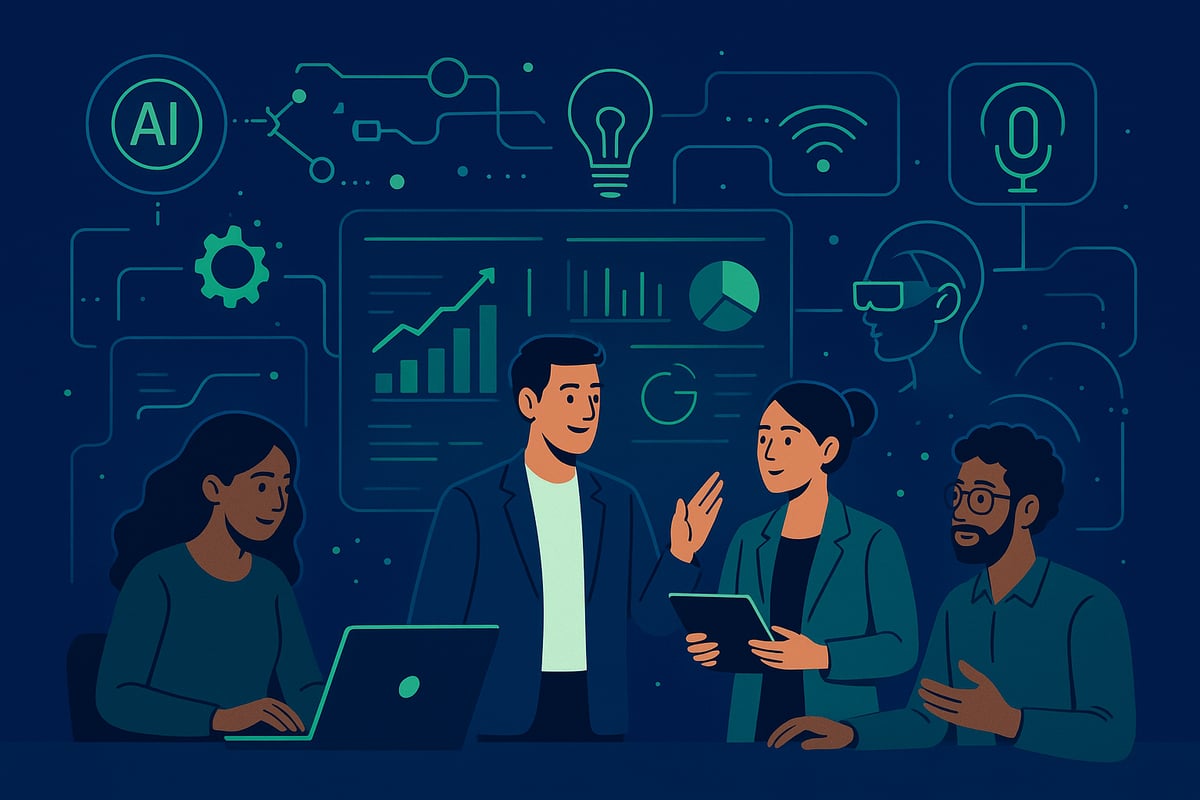
The rapid evolution of technology is shaping the future of online marketing marketing in 2026. Businesses that harness the latest tools gain a decisive edge. From artificial intelligence to augmented reality, these innovations are transforming how brands connect with audiences, automate campaigns, and protect data. Embracing these advancements is essential for any organisation looking to thrive in a digital-first world.
Artificial Intelligence in Marketing
Artificial intelligence is now central to online marketing marketing, driving personalisation, predictive analytics, and real-time engagement. AI-powered chatbots handle customer queries instantly, while machine learning algorithms analyse huge data sets to predict trends and behaviours. This allows marketers to tailor content and offers with unprecedented accuracy. In fact, 63% of marketers use AI for content recommendations, boosting relevance and conversion rates. As AI evolves, expect even deeper integration with marketing platforms, enabling smarter automation and more dynamic campaigns.
Marketing Automation Platforms
Marketing automation platforms have revolutionised online marketing marketing by streamlining repetitive tasks and ensuring consistent communication across channels. These platforms integrate with CRM systems, segment audiences, and trigger personalised emails or ads based on user actions. Automation not only saves time but also increases lead generation by 55%, according to HubSpot. Marketers can now build complex workflows that nurture prospects through the entire customer journey, all while maintaining a human touch in messaging.
Data Analytics and Attribution
Data analytics is the backbone of modern online marketing marketing, providing actionable insights and driving better decisions. Multi-touch attribution models help marketers understand which touchpoints contribute most to conversions, allowing for smarter budget allocation. Real-time dashboards and automated reports make it easy to monitor campaign performance and adjust strategies quickly. With 70% of marketers citing analytics as critical for decision-making, investing in robust analytics tools is no longer optional but essential for sustained growth.
Voice, Visual, and Augmented Reality Search
Voice, visual, and augmented reality (AR) search are transforming how consumers discover brands online. With half of all searches predicted to be voice-based by 2026, optimising content for voice assistants is vital. Visual search lets users find products instantly using images, while AR enables interactive product demos and virtual try-ons. These innovations create richer experiences and new opportunities for online marketing marketing. Brands that adapt to these search trends can capture audiences in more immersive, engaging ways.
Cybersecurity and Data Protection
As online marketing marketing relies increasingly on digital tools, cybersecurity and data protection have become top priorities. Marketers must comply with evolving regulations and implement robust safeguards to protect customer information. Consumers are more likely to engage with brands that demonstrate strong data protection practices. In fact, 68% of consumers are more likely to buy from brands that protect their data. Building trust through transparent and ethical data handling is now fundamental to successful digital marketing.
Measuring Success: Analytics, KPIs, and Continuous Improvement
In the fast-paced world of online marketing marketing, measuring success is more than just checking traffic numbers. To thrive in 2026, businesses need a robust system for analytics, clear KPIs, and a culture of continuous improvement. The right approach turns data into actionable insights, ensuring every campaign delivers measurable value.
Setting the Right KPIs
Key Performance Indicators (KPIs) are the heartbeat of online marketing marketing measurement. Choosing the right KPIs is essential for aligning marketing activities with business objectives. Common metrics include website traffic, engagement rates, conversion rates, customer acquisition cost (CAC), and customer lifetime value (CLV).
90% of high-performing marketers track ROI, demonstrating that data-driven decisions are crucial. Setting KPIs that reflect your goals ensures every online marketing marketing effort is focused and measurable. Review your KPIs regularly to stay on track and adapt to changing objectives.
Tools for Tracking and Reporting
Effective online marketing marketing relies on advanced tools to track and report performance. Popular platforms such as Google Analytics 4, SEMrush, and HubSpot offer real-time dashboards, detailed segmentation, and custom reporting features.
65% of UK marketers use Google Analytics, highlighting its importance for actionable insights. Social analytics tools add value by monitoring engagement and reach across multiple platforms. Selecting the right mix of tools empowers teams to monitor progress and react quickly to trends.
Attribution and ROI Analysis
Understanding which touchpoints drive results is essential for optimising online marketing marketing. Attribution models, such as last-click and multi-touch, help marketers allocate credit accurately. Multi-touch attribution can increase marketing efficiency by 30%, supporting smarter budget decisions.
Calculating and improving ROI is a top priority for every business. For a deeper dive, see Measuring ROI in digital marketing for practical strategies on tracking and enhancing return on investment. Regular ROI analysis ensures each online marketing marketing activity delivers maximum value.
A/B Testing and Experimentation
Continuous experimentation is a hallmark of successful online marketing marketing. A/B testing involves comparing two versions of an ad, landing page, or content piece to identify the most effective option. Businesses using A/B testing see 20% higher conversion rates, proving its value for ongoing optimisation.
Test variables like headlines, images, and calls to action. Use the results to refine campaigns and incrementally improve performance. Building a culture of experimentation keeps your online marketing marketing agile and competitive.
Learning from Data: Continuous Improvement
The journey to online marketing marketing excellence never ends. Use insights from analytics and testing to refine strategies, update content, and adapt to new trends. 72% of marketers update their strategies quarterly, reflecting the need for agility and responsiveness.
Continuous improvement is about learning from both successes and failures. Embrace a mindset of ongoing optimisation, and your online marketing marketing efforts will consistently deliver stronger results.
Future-Proofing Your Online Marketing: Trends and Predictions for 2026
As we approach 2026, investment in online marketing marketing continues to soar, with UK ad spend hit £42.6bn in 2024 driven by digital innovation. Staying ahead means embracing future-focused strategies that reflect evolving consumer expectations, regulatory shifts, and technological advancements.
The Rise of Privacy-First Marketing
Online marketing marketing in 2026 is shaped by privacy-first principles. Cookieless tracking is now standard, and brands increasingly rely on first-party data to build trust. Proactive consent management and transparent data practices are essential. Marketers must prioritise compliance and communicate data usage clearly to reassure consumers.
Key elements include:
- Implementing robust consent mechanisms
- Using first-party data for personalisation
- Ongoing GDPR compliance
A privacy-first approach not only protects your business but also strengthens customer loyalty.
Sustainability and Ethical Marketing
Sustainability is at the heart of online marketing marketing strategy in 2026. Consumers prefer brands that prioritise eco-friendly campaigns and ethical values. Marketers are expected to demonstrate social responsibility and minimise environmental impact throughout their campaigns.
To stay relevant:
- Emphasise transparency in sourcing and operations
- Highlight social initiatives in campaigns
- Adopt green digital practices
By aligning with ethical standards, brands foster deeper connections with values-driven audiences.
Hyper-Personalisation and Customer Experience
Hyper-personalisation defines the next phase of online marketing marketing. Dynamic content, tailored offers, and predictive engagement are now the norm. Marketers use AI and big data to deliver unique journeys for every customer, increasing satisfaction and conversion rates.
Best practices include:
- Segmenting audiences with precision
- Utilising AI for real-time content adjustments
- Predicting customer needs through analytics
Personalisation not only enhances user experience but also drives measurable business growth.
The Expansion of Social Commerce
Social commerce is transforming online marketing marketing by enabling consumers to shop directly within social platforms. Seamless integration with payment and fulfilment systems streamlines the buyer journey. Brands leverage influencer partnerships and interactive content to boost engagement and sales.
Consider these tactics:
- Optimise product catalogues for social platforms
- Use shoppable posts and live streams
- Collaborate with trusted influencers
With social commerce sales in the UK set to reach new heights, brands must adapt quickly to capitalise on these opportunities.
Adapting to New Technologies and Platforms
Online marketing marketing success in 2026 demands agility and a willingness to embrace emerging technologies. Early adoption of platforms like the metaverse, AR, and voice search can set brands apart. Teams must prioritise continuous learning and upskilling to stay ahead.
Strategic steps:
- Monitor tech trends and pilot innovative tools
- Invest in employee training programmes
- Evaluate ROI from new digital channels
Adapting swiftly ensures your marketing remains resilient and future-ready.
As you look to navigate the ever changing online marketing landscape in 2026, having a partner who truly understands the strategies, technologies, and trends that drive real growth can make all the difference. At OxD PR, we specialise in marketing solutions that blend smart SEO, impactful web design, and data driven campaigns tailored to your business goals. If you are ready to elevate your brand, boost your online visibility, and see measurable results, let us help you create a strategy that stands out. To discover how we can transform your online marketing, start with our Marketing services today.