SME Advertising Guide: Strategies for Success in 2026
In 2026, small and medium-sized enterprises face a rapidly shifting advertising environment, filled with both opportunity and intense competition. Success is no longer guaranteed by simply having a presence; sme advertising now demands agility, innovation, and a strategic approach.
This guide provides actionable strategies to help you build effective, measurable campaigns that fuel real business growth. Discover how to define your audience, craft compelling messages, select the best channels, optimise your budget, and track results.
Advertising is essential for SME survival and expansion in a digital-first world. Explore new trends, proven tactics, and insights designed to maximise your ROI and help you rise above the noise. Ready to put these strategies into action for 2026?
Understanding the 2026 SME Advertising Landscape
The landscape for sme advertising in 2026 is dynamic, marked by rapid digital transformation and changing business realities. SMEs must adapt quickly to new platforms and tools, as the shift from traditional to digital-first advertising accelerates. Increased access to advanced advertising technology is levelling the playing field, allowing smaller businesses to compete effectively. However, common challenges persist, such as limited budgets, in-house campaign management, and the need to stretch resources. According to B2B International, 90% of SMEs now use websites as a core advertising platform, yet advertising spend often remains under 2% of turnover. The rise of DIY advertising has reduced reliance on agencies, making agility and adaptability more important than ever for sme advertising success.
The Evolving Role of Advertising for SMEs
Sme advertising is undergoing a fundamental shift, moving away from traditional media towards digital-first strategies. This evolution is driven by the increasing accessibility of sophisticated advertising platforms and tools. SMEs are now able to target audiences with precision and manage campaigns in-house, despite having smaller teams and tighter budgets. Data reveals that 90% of SMEs leverage their websites for advertising, highlighting the central role of digital channels. Typically, advertising spend for SMEs is modest, often below 2% of turnover. The trend towards DIY advertising means less reliance on agencies, making agility essential. SMEs that adapt quickly can respond to market changes and seize new opportunities, ensuring their advertising remains effective and relevant.
Key Trends and Technologies Shaping SME Advertising
Major trends are reshaping sme advertising in 2026. Programmatic and AI-driven ad buying are becoming more accessible, enabling SMEs to automate and optimise campaigns for better results. Personalisation and hyper-targeting are now standard, allowing businesses to reach the right people with tailored messages. Video and multimedia content continue to dominate engagement, while automation and analytics make it easier to track and improve performance. Many SMEs are integrating digital and traditional channels for a more holistic approach. As highlighted in Marketing Trends Every UK SME Should Watch in 2026, trends like human-led automation and authentic brand storytelling are key. Affordable martech solutions help SMEs create smarter, more impactful campaigns.
Regulatory and Market Considerations in 2026
Regulation is becoming a central concern in sme advertising, especially as data privacy laws like GDPR and ePrivacy evolve. SMEs must prioritise ethical advertising and transparency to build trust with consumers and business buyers. Behavioural shifts post-pandemic have changed how buyers engage with advertising, requiring SMEs to be more responsive and adaptive. Economic uncertainty is influencing advertising spend, pushing businesses to seek measurable returns. Sustainability and social responsibility are increasingly important, with audiences expecting brands to demonstrate genuine values through their messaging. SMEs that stay informed and proactive about compliance and market changes will be better positioned to succeed in the competitive advertising landscape.
Opportunities and Challenges Ahead
The future of sme advertising presents both significant opportunities and notable challenges. Digital tools offer cost-effective ways to reach global markets and target niche audiences. However, SMEs must continually keep pace with rapid changes in advertising platforms and technologies. Measuring effectiveness and demonstrating ROI can be difficult without robust analytics. Standing out against larger competitors requires creative thinking and strategic execution. Ongoing education and upskilling are vital for SME marketers to stay ahead. Many SMEs are already finding success by embracing new advertising realities, adapting quickly, and leveraging innovative approaches to connect with their audiences and achieve measurable growth.
Step 1: Defining and Understanding Your Target Audience
Knowing your audience is the foundation of effective sme advertising. In 2026, the most successful campaigns start with a deep understanding of who you want to reach and what motivates them. This step-by-step approach ensures your message is relevant, timely, and targeted.

Building and Maintaining a Robust Customer Database
A reliable customer database is the heartbeat of sme advertising. Accurate, up-to-date records allow you to target the right individuals and avoid wasted spend. For B2B SMEs, remember your “decision making unit” often includes several stakeholders, each with unique needs.
Staff turnover means contact details can quickly become outdated. Make regular updates a habit. Outdated information leads to missed opportunities and inefficient campaigns. Many SMEs overlook database management, impacting sme advertising effectiveness and return on investment.
To maintain a high-quality database:
- Schedule quarterly audits.
- Assign a dedicated team member for updates.
- Use automation tools to flag old or invalid contacts.
Prioritising data hygiene ensures your sme advertising always reaches the right audience.
Audience Segmentation and Persona Development
Segmentation is essential in sme advertising. By dividing your audience by industry, company size, role, or specific needs, you can deliver messages that resonate. Building detailed buyer personas helps you understand what drives each group.
Aim for a balance between broad reach and targeted messaging. Too wide, and your message loses impact. Too narrow, and you risk missing growth opportunities. Avoid misclassifying contacts, as this can lead to irrelevant offers.
Example personas might include:
- Price-sensitive buyers
- Quality-focused decision-makers
- Technical evaluators
Well-crafted segmentation makes your sme advertising more precise and effective.
Identifying Audience Pain Points and Motivations
To make sme advertising stand out, you must uncover what truly matters to your audience. Use surveys, interviews, and analytics to learn what drives their decisions. In many SMEs, buyers value price, while production managers might focus on reliability or service.
Common motivators include:
- Competitive pricing
- Consistent quality
- Fast, responsive service
- Trust and reliability
Tailor your offers to address these pain points. The more specific your solutions, the more your sme advertising will connect and convert.
Tools and Techniques for Audience Research
Effective sme advertising relies on robust research tools. CRM systems and marketing automation platforms make data collection and analysis easier, while social listening can reveal what your audience is discussing online.
Consider these techniques:
- Use CRM to track interactions and preferences.
- Conduct regular surveys or focus groups.
- Analyse competitors to spot market gaps.
- Tap into industry reports for broader trends.
For more guidance, explore Digital marketing insights for SMEs, which covers the latest strategies and tools for audience research.
Keeping Your Audience Profile Current
The sme advertising landscape changes fast, so keeping your audience data fresh is vital. Schedule regular database audits and assign clear responsibility for updates. Integrate insights from sales and customer service to capture new trends or changes in buyer behaviour.
SMEs that update their databases at least quarterly see better campaign ROI and more relevant engagement. By staying proactive, you ensure your sme advertising remains accurate, targeted, and effective.
Step 2: Crafting Compelling Advertising Messages
Creating a standout message is the heart of effective sme advertising. Without a clear, compelling idea, even the best campaigns can fall flat. This step guides you through building messages that connect, persuade, and drive results for your business.

The Power of the BIG IDEA in SME Advertising
Every successful sme advertising campaign starts with a strong, memorable core message. This is often called the BIG IDEA, a concept championed by David Ogilvy. The BIG IDEA should be simple, unique, and instantly recognisable.
Avoid overwhelming your audience with too many details. Instead, focus on one main benefit that sets your offer apart. For example, Rolls Royce’s classic ad, "At 60 miles an hour the loudest noise in this new Rolls-Royce comes from the electric clock," demonstrates how a single message can capture attention and imagination.
A well-crafted BIG IDEA helps your business stand out in a crowded marketplace and ensures your advertising is remembered.
Aligning Messages with Audience Needs
For sme advertising to resonate, your message must reflect what your audience truly values. Decision-makers, whether buyers or technical staff, have different priorities. Buyers may seek cost savings, while technical staff focus on reliability or performance.
To create relevance, map your benefits to these priorities. Avoid generic claims like "best quality" or "great service." Instead, be specific: "Reduce downtime by 30% with our automated solution," or "Save 20% on annual supply costs."
By tailoring your messaging, you build trust and show you understand your market’s real challenges and goals.
Creative Approaches on a Limited Budget
Resourceful creativity is essential in sme advertising, especially when budgets are tight. Storytelling can make your message more relatable, while visual content such as infographics or short videos boosts engagement and retention.
Leverage affordable DIY tools for design and video creation. Many SMEs achieve impressive results with free or low-cost platforms that offer professional templates and easy editing.
Consider these approaches:
- Share customer stories or testimonials.
- Use humour or emotion to make your message memorable.
- Repurpose content across channels for wider reach.
Even without a big budget, you can create advertising that captures attention and delivers results.
Testing and Refining Your Message
Continuous improvement is vital for effective sme advertising. Start by A/B testing different headlines, visuals, or offers to discover what resonates most. Gather feedback from your audience, whether through surveys or direct customer interactions.
Track campaign performance and iterate based on real data. For example, SMEs often boost conversions by refining their ad copy or visuals in response to analytics. For more guidance on improving your results, explore Maximising ROI in digital marketing.
By making regular adjustments, you ensure your advertising remains relevant, persuasive, and profitable.
Step 3: Choosing the Right Advertising Channels
Selecting the right advertising channels is fundamental to successful sme advertising. In 2026, the sheer number of options can be overwhelming, but understanding each channel’s strengths and limitations will help you make informed decisions. The right mix not only maximises your budget but also ensures your message reaches the audience that matters most.
Evaluating Digital vs. Traditional Channels for SMEs
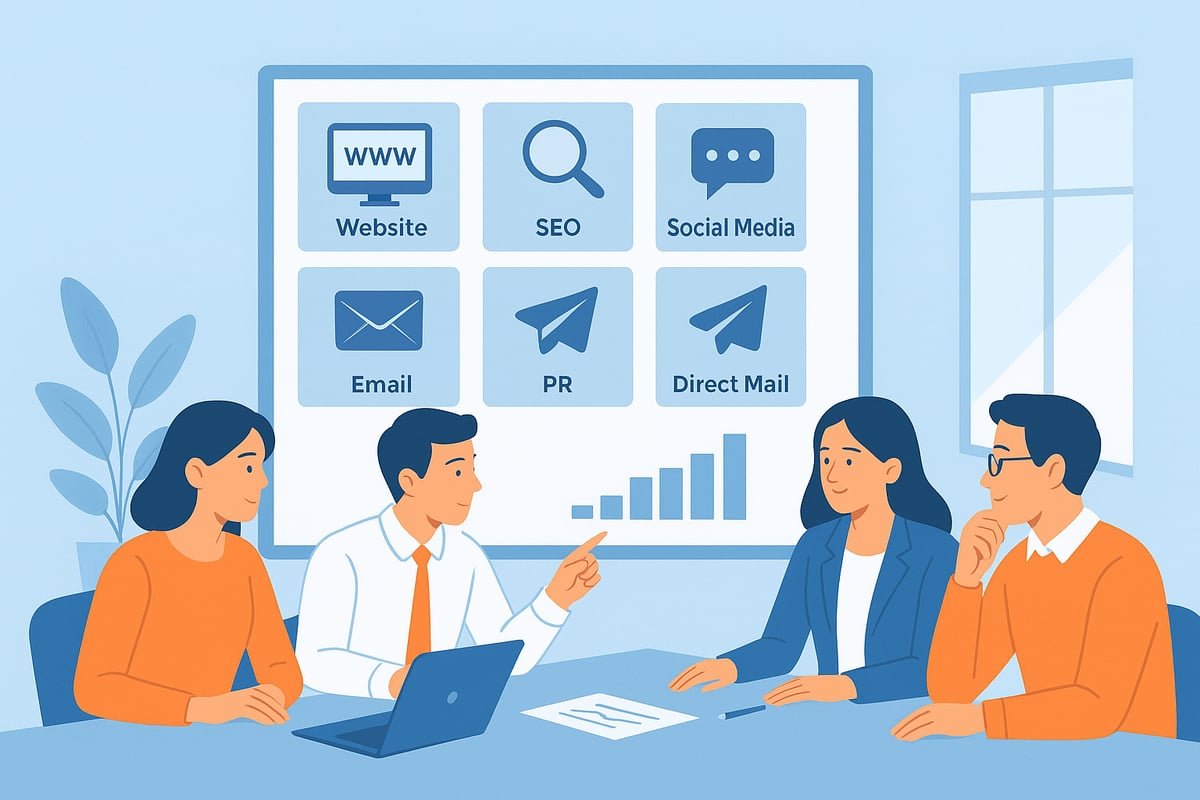
Sme advertising now spans a blend of digital and traditional platforms. Digital channels include websites, social media, and search engines, while traditional options cover PR, direct mail, and print.
- Digital channels: Offer cost-effective targeting, real-time analytics, and scalability.
- Traditional channels: Provide tangible touchpoints and local reach, but often at a higher cost per impression.
A recent study found that 90% of SMEs use websites, and 60% rely on PR and direct mail. With limited budgets, most focus on digital and PR rather than expensive mass media. When planning sme advertising, assess your goals, audience preferences, and available resources to find the right balance.
Maximising Website and SEO Impact
Your website is the cornerstone of sme advertising. It should be mobile-friendly, fast-loading, and feature clear calls to action. Effective SEO strategies drive organic traffic and increase visibility, ensuring potential customers find you before competitors.
Optimised landing pages can significantly boost lead generation. For SMEs seeking to enhance their search presence, Comprehensive SEO services for SMEs provide adaptable solutions and actionable tactics. Regularly review analytics to refine your approach and stay ahead in the competitive sme advertising landscape.
Leveraging Social Media and Paid Advertising
Social media platforms such as LinkedIn, Facebook, and Instagram are essential for sme advertising. Choose platforms where your audience is most active, then tailor content for each channel. Setting realistic budgets and audience targeting helps maximise return on investment.
Paid social campaigns allow for niche targeting, while organic posts build community and brand loyalty. Many SMEs find success combining both approaches. Monitor campaign metrics closely and adjust tactics to ensure your sme advertising delivers measurable results.
Harnessing PR, Direct Mail, and Email Marketing
PR, direct mail, and email remain powerful components of sme advertising. A well-crafted press release can generate valuable media coverage and credibility. Direct mail offers a tactile, memorable way to reach decision-makers, especially in local B2B markets.
Email marketing excels at nurturing leads and retaining customers. Combining these channels often leads to higher engagement. Consistency and personalisation are key, so segment your lists and tailor messages for maximum impact in your sme advertising efforts.
Integrating Channels for Maximum Effectiveness
Integrated campaigns create a seamless experience across all touchpoints, amplifying the impact of sme advertising. Coordinate messaging and timing across channels to reinforce your core message.
- Use retargeting to re-engage visitors who interacted with your website or ads.
- Cross-channel analytics help track performance and optimise spend.
- Omnichannel strategies often result in higher conversion rates and stronger brand recall.
The most successful SMEs view sme advertising as an interconnected ecosystem, not a series of isolated tactics. Regularly review results and fine-tune your approach to stay competitive.
Step 4: Budgeting and Resource Allocation for SME Advertising
Effective budgeting is at the heart of successful sme advertising. SMEs must balance ambition with practicality, ensuring that every pound invested supports business growth. Allocating resources wisely means understanding costs, evaluating internal capabilities, and making data-driven decisions about where to spend and save. In this section, we break down how to set, allocate, and maximise your advertising budget for 2026.
Setting Realistic Advertising Budgets
For sme advertising to deliver results, start by defining a clear, realistic budget. On average, SMEs spend under 2% of turnover on advertising. This can range from £2,000 for micro-businesses to over £80,000 for larger SMEs, depending on industry and competition.
Key factors to consider include:
- Business goals and growth targets
- Competitive landscape
- Previous campaign performance
- Specific audience reach objectives
Referencing the 2025 Small Business Advertising Trends Report can help benchmark your spend and identify emerging best practices. Remember, flexibility is crucial as market conditions shift.
In-House vs. Agency: Making the Right Choice
One of the biggest decisions in sme advertising is whether to manage campaigns internally or work with an agency. Two-thirds of SMEs now run campaigns in-house, especially those with limited budgets or digital expertise.
Consider these pros and cons:
- In-house: Greater control, cost savings, direct alignment with business needs, but can stretch resources thin.
- Agency: Access to specialist skills, creative insight, and advanced tools, though often with higher fees and less day-to-day visibility.
For most SMEs, a blended approach works best. Handle core activities internally, but bring in agencies for complex creative or technical projects as your needs grow.
Prioritising Spend Across Channels
Channel selection is central to sme advertising effectiveness. Focus your budget on platforms that consistently deliver the highest ROI. Digital channels, such as websites, SEO, and social media, often outperform traditional media in cost-effectiveness for SMEs.
A simple comparison:
| Channel | Cost | Typical ROI | Common SME Use |
|---|---|---|---|
| Website/SEO | Low | High | Universal |
| Social Media | Medium | Medium-High | Frequent |
| PR/Direct Mail | Medium | Variable | Selective |
| Print/TV | High | Low | Rare |
For more insights, explore SMB Advertising and Marketing Statistics to see current channel trends and ROI benchmarks. Test and scale campaigns, reallocating spend as you identify what works.
Maximising Efficiency with Limited Resources
SMEs often face resource constraints in sme advertising. Maximising efficiency is essential for staying competitive. Leverage free and low-cost digital tools for campaign management, scheduling, and analytics.
Practical steps include:
- Automate repetitive tasks with marketing software
- Outsource specialised tasks when necessary
- Train staff in digital advertising basics
- Regularly review and optimise campaigns based on data
By focusing on efficiency, SMEs can achieve strong results even with modest budgets, ensuring that every advertising pound goes further.
Step 5: Measuring, Optimising, and Scaling Your Advertising Efforts
Unlocking the full potential of your sme advertising means treating measurement and optimisation as an ongoing discipline, not a one-off task. This step ensures every pound you invest delivers measurable returns and supports your long-term business growth.
Setting Clear Goals and KPIs
Start with concrete goals for your sme advertising. Define what success looks like, whether it is boosting website traffic, generating qualified leads, or increasing sales. Align each advertising campaign's objectives to your broader business targets.
Use the SMART framework for clarity:
Increase website enquiries by 30% within three months via paid search campaigns.
Common KPIs to track include:
- Website visits and session duration
- Conversion rate and cost per acquisition
- Lead quality and sales pipeline growth
Clear targets keep your team focused and make it easier to benchmark progress.
Tracking and Analysing Campaign Performance
Effective sme advertising relies on robust tracking and analytics. Utilise tools such as Google Analytics, CRM dashboards, and ad platform insights to monitor:
- Click-through rates (CTR)
- Cost per click (CPC)
- Return on investment (ROI)
Comparing your results to industry benchmarks helps you spot strengths and weaknesses. For a broader view of digital advertising trends, consult resources like the Global Entertainment & Media Outlook 2022–2026, which highlights the shift towards digital channels and informs your performance expectations.
Regular reporting allows you to identify underperforming channels or creatives and make data-driven decisions.
Continuous Optimisation for Better Results
Optimisation is the heartbeat of successful sme advertising. Implement A/B testing to refine headlines, images, and calls to action. Small tweaks, like adjusting ad copy or swapping out visuals, can lead to significant improvements in engagement and conversions.
Build a habit of reviewing results weekly. Shift budgets towards high-performing channels and pause campaigns that underdeliver. Encourage a culture of experimentation, learning from both wins and setbacks.
A summary table for optimisation tactics:
| Tactic | Expected Outcome |
|---|---|
| A/B testing | Higher conversion rates |
| Budget reallocation | Improved ROI |
| Creative refresh | Increased engagement |
Scaling Successful Advertising Campaigns
Once you discover what works in sme advertising, scale those efforts for greater impact. Replicate high-performing campaigns in new regions or market segments. Increase investment in proven channels to maximise reach.
Plan for sustainable growth by documenting your processes and results. Use automation tools to streamline campaign management as you expand. If social media is a core channel, consider exploring advanced social media marketing strategies to reach new audiences efficiently.
Continual scaling, backed by data and optimised processes, ensures your advertising fuels ongoing business development.
As you look ahead to making your SME’s advertising truly effective in 2026, it’s clear that success comes from combining smart strategy, creative messaging, and the right mix of digital channels. Whether you’re refining your website, focusing on SEO, or integrating campaigns across platforms, getting expert support can make all the difference. If you’re ready to take your business growth to the next level and want a tailored approach that delivers measurable results, let’s have a conversation. You can get started today by simply requesting a Get a Quote and see how OxD PR can help you stand out.