Web Marketing Digital: Strategies for Modern Growth

The digital landscape has fundamentally transformed how businesses connect with their audiences, making web marketing digital an indispensable component of commercial success. As traditional marketing channels continue to evolve, companies must embrace comprehensive digital strategies that combine technical expertise, creative content, and data-driven decision-making. Understanding the core principles and emerging trends in web marketing digital enables businesses to build resilient online presences that generate sustainable growth.
Understanding the Web Marketing Digital Ecosystem
The modern web marketing digital environment encompasses multiple interconnected channels and technologies that work together to achieve business objectives. Unlike isolated marketing tactics of the past, today's successful strategies integrate various platforms to create cohesive customer experiences.
Digital marketing systems have become increasingly sophisticated, allowing businesses to manage content distribution across web, mobile, and social channels from centralised platforms. This evolution reflects the complex nature of consumer behaviour in 2026, where potential customers interact with brands across numerous touchpoints before making purchasing decisions.
Core components of effective web marketing digital strategies include:
- Search engine optimisation and technical website performance
- Content marketing that addresses customer pain points
- Paid advertising campaigns across search and social platforms
- Email marketing automation and personalisation
- Social media engagement and community building
- Analytics and conversion rate optimisation
The integration of these elements creates a multiplier effect, where each channel amplifies the others. For instance, high-quality content improves SEO performance whilst simultaneously providing material for social media distribution and email campaigns.

Strategic Planning for Web Marketing Digital Success
Developing a robust web marketing digital strategy requires methodical planning that aligns with broader business goals. Without clear objectives and measurable targets, digital marketing efforts become fragmented and fail to deliver meaningful returns on investment.
Setting Measurable Objectives
Begin by defining specific, quantifiable goals that support your organisation's growth trajectory. Rather than vague aspirations like "increase online presence," establish concrete targets such as achieving 40% year-on-year organic traffic growth or generating 150 qualified leads monthly through digital channels.
The framework for effective objective-setting should consider both short-term wins and long-term positioning. Quarterly milestones provide momentum whilst annual goals ensure strategic consistency.
| Objective Type | Example Metric | Measurement Frequency |
|---|---|---|
| Traffic Growth | 35% increase in organic sessions | Monthly |
| Lead Generation | 200 marketing-qualified leads | Monthly |
| Conversion Rate | 4.5% landing page conversion | Weekly |
| Brand Awareness | 50,000 social media impressions | Weekly |
| Customer Retention | 25% email engagement rate | Fortnightly |
Audience Research and Segmentation
Understanding your target audience forms the foundation of effective web marketing digital campaigns. Comprehensive research reveals not only demographic information but also psychographic insights that inform messaging, channel selection, and content creation.
Modern audience analysis extends beyond basic demographics to include behavioural patterns, content consumption habits, and decision-making triggers. Tools like Google Analytics 4 provide sophisticated audience segmentation capabilities that enable personalised marketing approaches.
Businesses must identify multiple audience segments, each requiring tailored strategies. A B2B software company might segment audiences into technical decision-makers, financial approvers, and end-users, crafting distinct messaging for each group whilst maintaining brand consistency.
Content Strategy as the Core of Web Marketing Digital
Content remains the cornerstone of successful web marketing digital initiatives, serving as the primary vehicle for communicating value propositions and establishing authority. However, the content landscape has evolved considerably, demanding higher quality, greater relevance, and more diverse formats than ever before.
Effective content strategies balance evergreen resources that provide lasting value with timely pieces that capitalise on current trends and conversations. This combination ensures consistent organic traffic whilst maintaining engagement with existing audiences.
Content Types That Drive Results
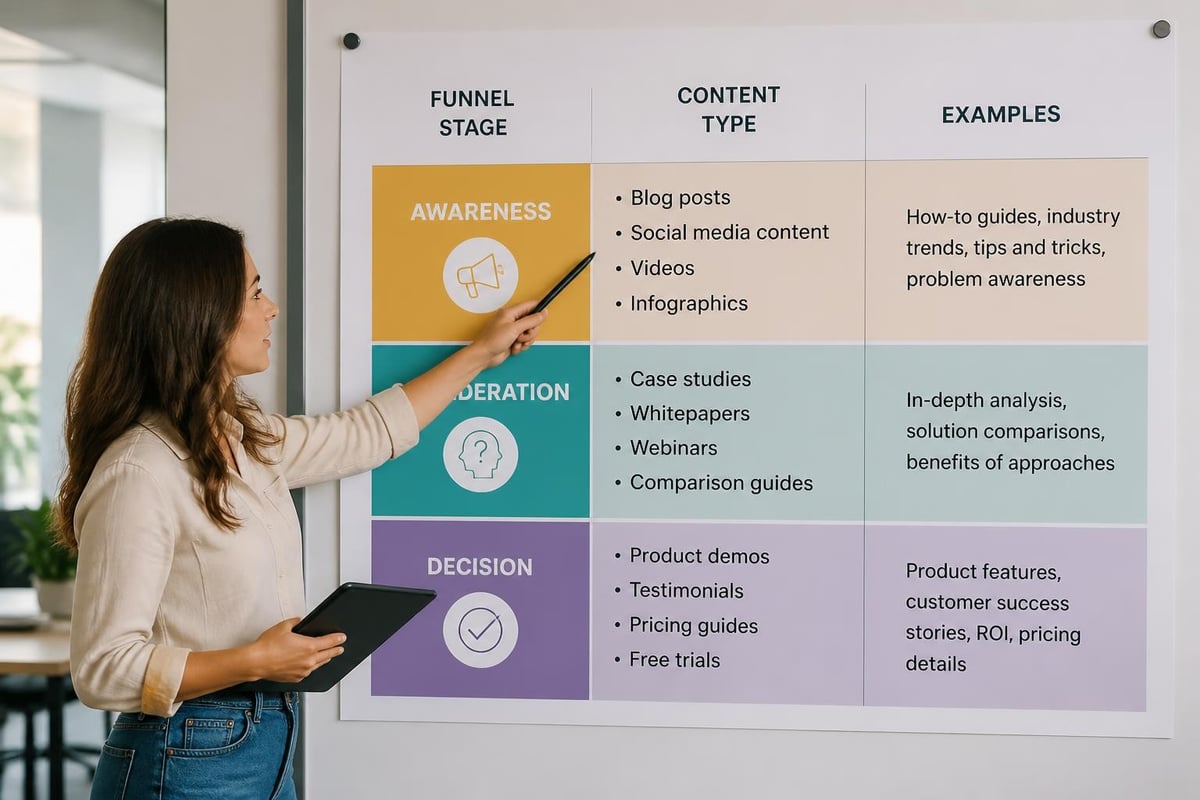
Different content formats serve distinct purposes within the web marketing digital funnel. Top-of-funnel awareness content typically takes the form of educational blog posts, infographics, and social media updates that address broad industry topics. These resources attract new visitors whilst demonstrating expertise.
Middle-of-funnel consideration content includes detailed guides, comparison articles, and case studies that help prospects evaluate solutions. This material directly influences purchasing decisions by providing the information needed to justify investments.
Bottom-of-funnel conversion content encompasses product demonstrations, client testimonials, and consultative resources that remove final objections and facilitate decision-making.
High-performing content formats in 2026:
- Long-form comprehensive guides (2,000+ words)
- Video tutorials and explainer content
- Interactive tools and calculators
- Original research and data visualisations
- Podcast episodes addressing industry challenges
- Webinars featuring subject matter experts
The Content ROI Center offers valuable insights into leveraging content strategically to drive business opportunities whilst measuring genuine impact on revenue generation.
Search Engine Optimisation in Web Marketing Digital
SEO remains fundamental to web marketing digital success, driving sustainable organic traffic without the ongoing costs associated with paid advertising. However, search optimisation has grown increasingly complex, requiring technical expertise alongside content quality.
Modern SEO encompasses three primary pillars: technical optimisation, on-page content, and off-page authority building. Neglecting any single element compromises overall performance, making holistic approaches essential.
Technical SEO Foundations
Technical optimisation ensures search engines can efficiently crawl, index, and understand your website content. Core Web Vitals have become ranking factors, making page speed, interactivity, and visual stability crucial performance metrics.
Mobile-first indexing means websites must deliver exceptional experiences on smartphones and tablets. Responsive design is no longer optional but fundamental to search visibility and user satisfaction.
Structured data markup helps search engines understand content context, enabling rich results that improve click-through rates. Implementing schema for articles, products, reviews, and local businesses provides competitive advantages in search results.
Resources like Search Engine Journal’s digital marketing section provide current best practices for technical optimisation alongside emerging trends in search technology.
Content Optimisation Strategies
On-page optimisation balances keyword targeting with natural, user-focused writing. Keyword stuffing has long been counterproductive; instead, semantic relevance and comprehensive topic coverage determine ranking potential.
Effective keyword research identifies not only primary target terms but also related concepts and questions that searchers ask. Tools like Google's Keyword Planner and third-party platforms reveal search intent, enabling content that directly addresses user needs.
For businesses seeking to establish robust online foundations, exploring comprehensive solutions like OxD PR’s website development services can accelerate implementation of SEO best practices from the ground up.
Paid Advertising Within Web Marketing Digital Frameworks
Whilst organic strategies build long-term value, paid advertising delivers immediate visibility and enables precise targeting. The most effective web marketing digital approaches combine both, using paid campaigns to amplify content whilst SEO efforts mature.
Pay-per-click advertising across search engines and social platforms offers unparalleled targeting capabilities. Advertisers can reach specific demographics, interests, behaviours, and even custom audiences based on existing customer data.
| Platform | Best For | Average CPC (UK) | Conversion Potential |
|---|---|---|---|
| Google Search | High-intent queries | £1.80-£4.50 | Excellent |
| Facebook/Instagram | Visual products, B2C | £0.60-£2.20 | Good |
| B2B services | £4.50-£8.00 | Very Good | |
| YouTube | Brand awareness | £0.15-£0.45 | Moderate |
Campaign Structure and Optimisation
Successful paid campaigns require meticulous structure, with tightly themed ad groups that match search intent or audience characteristics. Single keyword ad groups (SKAGs) in search campaigns enable precise message matching, improving quality scores and reducing costs.
Continuous testing forms the backbone of paid advertising optimisation. A/B testing ad copy, landing pages, and targeting parameters reveals performance drivers, enabling data-informed refinements that improve ROI over time.
Retargeting campaigns capture prospects who previously engaged with your content but didn't convert. These audiences demonstrate higher intent and typically convert at 2-3 times the rate of cold traffic, making them highly cost-effective.
Analytics and Performance Measurement
Web marketing digital success depends on rigorous measurement and analysis. Without comprehensive tracking, businesses cannot identify which strategies drive results or where to allocate resources for maximum impact.
Modern analytics platforms provide granular insights into user behaviour, acquisition channels, conversion paths, and revenue attribution. Google Analytics 4 represents a significant evolution, focusing on event-based tracking and cross-platform user journeys rather than traditional session-based metrics.
Essential metrics for web marketing digital performance:
- Organic search traffic and keyword rankings
- Conversion rates by channel and campaign
- Customer acquisition cost (CAC)
- Customer lifetime value (CLV)
- Return on ad spend (ROAS)
- Email engagement and automation performance
- Social media reach and engagement rates
Beyond platform-specific analytics, businesses must implement comprehensive attribution modelling that accounts for multi-touch customer journeys. First-click, last-click, and linear attribution models each offer different perspectives on channel effectiveness.
Regular reporting cadences ensure stakeholders remain informed whilst enabling quick responses to performance shifts. Weekly operational reviews identify tactical adjustments, whilst monthly strategic analyses evaluate broader trends and opportunities.

Social Media Integration in Web Marketing Digital
Social platforms have evolved from purely engagement channels to comprehensive business tools that support customer service, sales, and community building. Effective web marketing digital strategies leverage social media's unique capabilities whilst maintaining consistent brand messaging across platforms.
Platform selection should align with audience preferences and content strengths. LinkedIn dominates B2B professional networking, Instagram excels for visual brands, whilst Twitter facilitates real-time conversations and thought leadership.
Content Adaptation Across Platforms
Each social platform demands unique content approaches. Instagram prioritises high-quality visuals and stories, LinkedIn values professional insights and industry commentary, whilst TikTok rewards creative, entertaining content that feels native to the platform.
Repurposing content across channels maximises efficiency, but direct cross-posting often underperforms. Instead, adapt core messages to suit each platform's format and audience expectations. A comprehensive blog post might become a LinkedIn article, Instagram carousel, Twitter thread, and YouTube video, each optimised for its environment.
Social listening tools monitor brand mentions, competitor activities, and industry conversations, providing insights that inform content strategy and customer service responses. Proactive engagement builds community whilst demonstrating responsiveness that enhances brand perception.
Email Marketing Automation
Email remains one of the highest-ROI channels in web marketing digital, delivering an average return of £42 for every £1 spent. However, generic batch-and-blast approaches no longer suffice; modern email marketing demands segmentation, personalisation, and automation.
Marketing automation platforms enable sophisticated workflows that respond to user behaviour. Welcome sequences nurture new subscribers, abandoned cart emails recover lost sales, and re-engagement campaigns revive dormant contacts.
Segmentation based on demographics, behaviour, and engagement levels ensures recipients receive relevant content. A subscriber who frequently engages with SEO content should receive different messages than someone interested in social media marketing, even if both fall within your target audience.
Effective email campaign types:
- Welcome series for new subscribers
- Educational nurture sequences
- Promotional campaigns for product launches
- Customer success and onboarding flows
- Re-engagement campaigns for inactive contacts
- Post-purchase follow-up and upsell sequences
Personalisation extends beyond using recipient names to include dynamic content blocks that change based on user attributes or behaviour. Product recommendations, location-specific offers, and content suggestions based on browsing history all improve relevance and conversion rates.
Emerging Trends Shaping Web Marketing Digital
The digital marketing landscape continuously evolves, with technological advances and changing consumer expectations driving innovation. Staying ahead of emerging trends provides competitive advantages whilst future-proofing marketing strategies.
Artificial intelligence and machine learning increasingly influence web marketing digital practices. Predictive analytics anticipate customer needs, chatbots provide instant support, and AI-powered content tools assist with ideation and optimisation. However, human creativity and strategic thinking remain irreplaceable.
Voice search optimisation grows in importance as smart speakers and voice assistants become ubiquitous. Conversational keyword targeting and featured snippet optimisation help capture this expanding search segment.
Privacy regulations like GDPR and evolving cookie policies necessitate first-party data strategies. Building owned audiences through email lists, customer databases, and logged-in user experiences reduces reliance on third-party tracking whilst strengthening customer relationships.
Video content consumption continues its upward trajectory, with short-form vertical video particularly resonating with younger demographics. Platforms like TikTok, Instagram Reels, and YouTube Shorts demand consideration in comprehensive web marketing digital strategies.
For businesses looking to stay current with industry developments, Search Engine Watch provides regular updates on search marketing trends and technological innovations that impact digital strategies.
Local SEO for Location-Based Businesses
Businesses serving specific geographic areas must prioritise local search optimisation within their web marketing digital frameworks. Local SEO drives foot traffic, phone calls, and location-specific conversions through enhanced visibility in geographically relevant searches.
Google Business Profile optimisation forms the foundation of local search success. Complete, accurate profiles with regular posts, reviews, and photos significantly outperform neglected listings. Encouraging satisfied customers to leave reviews builds social proof whilst improving local search rankings.
Local citations across directories, industry-specific platforms, and review sites reinforce geographic relevance and business legitimacy. Consistency in NAP (Name, Address, Phone) information across all citations prevents confusion and strengthens local signals.
Location-specific content targeting local keywords and addressing community-relevant topics demonstrates genuine connection to the areas served. For businesses operating in multiple locations, dedicated pages for each service area prevent keyword cannibalisation whilst maximising local visibility. Companies expanding into new territories, such as those exploring opportunities in Birmingham, benefit from location-specific content strategies that establish local relevance.
Similarly, service businesses might find value in partnering with complementary local services like Lets move london to expand their network and visibility within specific geographic markets.
Conversion Rate Optimisation Principles
Driving traffic represents only half the web marketing digital equation; converting visitors into customers determines actual business impact. Conversion rate optimisation (CRO) systematically improves the percentage of visitors who complete desired actions.
Landing page optimisation focuses on elements that influence decision-making: compelling headlines, clear value propositions, persuasive copy, social proof, and prominent calls-to-action. Each element must work harmoniously to guide visitors towards conversion.
A/B Testing Methodology
Rigorous testing reveals which design, copy, and structural elements drive conversions. A/B tests compare two variants, isolating single variables to determine their impact. Testing headlines, button colours, form lengths, and page layouts provides empirical evidence for optimisation decisions.
Statistical significance ensures test results reflect genuine performance differences rather than random variance. Premature test conclusions based on insufficient data lead to poor decisions that harm conversion rates.
Multivariate testing examines multiple elements simultaneously, revealing interaction effects between page components. Whilst more complex, this approach can uncover optimisation opportunities that sequential A/B testing might miss.
Heat mapping and session recording tools visualise user behaviour, revealing where visitors click, how far they scroll, and where they abandon pages. These insights inform hypotheses for subsequent testing and optimisation efforts.
For comprehensive perspectives on digital marketing effectiveness, academic research like this paper on digital marketing fairness provides critical analysis of industry practices and proposes more equitable approaches.
Integration and Consistency Across Channels
Siloed marketing channels create disjointed customer experiences that undermine brand perception and conversion potential. Effective web marketing digital strategies ensure consistent messaging, visual identity, and customer experiences across all touchpoints.
Cross-channel campaigns amplify messages through coordinated efforts across search, social, email, and display advertising. A product launch might include SEO-optimised content, paid search campaigns, social media promotion, email announcements, and retargeting ads, all reinforcing the same core message.
Marketing technology stacks must integrate seamlessly, enabling data flow between platforms. CRM systems, email platforms, analytics tools, and advertising accounts should share information, creating unified customer views that inform personalisation and targeting.
Brand guidelines ensure visual and tonal consistency across channels, building recognition and trust. Whilst each platform may require format adaptations, core brand elements like colour schemes, typography, and messaging frameworks should remain consistent.
Resources like The Digital Codex offer comprehensive guides spanning multiple digital marketing disciplines, providing frameworks for integrated strategy development.
Mastering web marketing digital requires continuous learning, rigorous testing, and strategic integration across multiple channels and technologies. By implementing comprehensive strategies that combine SEO, content marketing, paid advertising, social media, and email campaigns, businesses position themselves for sustainable growth in increasingly competitive digital markets. OxD PR brings expertise across all these disciplines, helping businesses develop and execute integrated digital strategies that drive measurable results and long-term success.