Ad Agency Strategy Guide: Mastering Success in 2026
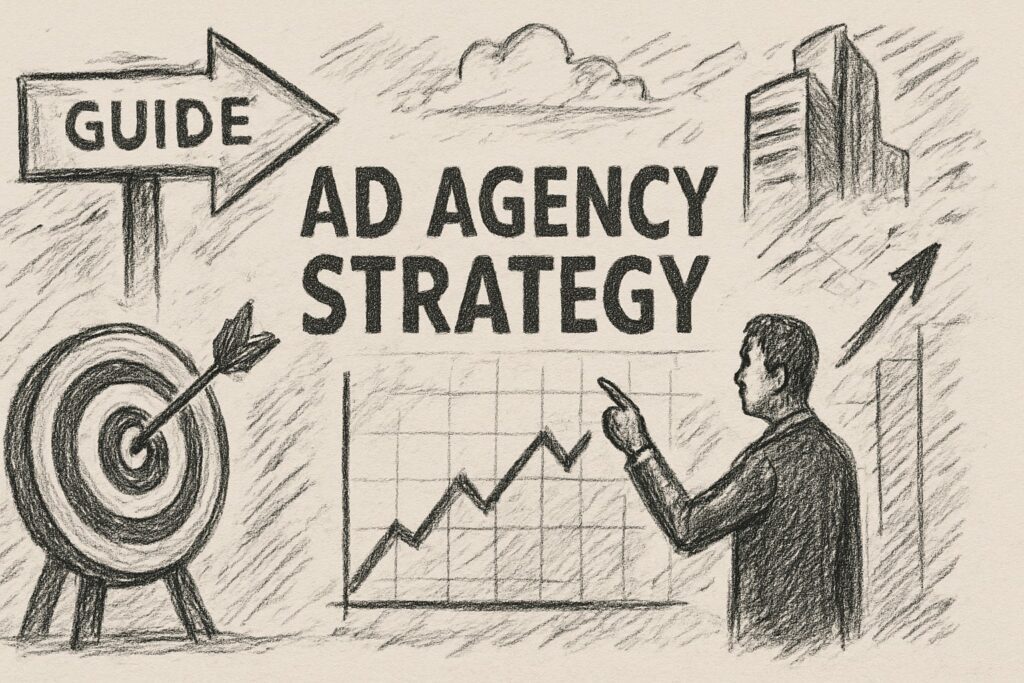
The advertising agency world is transforming rapidly as we approach 2026. Agencies face a whirlwind of new technologies, shifting client expectations, and fierce competition. Every year, the stakes get higher, and the rules of success evolve.
Clients now demand more complex solutions, while the number of channels multiplies. Adapting to this environment is no longer optional. To stay ahead, agencies must rethink their approach and embrace innovation.
This guide delivers actionable insights and proven, data-driven recommendations. Discover future-proof frameworks designed to help you not only survive but thrive. Explore essential changes in agency positioning, team structure, channel orchestration, AI integration, data-driven personalisation, and real-world success stories. Your journey to mastering ad agency strategy in 2026 starts here.
The New Agency Landscape: Trends and Challenges for 2026
The ad agency strategy landscape is transforming rapidly as 2026 approaches. Agencies are navigating complex client needs, technological leaps, and evolving channels. Success requires a proactive approach, continuous learning, and a willingness to reinvent traditional models.
Evolving Client Expectations and Industry Dynamics
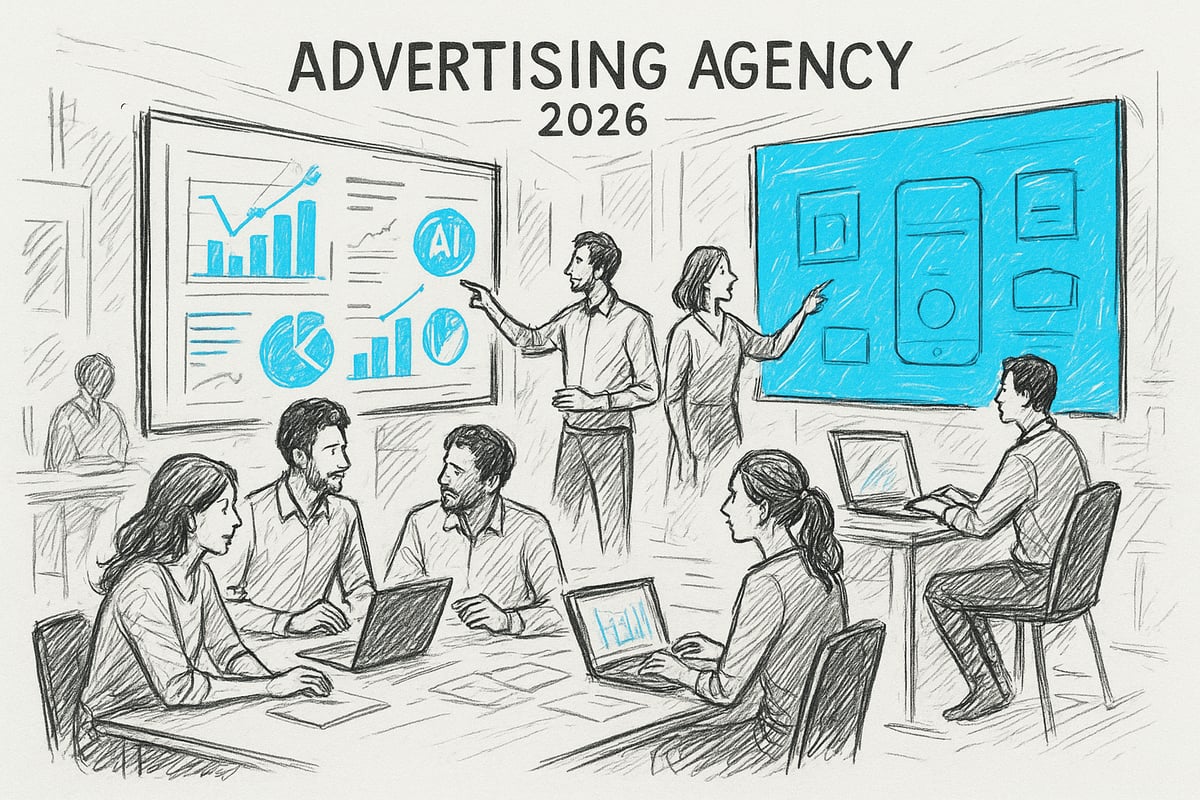
Clients today expect more from their agency partners. They require not only creative brilliance but also measurable business impact. This shift is driving agencies to refine their ad agency strategy, uniting brand-building with performance marketing.
Competition is fierce, as pitch activity rises yet revenue per pitch declines. Leading agencies, such as Droga5, now filter opportunities based on shared ambition and mission alignment. For those seeking deeper insight on future-proofing, the Ads agency guide for 2026 offers a forward-looking perspective.
Rise of Multi-Channel Complexity
The explosion of media channels is reshaping ad agency strategy for top performers. Research indicates 48 percent of high-performing agencies now manage campaigns across five or more programmatic channels.
Orchestration is essential, as merely being present across platforms often leads to fragmented messaging and wasted spend. Agencies are embracing connected TV, shoppable ads, AR, and digital out-of-home as major growth opportunities, demanding a nimble, integrated approach.
Impact of AI and Technology
AI is becoming foundational to the modern ad agency strategy. Currently, 39 percent of agencies see AI as a core part of their daily workflow. Tools for creative optimisation, predictive analytics, and real-time targeting are quickly becoming standard practice.
GALE’s Alchemy.Ai platform, for example, streamlines RFI responses and boosts efficiency. Agencies leveraging AI are more agile, able to adapt strategies and deliver results faster than ever before.
Talent, Turnover, and Team Culture
Rapid change is adding pressure to agency teams and increasing staff turnover. A strong ad agency strategy now places emphasis on team empowerment, collaboration, and chemistry.
High turnover impacts client relationships and internal morale. Agencies that prioritise culture, continuous development, and clear communication are more likely to attract and retain top talent in a competitive market.
Data Privacy and 1st-Party Data Imperative
With privacy regulations tightening, agencies must evolve their ad agency strategy to centre on 1st-party data. Building compliant, effective systems for data use is now non-negotiable.
High-performing agencies operationalise owned data for personalisation, targeting, and accurate attribution, ensuring campaigns remain relevant and measurable in an evolving landscape.
Building a Future-Proof Agency Team and Culture
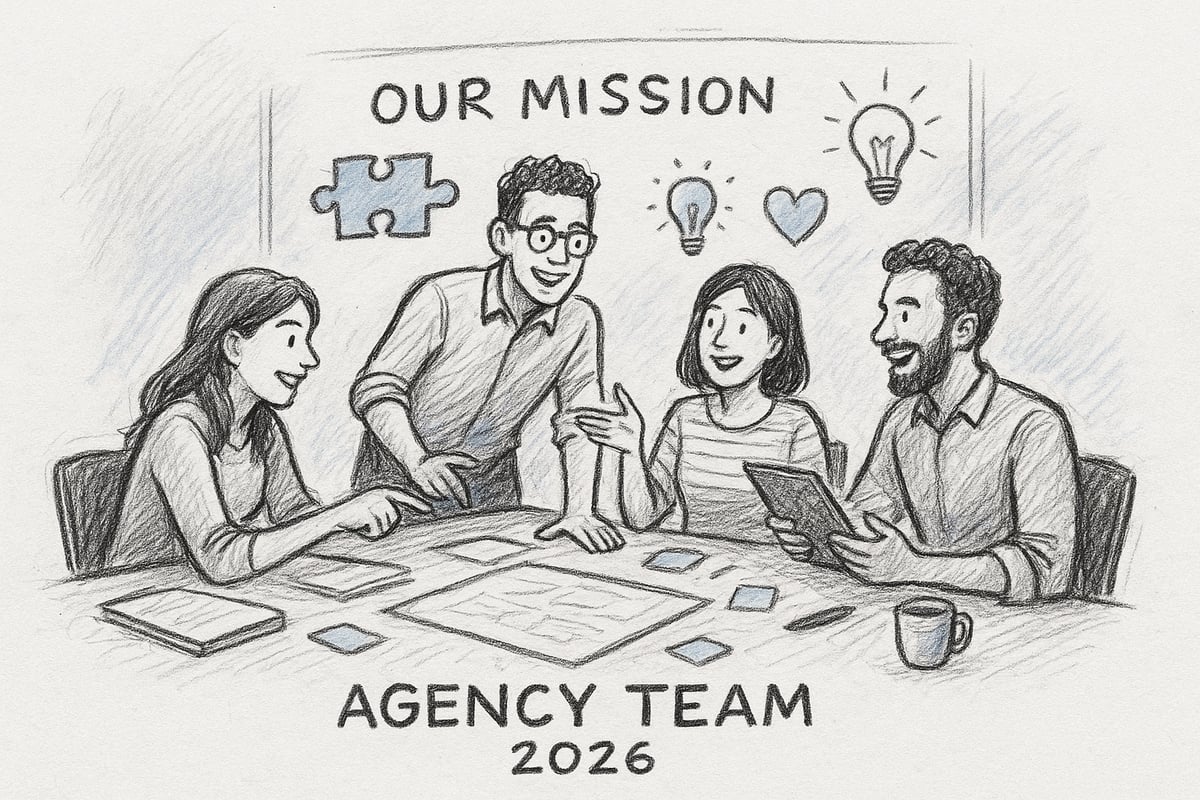
A future-proof ad agency strategy starts with a clearly defined mission. When agencies articulate their purpose, they attract clients and talent who share their values. This clarity helps filter opportunities and unify internal teams. For instance, Droga5’s commitment to “outsized impact through outsized ambition” guides its partnerships and project choices. Agencies seeking to stand out can benefit from a robust creative strategy for agencies, ensuring their positioning is both authentic and differentiated.
Structuring for Collaboration and Integration
Integration is essential in today’s landscape. Agencies are merging marketing, PR, and new business functions to streamline communication and foster creativity. Cross-functional teams that include creative, strategy, analytics, and account management build a holistic understanding of both client needs and internal capabilities. Rotational programmes, like those experienced by Lindsay Bennett, help team members gain insight into various roles, strengthening collaboration and empathy.
This collaborative structure reduces silos and accelerates response times. When diverse perspectives come together, agencies develop more innovative solutions for their clients.
Empowerment and Entrepreneurial Mindset
Empowering teams is vital for an effective ad agency strategy. Agencies should seek entrepreneurial talent and create an environment where individuals can shape opportunities and take accountability. This means providing resources, tools, and support rather than relying on a single new business lead.
By empowering employees to experiment and learn from outcomes, agencies foster a culture of innovation. Staff who feel accountable are more likely to go the extra mile, driving both individual and collective success.
Balancing Brand and Demand
Agencies must align their own marketing and new business development as a single growth ecosystem. Investing in the agency’s brand is just as important as building client brands. This dual focus supports a healthy pipeline and ensures long-term sustainability.
A balanced approach also enables agencies to demonstrate both creative excellence and business impact, meeting rising client expectations in a competitive market.
Nurturing Culture and Chemistry
Team chemistry is often a deciding factor for clients when choosing an agency. Agencies should cultivate a culture that values learning, open collaboration, and mutual respect. Droga5’s success is partly attributed to its strong internal rapport, which is evident to clients from the outset.
Maintaining a positive environment not only attracts new business but also improves retention of both clients and talent.
Addressing Turnover and Talent Retention
High turnover disrupts client relationships and undermines agency stability. To counter this, agencies should invest in ongoing professional development, clear communication, and regular recognition of achievements. A supportive environment encourages loyalty and trust, reducing the risk of losing key team members.
Retention strategies must evolve alongside the agency, adapting to new employee expectations and market realities.
Measuring Team Success
Measuring the success of an ad agency strategy requires both qualitative and quantitative metrics. Feedback from clients and observations of team dynamics provide valuable insights. Simultaneously, tracking pipeline growth and win rates offers a clear measure of business outcomes.
Agencies that regularly assess both people and performance are better equipped to adjust their strategies and maintain a competitive edge.
Orchestrating Multi-Channel Strategy for Maximum Impact
In today's competitive landscape, getting multi-channel strategy right is crucial for any effective ad agency strategy. The days of siloed campaigns are over, with agencies needing to deliver a seamless, data-driven experience across every channel. Success in 2026 will depend on how well agencies orchestrate their efforts, align teams, and leverage emerging technologies.
Beyond Multi-Channel: Integrated Orchestration
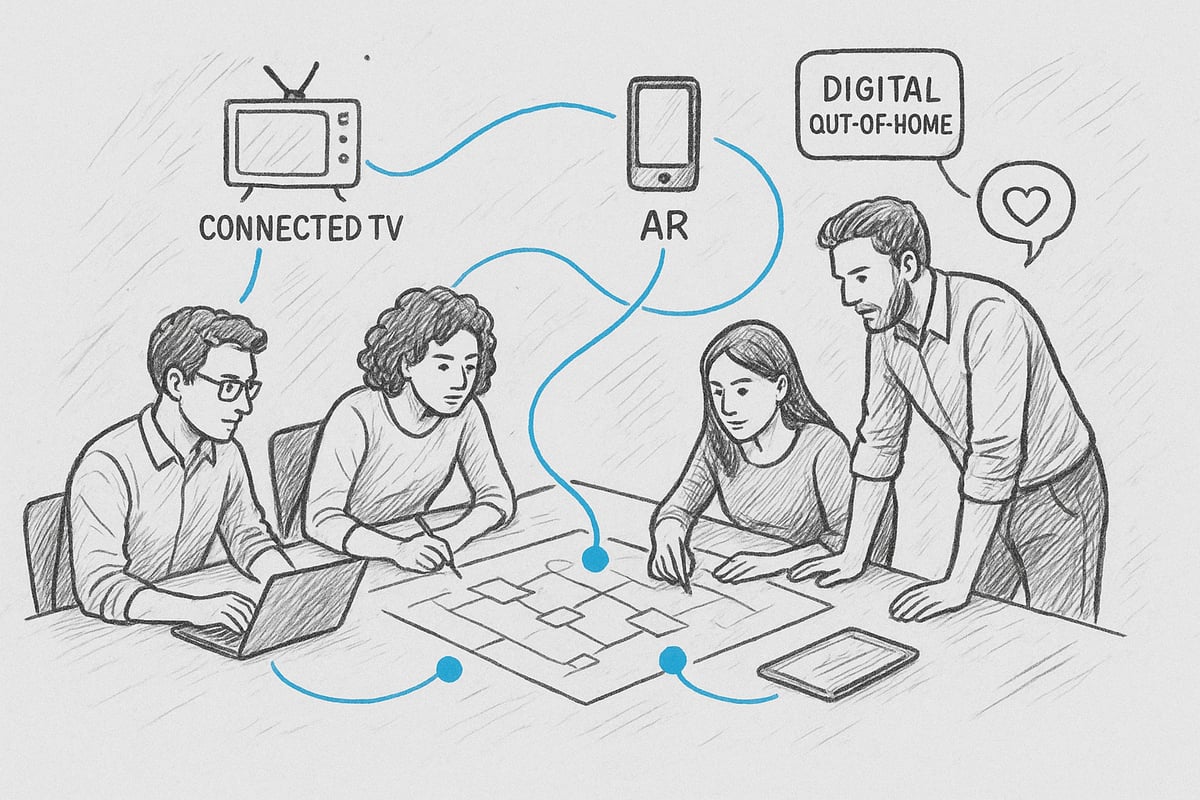
Top-performing agencies understand that effective ad agency strategy means more than simply being present across various platforms. It is about orchestrating creative and messaging so each channel complements the others, driving compounded impact. This requires moving from fragmented efforts to systems thinking, where every campaign element connects back to shared KPIs and objectives.
Orchestration brings together brand and performance goals, enabling teams to test incrementality and optimise spend holistically. For more on how agencies are transforming their approach, see Digital experience agency trends. By aligning strategy and execution, agencies can unlock significant performance gains and deliver measurable results.
Selecting the Right Channel Mix for 2026
Choosing the correct blend of channels is a cornerstone of any future-proof ad agency strategy. With the rapid evolution of media, options now include connected TV, augmented reality, shoppable ads, and digital out-of-home. According to StackAdapt, 48% of leading agencies already run campaigns across five or more programmatic channels.
To avoid diminishing returns, agencies must balance reach, frequency, and relevance. Regularly reviewing performance data ensures the channel mix remains optimal as audience behaviour shifts. The most successful agencies treat channel selection as a dynamic process, adapting quickly to new opportunities.
Ensuring Consistent Brand Experience
A unified brand experience is essential for any ad agency strategy aiming for long-term growth. Teams must create adaptable assets that convey the same values and narrative, regardless of channel or format. This requires clear communication between creative, strategy, and account teams to ensure every touchpoint reinforces the agency or client brand.
Consistency builds trust and recognition, turning fragmented interactions into a cohesive journey. Agencies that invest in brand alignment at every stage are better positioned to stand out in a crowded market.
Cross-Channel Measurement and Attribution
Effective measurement is at the heart of a successful ad agency strategy. Agencies now rely on advanced analytics tools to track performance across platforms in real time. Shared KPIs connect brand awareness efforts with direct response outcomes, allowing teams to optimise budgets and creative based on holistic insights.
Techniques like incrementality testing and cross-platform attribution are increasingly standard. By integrating these capabilities, agencies can demonstrate true business impact and justify investment in multi-channel campaigns.
Overcoming Resource and Data Integration Challenges
A robust ad agency strategy must address the friction points that come with multi-channel orchestration. Common barriers include resource allocation, data silos, and gaps in measurement. Investing in platforms that enable seamless data sharing and campaign management is vital.
Clear processes and regular team training can reduce integration headaches. Agencies that prioritise collaboration and technology adoption find it easier to deliver consistent, high-quality results for their clients.
Case Study: Orchestrated Strategy in Action
Popeyes provides a prime example of multi-channel orchestration delivering tangible results. By implementing a programmatic, cross-channel approach, the brand increased return on ad spend by 680% (StackAdapt case study). This success was driven by unified messaging, agile execution, and robust attribution, proving the value of a well-coordinated strategy.
Future Opportunities and Risks
Looking ahead, agencies must anticipate shifts in media consumption, technology adoption, and regulatory requirements. The ad agency strategy of tomorrow will require ongoing agility, a willingness to experiment with new formats, and a commitment to privacy and compliance. Staying proactive will be key to navigating risks and capitalising on emerging opportunities.
Harnessing AI and Automation to Drive Agency Success
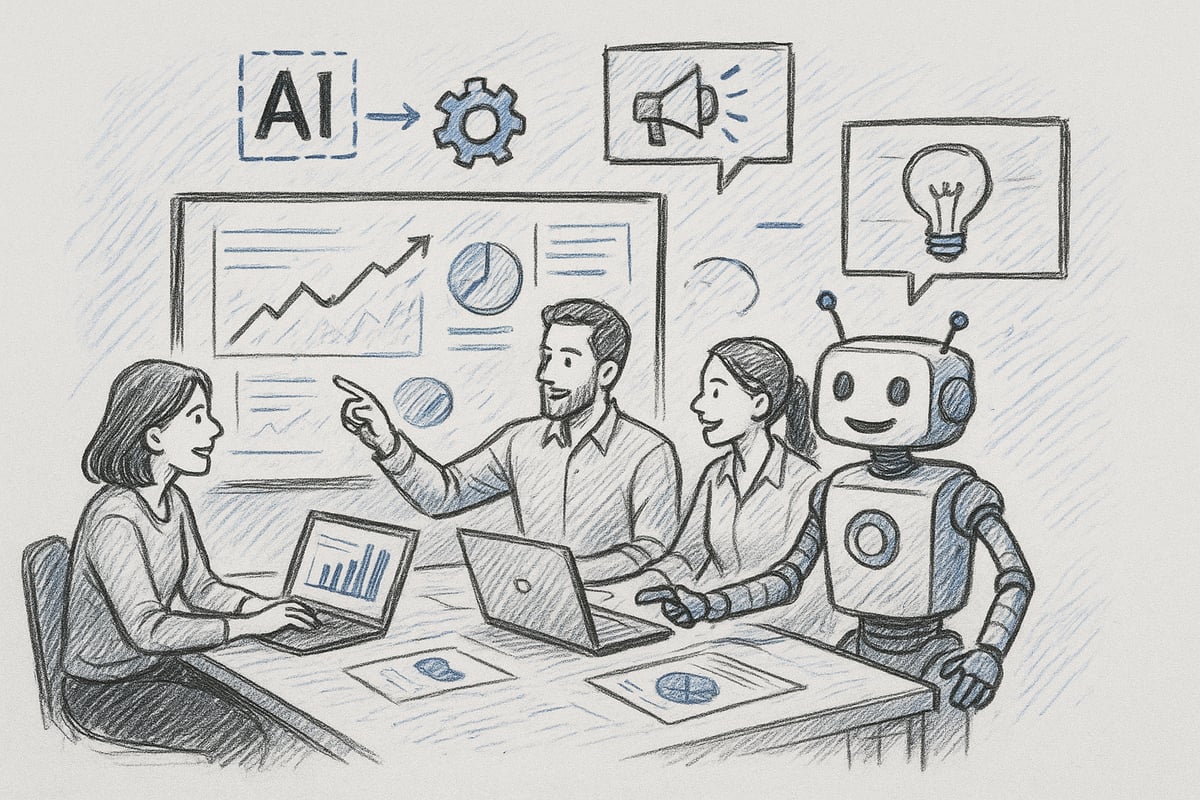
Artificial intelligence and automation are fundamentally reshaping the ad agency strategy landscape. By 2026, agencies must treat AI not as an experiment but as a critical pillar for operational excellence, creativity, and growth. Embracing these technologies is no longer optional for agencies serious about long-term success.
AI as Core Infrastructure, Not Experiment
AI has moved from a nice-to-have feature to an essential part of every ad agency strategy. According to industry research, 39% of agencies now report AI as a core component of their workflows. This shift is so significant that the near-universal adoption of AI in agency workflows is transforming how agencies deliver value to clients. Core uses include advanced audience targeting, creative optimisation, predictive analytics, and real-time performance tracking. Agencies that embed AI into their infrastructure position themselves to anticipate trends and client needs more effectively.
Enhancing Creative and Strategic Output
AI-powered tools are elevating creative development and strategic planning within any ad agency strategy. Generative AI supports campaign ideation, copywriting, and visual asset creation, giving teams more time to focus on high-value creative work. Platforms like GALE’s BRAD bot automate RFI responses, streamlining internal coordination and freeing up resources. This integration enables agencies to quickly generate insights that inform more effective campaigns and foster innovation across departments.
Operational Efficiency and Scale
Automation is central to scaling ad agency strategy in a fast-paced environment. By automating repetitive tasks such as reporting, media buying, and data analysis, agencies can reallocate talent to strategic initiatives. AI-driven platforms allow for real-time personalisation and campaign adaptation, ensuring that agencies respond swiftly to market changes. As a result, operational efficiency improves, and agencies can manage larger, more complex client portfolios with fewer bottlenecks.
Balancing Automation with Human Insight
While automation is invaluable, human judgement remains crucial within ad agency strategy. High-performing agencies combine the analytical power of AI with the creative, contextual thinking of experienced professionals. AI augments decision-making but does not replace the need for authentic brand voice and nuanced client understanding. Reshaping team roles to focus on strategic guidance and creative direction ensures that automation enhances, rather than diminishes, agency value.
Benchmarking AI Integration
Measuring AI’s impact is vital for refining ad agency strategy. Agencies should benchmark their AI adoption against industry leaders, assessing where automation delivers the highest ROI. Compare performance metrics such as campaign efficiency, client retention, and creative output. This approach helps agencies identify areas for further AI integration and ensures continuous improvement in both results and processes.
Overcoming Barriers to Adoption
Adopting AI at scale requires overcoming internal and external challenges. Common concerns include data quality, transparency, and the need for team training. Successful ad agency strategy addresses these by investing in robust data management, fostering a culture of experimentation, and offering ongoing professional development. Agencies that proactively tackle these barriers are more likely to realise the full benefits of AI-driven transformation.
Preparing for AI-Driven Future
Looking ahead, agencies must stay informed about AI trends, regulatory shifts, and ethical considerations. Future-proof ad agency strategy involves not only deploying the right technology but also cultivating agility and a learning mindset. By keeping pace with innovation and regulatory changes, agencies will maintain a competitive edge and deliver measurable, sustainable value to clients.
Activating 1st-Party Data for Personalisation and Growth
Agencies that master 1st-party data will define the future of ad agency strategy. As privacy regulations tighten and third-party cookies fade, the ability to collect, manage, and activate owned data becomes a core differentiator. This section explores how agencies can leverage 1st-party data for superior personalisation, growth, and measurable results.
The Strategic Value of 1st-Party Data
1st-party data is now the backbone of a high-performing ad agency strategy. It enables precise targeting, compliant personalisation, and accurate attribution that third-party data can no longer guarantee.
Agencies using robust 1st-party data can build stronger client relationships by delivering campaigns that resonate on an individual level. This data covers behavioural, transactional, and engagement insights, making it possible to tailor messaging for relevance and impact.
| 1st-Party Data Type | Use Case | Benefit |
|---|---|---|
| Behavioural | Audience segmentation | Higher engagement |
| Transactional | Purchase modelling | Improved ROI |
| Engagement | Creative personalisation | Increased loyalty |
Building Clean, Actionable Data Systems
A successful ad agency strategy depends on data quality. Agencies must invest in rigorous data hygiene, ensuring information is up-to-date, accurate, and accessible across departments.
Key practices include:
- Integrating CRM and analytics platforms
- Regular audits for data consistency
- Real-time access for campaign teams
Agencies with unified data systems activate insights faster, supporting agile campaign optimisation and better client outcomes.
Personalisation at Scale
Personalisation is the competitive edge in today’s ad agency strategy. Using 1st-party data, agencies can create micro-segments based on real customer behaviour, not assumptions.
With AI-driven tools, personalisation expands across channels, adapting creative assets and messaging for every audience touchpoint. This approach boosts engagement, conversion rates, and brand loyalty, positioning agencies as leaders in results-driven marketing.
Attribution and Measurement
Effective ad agency strategy requires connecting 1st-party data with attribution models to close the loop on campaign performance. Owned data allows agencies to track user journeys from initial contact to conversion, revealing which touchpoints drive value.
By leveraging behavioural and transactional data, agencies can refine targeting and optimise spend. Advanced analytics platforms further enhance measurement, enabling real-time adjustments and transparent reporting to clients.
Evolving Tech Stacks for Data Activation
Modern ad agency strategy relies on tech stacks that connect CRM, analytics, and campaign management. The latest platforms reduce lag between insight and execution, empowering teams to act on data instantly.
As programmatic and AI tools evolve, seamless integration becomes vital. For a deeper dive into how agencies are adopting these innovations, see Programmatic advertising trends.
Future-Proofing Against Privacy Changes
With GDPR and the demise of third-party cookies, agencies must future-proof their ad agency strategy. Transparent data practices, clear consent management, and ongoing compliance are essential.
Staying informed about privacy regulations and evolving client expectations is key. For more on upcoming shifts, explore Marketing trends for 2026.
Case Study: Data-Driven Agency Growth
Agencies that operationalise 1st-party data consistently outperform their peers. Recent research shows that those who invest in data-driven ad agency strategy report higher client satisfaction, improved retention, and stronger campaign results.
By putting data at the centre of their approach, these agencies achieve personalisation and growth at scale, setting a standard for the industry in 2026 and beyond.
Real-World Agency Success Stories and Lessons Learned
In today's fiercely competitive market, a robust ad agency strategy is no longer optional, it is essential for agencies aiming to secure sustainable growth. Real-world success stories reveal how leading agencies have adapted their approaches, blending creativity, technology, and authenticity to stand out. These lessons offer practical blueprints for agencies targeting excellence in 2026.
Winning New Business with Strategic Positioning
Strategic positioning is at the heart of every successful ad agency strategy. Agencies like GALE distinguish themselves as “business agencies,” setting themselves apart from the crowd. By investing in always-on PR, CRM, and partnerships, they create a continuous presence that attracts new business. For example, after prioritising its brand and implementing targeted marketing tactics, GALE saw a 100 percent increase in new business leads, demonstrating the direct link between agency positioning and growth. For more methods, see these advertising agency marketing tactics.
The Power of Creative Output and Team Chemistry
Award-winning creative output remains a powerful differentiator in any ad agency strategy. Agencies such as Droga5 have built reputations for bold, distinctive work that resonates with ambitious clients. Yet, it is not just creative excellence that wins pitches. Clients cite team chemistry and rapport as decisive factors. Agencies that invest in fostering positive, collaborative cultures consistently outperform those that do not, as clients sense genuine collaboration.
Authenticity and Humility in Agency Marketing
Authenticity and humility have become cornerstones of a resilient ad agency strategy. Instead of relentless self-promotion, top agencies focus on delivering results and forming respectful client relationships. Agencies like Pereira O’Dell are known for honest, provocative pitches that challenge conventions while maintaining professionalism. This approach builds trust, ensuring that the agency’s reputation is not only based on output but also on integrity and transparency.
Integrating Technology for Competitive Advantage
Incorporating proprietary technology is now a non-negotiable part of a modern ad agency strategy. GALE’s Alchemy.Ai platform is a prime example, streamlining internal processes and responding to RFIs with impressive speed. AI-powered tools enable agencies to deliver faster, more insightful responses to client needs. By leveraging automation and data-driven insights, agencies can accelerate business development and enhance client value, setting themselves apart in a crowded field.
Navigating Industry Disruption and Change
The pace of industry change demands constant adaptation. Agencies must navigate increased pitch activity, client turnover, and ongoing consolidation. Success hinges on internal alignment and clear external positioning. As detailed in this analysis of agency reinvention in 2026, those who proactively invest in their brand, technology, and culture are better equipped to weather disruption and capitalise on emerging opportunities.
Lessons for 2026 and Beyond
The greatest lesson for any ad agency strategy is the importance of mastering the fundamentals. Agencies that focus on differentiation, nurture collaboration, embrace data, and integrate technology are best placed for long-term success. Continuous learning and agility are essential, as is a client-centric mindset. By applying these principles, agencies can not only adapt to change but also shape the future of the industry.
As we look ahead to 2026, it’s clear that mastering your agency’s strategy means more than just staying current—it’s about leading with innovation, clarity, and measurable results. Whether you’re focused on refining your positioning, integrating AI, or delivering seamless multi-channel campaigns, you deserve a partner who understands how to fuel growth and help you stand out in a crowded market. If you’re ready to elevate your agency’s impact and put these insights into action, let’s talk about how OxD PR can support your next big step. Start your journey and Get a Quote today.