Marketing Web Development Guide: Strategies for 2026 Success
In 2026, digital business growth will hinge on one critical factor: the seamless integration of marketing web development. As boundaries blur between these disciplines, businesses must adapt or risk falling behind.
This guide delivers actionable strategies for aligning marketing web development, ensuring your brand stands out, attracts the right audience, and converts at scale.
Discover the latest trends, frameworks, and practical tactics. From user-centric design to technical SEO, automation, and analytics, you'll gain expert insight to future-proof your digital strategy. Ready to unlock growth? Let’s dive in.
The Evolving Relationship Between Marketing and Web Development in 2026
The digital landscape in 2026 is witnessing a profound transformation, as the boundaries between marketing web development dissolve. Businesses are no longer treating these functions as isolated silos. Instead, they are embracing an integrated approach, where collaboration is not just encouraged but essential for sustainable growth.
The Convergence of Disciplines
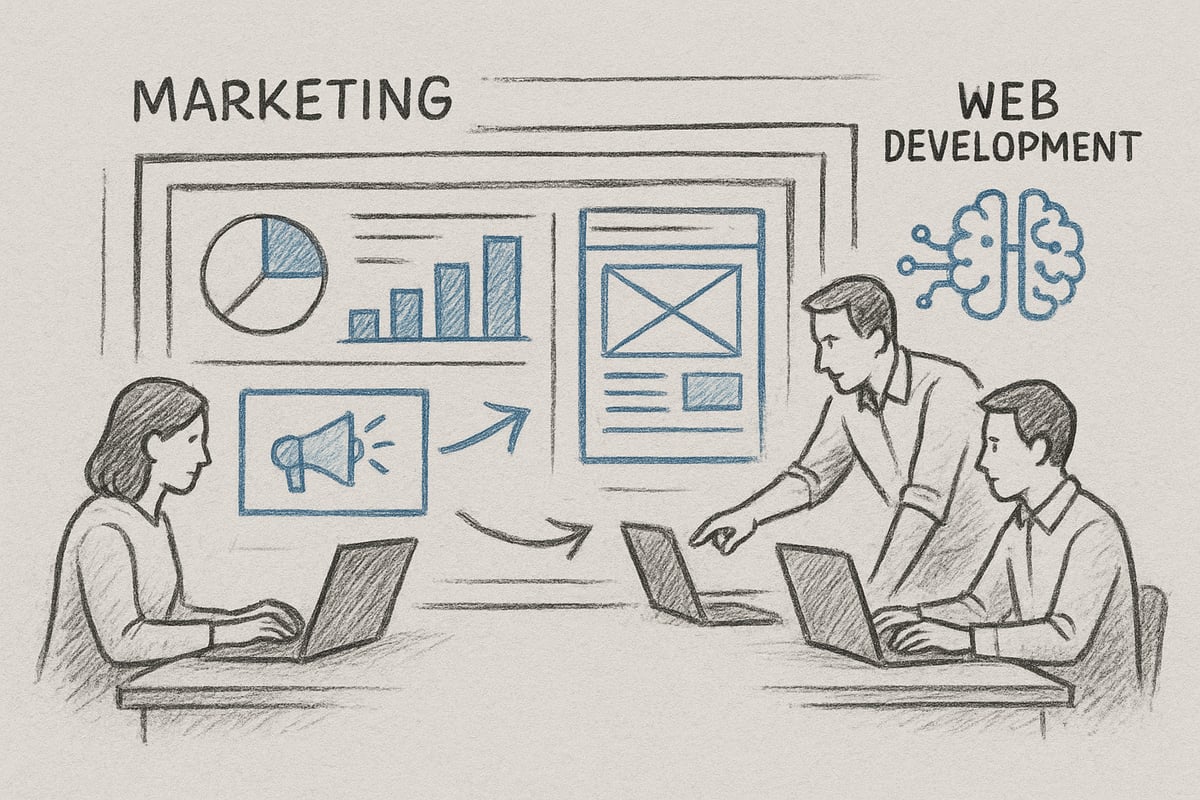
In recent years, the convergence of marketing web development has reshaped how digital projects are executed. The traditional boundaries between creative strategists and technical developers have blurred, giving rise to cross-functional teams with shared objectives. As one industry leader put it, "Marketing and web development are like two sides of the same coin" (LinkedIn).
Integrated workflows are now the norm. Marketers and developers co-create landing pages, launch campaigns in real time, and iterate sites based on live analytics. For example, during a product launch, both teams coordinate to ensure rapid updates, unified messaging, and seamless user journeys.
This collaborative model brings measurable value. According to industry surveys, 86% of businesses report increased ROI when marketing web development teams work closely together. Shared responsibilities for performance, branding, and conversion rates mean that every project is approached holistically, with each team bringing unique expertise to the table.
The impact of AI and automation cannot be overlooked. AI-powered tools are automating repetitive tasks, providing deeper insights, and enabling rapid prototyping. This technological shift is accelerating the pace at which marketing web development teams can respond to market changes and user needs. For a detailed look at integrated solutions, see web design and marketing services.
Key Challenges and Opportunities in 2026
Despite these advances, the landscape presents new challenges. The commoditisation of web development has made it harder for agencies and businesses to stand out. Global competition and pricing pressures are intensifying, demanding a focus on differentiation and value-added services within marketing web development.
However, significant opportunities are emerging. Personalisation, voice search, and omnichannel experiences are now core expectations. Brands are leveraging data to deliver tailored content and seamless transitions across devices and platforms. For example, 70% of users expect personalised website experiences by 2026, reflecting a shift towards user-centric strategies.
Evolving customer expectations demand frictionless digital journeys. Businesses that excel at integrating marketing web development are setting the standard. Collaborative success stories include brands that launch interactive, data-driven campaigns, and update content in response to user behaviour within hours.
Consider the following:
| Challenge | Opportunity |
|---|---|
| Commoditisation | Personalisation |
| Pricing pressure | Omnichannel journeys |
| Global competition | Voice search adoption |
By proactively aligning their marketing web development strategies, forward-thinking companies are not just keeping pace—they are leading the way. The brands thriving in 2026 are those that treat web performance, branding, and conversion as a unified mission, driven by deep collaboration and continuous innovation.
Step 1: Developing a User-Centric, Conversion-Driven Web Strategy
Understanding the evolving landscape of marketing web development starts with a shift in mindset: your website is no longer just a digital brochure, but the core of your entire marketing ecosystem. Success in 2026 hinges on building strategies that put users first, drive conversions, and seamlessly blend marketing and technical expertise.
Understanding Your Audience and Market
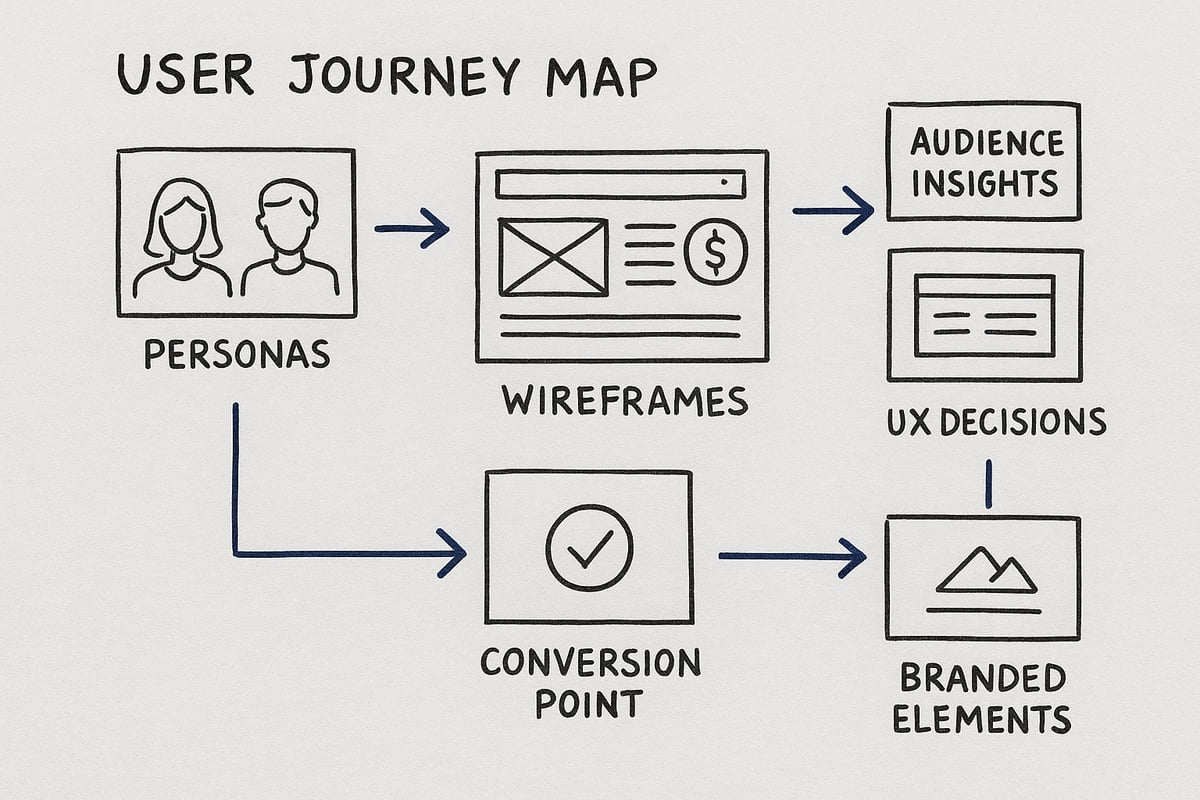
Every effective marketing web development initiative begins with a profound understanding of your audience. It is not enough to guess who they are or what they want. Deep research, including surveys, interviews, and analytics, enables you to build detailed personas that reflect real motivations and challenges.
Competitors emphasise, "Put yourself in the mind of the prospect you’re looking to serve." This mindset transforms how you approach marketing web development, ensuring your strategy is rooted in empathy and actionable insights.
Key tools to map the customer journey and pinpoint pain points include:
- Heatmaps and session recordings
- Customer feedback forms
- Analytics platforms
- Social listening tools
Statistics reveal that 74% of consumers feel frustrated by non-personalised websites. This frustration can translate into lost revenue and weakened brand loyalty. By focusing on outcome-driven content and avoiding technical jargon, you create experiences that resonate and convert.
If you are seeking practical tactics to strengthen your marketing web development projects, explore these web marketing strategies for step-by-step guidance.
Designing for Seamless User Experience (UX)
User experience is where marketing web development truly comes to life. Marketers play a pivotal role in informing UX decisions, ensuring that every interaction supports engagement and conversion.
Web development priorities such as site speed, accessibility, and intuitive navigation are non-negotiable. According to LinkedIn insights, these factors directly impact both user satisfaction and search performance.
Landing page optimisation is a cornerstone of marketing web development. Techniques like A/B testing headlines, refining call-to-action placements, and deploying responsive layouts can make a measurable difference. For instance, 53% of mobile users will abandon a site if it takes longer than three seconds to load.
Consider this table summarising key UX priorities and their impact:
| UX Factor | Impact on Marketing Web Development | Conversion Effect |
|---|---|---|
| Site Speed | Improves engagement, lowers bounce rate | Higher conversions |
| Accessibility | Expands reach, boosts reputation | Increased trust |
| Intuitive Navigation | Simplifies journeys, reduces friction | More completed goals |
Regular testing and incremental enhancements ensure your marketing web development efforts remain aligned with evolving user expectations.
Integrating Brand Identity and Messaging
A strong brand presence is essential for building trust and driving conversions in marketing web development. Consistency in messaging and design elements across all channels reinforces your value proposition and makes your business memorable.
Aligning visual identity, tone of voice, and content with marketing objectives ensures every website touchpoint supports your goals. Businesses with cohesive brand experiences see up to 23% higher revenue, underscoring the power of synergy between marketing and development efforts.
Case studies consistently show that brands succeeding in 2026 are those who treat marketing web development as a unified discipline. They use coordinated colour schemes, consistent typography, and unified messaging to create seamless journeys, both online and offline.
By embedding your brand essence in every aspect of the website, you encourage repeat visits, foster loyalty, and maximise the impact of every interaction.
Step 2: Technical Foundations for Marketing Success
Establishing robust technical foundations is essential for any marketing web development strategy. In 2026, aligning technical elements with marketing objectives is what drives visibility, growth, and trust. This section explores the core pillars every business must address to unlock digital success.
Building for SEO and Search Visibility
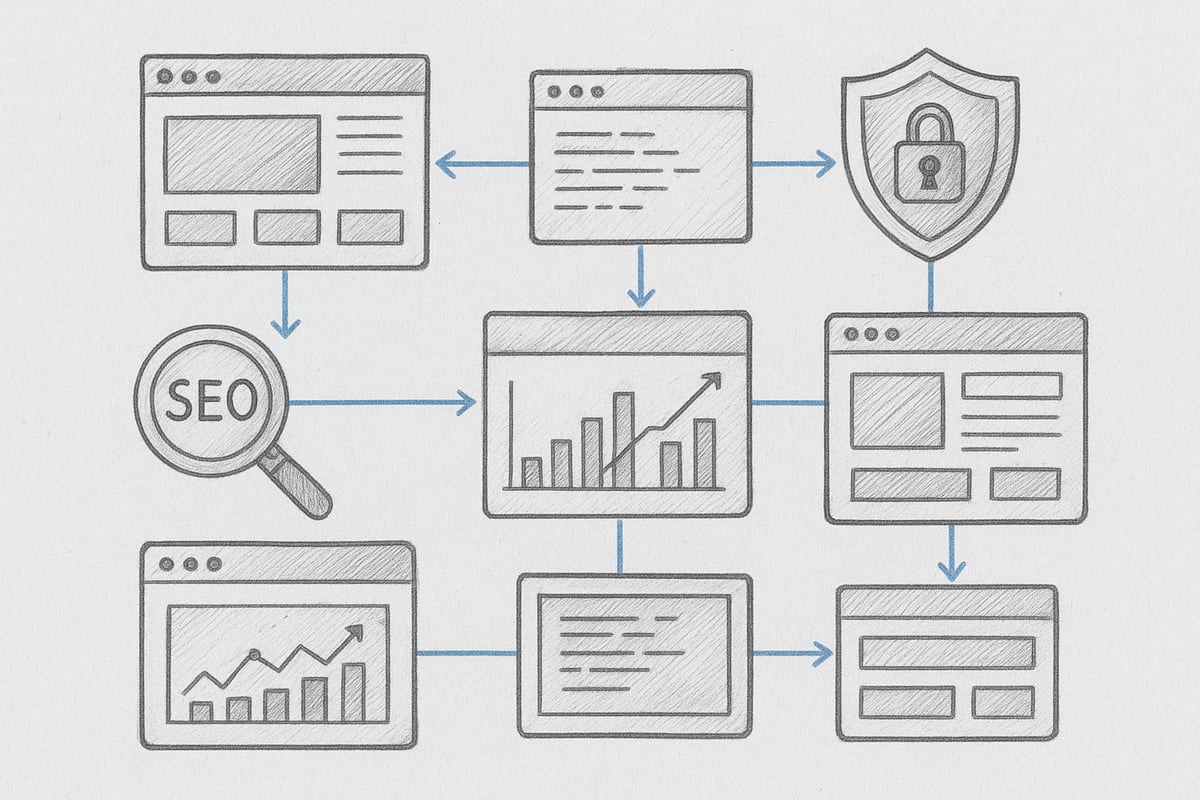
Technical SEO remains the backbone of effective marketing web development. Today, search engines prioritise sites that are mobile-friendly, fast, and structured for clarity. Marketers and developers must collaborate early to integrate keywords, metadata, and schema markup right from the planning phase.
Consider the following best practices:
| SEO Factor | Impact on Marketing Web Development | Example |
|---|---|---|
| Mobile-First Design | Increases reach and engagement | Responsive layouts |
| Structured Data | Enables rich snippets, better rankings | Product schema, FAQs |
| Page Speed | Reduces bounce, boosts conversions | Image optimisation, caching |
| Meta Tags | Improves click-through and discoverability | Customised titles/descriptions |
These principles are essential for any site aiming to win in search. According to industry research, 68% of online experiences begin with a search engine, making technical SEO a non-negotiable part of marketing web development. Tools like schema markup and optimised meta tags ensure your website is discoverable and authoritative.
For a deeper dive into technical and promotional strategies, see this overview of SEO and social media marketing.
Data Tracking, Analytics, and Marketing Automation
Modern marketing web development demands precise measurement and automation. Implementing analytics tools such as Google Analytics 4 and heatmaps enables teams to track user behaviour and optimise campaigns effectively. Web developers play a crucial role in embedding tracking codes, configuring event measurement, and ensuring data accuracy.
Integrating CRM platforms and marketing automation tools allows seamless management of leads and customer journeys. Developers ensure APIs connect these systems for real-time data flow, enabling marketers to automate email sequences, segment audiences, and monitor KPIs.
Key benefits of analytics-driven marketing web development include:
- Faster, data-backed decisions (companies using analytics are 5x more likely to act swiftly)
- Insightful reporting on campaign ROI and user engagement
- Automated workflows that nurture leads and drive conversions
A collaborative approach between marketing and development teams ensures tracking aligns with strategic goals, making every digital touchpoint measurable and actionable.
Ensuring Security and Compliance
Security and compliance are now central to marketing web development. Trust signals such as SSL certificates, GDPR compliance, and clear privacy policies reassure users and protect businesses. Developers must implement robust encryption, regular security updates, and data privacy protocols.
The consequences of neglecting these foundations are significant. Sites that suffer breaches or fail to comply with regulations often experience lost traffic, reputational damage, and legal penalties. Data shows that 79% of users will abandon a site if they suspect it is insecure, highlighting the direct impact on marketing outcomes.
To safeguard your marketing web development efforts:
- Prioritise HTTPS and SSL across all pages
- Keep privacy policies transparent and up to date
- Monitor for vulnerabilities and patch software regularly
By making security a visible part of your site, you build trust and encourage conversions, positioning your brand as reliable in a competitive digital landscape.
Step 3: Content, Funnels, and Personalisation Strategies for 2026
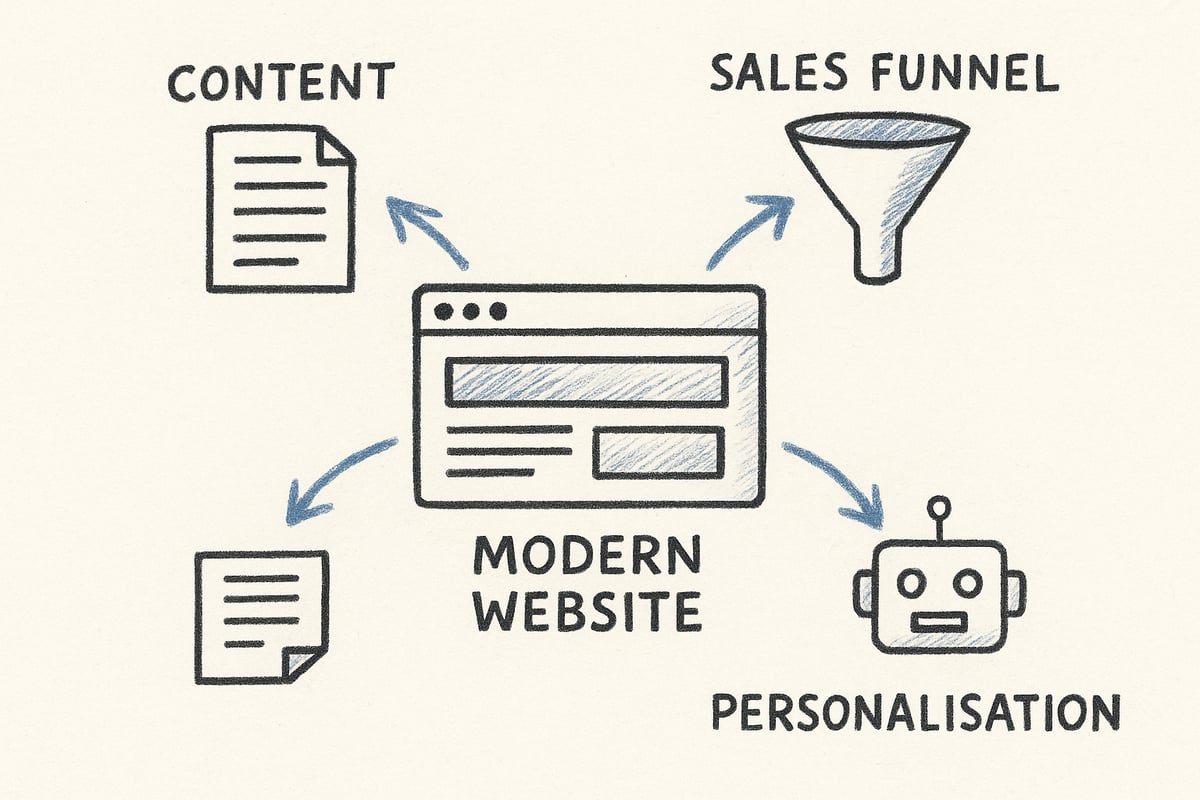
To drive measurable results in 2026, marketing web development must prioritise impactful content, effective sales funnels, and advanced personalisation. By weaving these elements together, businesses can turn their websites into high-converting assets that serve both user needs and organisational goals.
Crafting Outcome-Focused Content
In marketing web development, content is more than words on a page. It is the bridge between your audience's needs and your business outcomes. The most successful brands in 2026 are those that create content with a clear purpose, tailored to each stage of the customer journey.
Start by understanding your audience. Use surveys, analytics, and persona mapping to identify pain points and motivations. As Blog Marketing Academy advises, "Put yourself in the mind of the prospect you’re looking to serve." This approach ensures content resonates and drives engagement.
Focus on content formats proven to convert, such as:
- Case studies that demonstrate results
- Comparison guides that help decision-making
- Video demos showcasing product benefits
For example, before-and-after site makeovers or industry-specific landing pages can illustrate value and build trust. Data shows content marketing generates three times as many leads as paid search, making it a crucial pillar of marketing web development.
Avoid technical jargon where possible. Instead, communicate outcomes and solutions. The right content strategy increases brand authority and supports every other element of your digital funnel.
Building Effective Sales Funnels
The foundation of marketing web development success lies in a well-structured sales funnel. A modern funnel goes beyond basic lead capture, guiding visitors from initial interest to long-term loyalty with tailored offers and smooth transitions.
Break down your funnel into clear stages:
- Lead magnet (e.g., free checklist or guide)
- Front-end offer (entry-level product or service)
- Core offer (main product or solution)
- High-end offer (premium package or consulting)
Productised services and packaged offerings help simplify decisions and increase conversions. For instance, a downloadable resource can trigger an email nurture sequence, eventually leading to upsell opportunities.
A simple table can clarify the funnel stages:
| Funnel Stage | Example | Goal |
|---|---|---|
| Lead Magnet | Free checklist | Capture email |
| Front-End Offer | Intro service | Build trust |
| Core Offer | Main solution | Drive sales |
| High-End Offer | VIP consulting | Maximise value |
Companies with defined funnels see 62% higher conversion rates. Integrate your funnel planning directly into marketing web development to ensure seamless user journeys and measurable results.
Personalisation and Dynamic Experiences
Personalisation is quickly becoming a non-negotiable aspect of marketing web development. In 2026, users expect dynamic, tailored experiences that respond to their behaviours and preferences in real time.
Leverage AI and advanced data analytics to deliver:
- Smart recommendations based on browsing history
- Adaptive calls-to-action that shift by user segment
- Dynamic content blocks that change per visitor
E-commerce sites, for example, use personalisation to surface relevant products, increasing sales by up to 20%. According to AI in Web Development & Digital Marketing, intelligent content generation and AI-powered website builders are transforming how businesses engage users and drive conversions.
Seamless integration of personalisation tools within your marketing web development process ensures you meet rising expectations. By investing in dynamic experiences, you establish a competitive edge and foster deeper customer loyalty.
Step 4: Advanced Tactics—Automation, AI, and Omnichannel Integration
The landscape of marketing web development in 2026 is rapidly shifting. Businesses now rely on advanced tactics to stay ahead, using AI, automation, and seamless omnichannel integration to boost efficiency and deliver standout customer experiences.
Leveraging AI and Automation for Marketing Efficiency
AI is transforming marketing web development by automating repetitive tasks and enabling deeper personalisation. AI-powered chatbots handle customer queries instantly, while content generation tools create platform-specific posts and updates in seconds. Personalisation engines use data to shape individual user experiences, increasing engagement and satisfaction.
Businesses are increasingly deploying automation tools for lead nurturing, segmentation, and reporting. For example, automated email workflows respond to user behaviour in real time, delivering the right message at the perfect moment. This not only saves time but also maximises conversion opportunities.
Consider the latest trends: 80% of companies plan to use AI for customer interactions by 2026. According to AI Marketing Trends 2026, AI systems are now capable of adjusting marketing strategies on the fly, responding to performance data without human intervention. Integrating these tools into your marketing web development projects ensures your team remains agile and competitive.
Omnichannel Marketing and Unified Customer Journeys
Today's consumers expect a seamless experience across every touchpoint. Omnichannel marketing web development means delivering consistent messaging and branding on web, email, social media, and even offline channels. Achieving this requires a unified approach to both technology and strategy.
Technical solutions such as customer data platforms and integrated CRMs enable the creation of unified customer profiles. This allows for effective cross-channel retargeting and personalised offers, regardless of where the user interacts with your brand. Imagine a customer browsing your site on mobile, receiving a follow-up email with a tailored offer, and seeing a reminder on social media—all coordinated through smart automation.
The results speak for themselves. Omnichannel campaigns achieve 287% higher purchase rates compared to single-channel efforts. As AI in Web Development Statistics highlights, by 2027, 70% of websites will use some form of AI automation, making seamless integration a core part of marketing web development strategies.
Real-Time Data and Agile Campaigns
Access to real-time data is now essential for optimising campaigns and driving continuous improvement in marketing web development. Analytics dashboards provide instant feedback, helping teams spot trends and act quickly. Agile development practices allow for rapid site updates, A/B testing, and instant adjustments during high-traffic events like product launches or seasonal promotions.
Live personalisation is another powerful tactic. Websites can now adapt content and offers on the fly, based on real-time user behaviour. This ensures every visitor experiences a journey tailored to their needs, increasing the likelihood of conversion.
Top-performing marketers recognise the value of agility. Data shows that 63% of them update their websites at least weekly, ensuring their marketing web development efforts remain relevant and effective. By combining real-time analytics with agile workflows, brands can respond to market changes faster than ever.
Step 5: Measuring Success and Continuous Optimisation
In the fast-moving world of marketing web development, measuring success and embracing ongoing optimisation are vital. As digital strategies become more complex, a rigorous approach to analytics and improvement is the difference between stagnation and growth.
Setting Clear KPIs and Measurement Frameworks
Success in marketing web development starts with defining clear, actionable KPIs that reflect business goals. These should include metrics such as website traffic, user engagement, conversion rates, and customer lifetime value.
Collaboration between marketing and development teams is essential when selecting and tracking these indicators. For example, a shared dashboard can align both groups on targets and progress. Consider this simple KPI tracking structure:
kpis = {
    'traffic': 0,
    'engagement': 0,
    'conversion_rate': 0,
    'lifetime_value': 0
}
A regular review process ensures everyone understands how their actions impact results. Companies that implement frameworks for continuous measurement and feedback integrate analytics and reporting directly into their digital web services overview, making optimisation seamless.
Essential Marketing Web Development KPIs:
| Metric | Why It Matters |
|---|---|
| Traffic | Measures reach and visibility |
| Engagement | Shows user interest |
| Conversion Rate | Tracks effectiveness |
| Lifetime Value | Assesses long-term value |
Strong measurement frameworks bridge the gap between technical and marketing priorities, helping teams respond quickly to trends and opportunities.
Continuous Testing and Iteration
Continuous testing is at the heart of high-performing marketing web development. Businesses should regularly conduct A/B and multivariate tests to optimise site elements, from headlines to CTA placements.
Establishing feedback loops between marketing and development accelerates improvements. For example, if a landing page underperforms, marketers can suggest copy changes while developers adjust layout or speed. This agile process ensures updates are data-driven.
Iterative enhancements often include:
- Testing different page designs or navigation flows
- Experimenting with alternative messaging
- Refining checkout processes for higher conversions
According to industry research, businesses that run regular tests are twice as likely to achieve significant conversion gains. By embedding experimentation into daily routines, marketing web development teams create a culture of continuous improvement.
Staying Ahead: Trends and Future-Proofing
To remain competitive, marketing web development strategies must anticipate and adapt to emerging trends. Voice search, AR/VR, and progressive web apps are reshaping user expectations and digital experiences.
Building adaptable, scalable platforms allows brands to quickly integrate new features and technologies. For instance, some companies now use AI-driven personalisation to deliver tailored content in real time, reflecting a broader shift as highlighted in AI’s Impact on Marketing Jobs.
Brands that invest in innovation and remain agile consistently outperform peers. In fact, 61% of marketers plan to increase spending on emerging web technologies by 2026. By staying alert to changes and fostering a future-proof mindset, marketing web development teams can maintain a lasting competitive edge.
With the digital landscape evolving so rapidly, aligning your marketing and web development strategies is more crucial than ever for 2026 success. You have seen how a user-centric approach, seamless design, and smart technical foundations can transform your online presence and drive real growth. If you are ready to take the next step and create a website that not only looks great but also delivers measurable results, let us help you put these strategies into action. Explore how we can build a high-converting, future ready site by visiting our Web Design page today.