Business Growth UK: Strategic Guide for 2026 Success
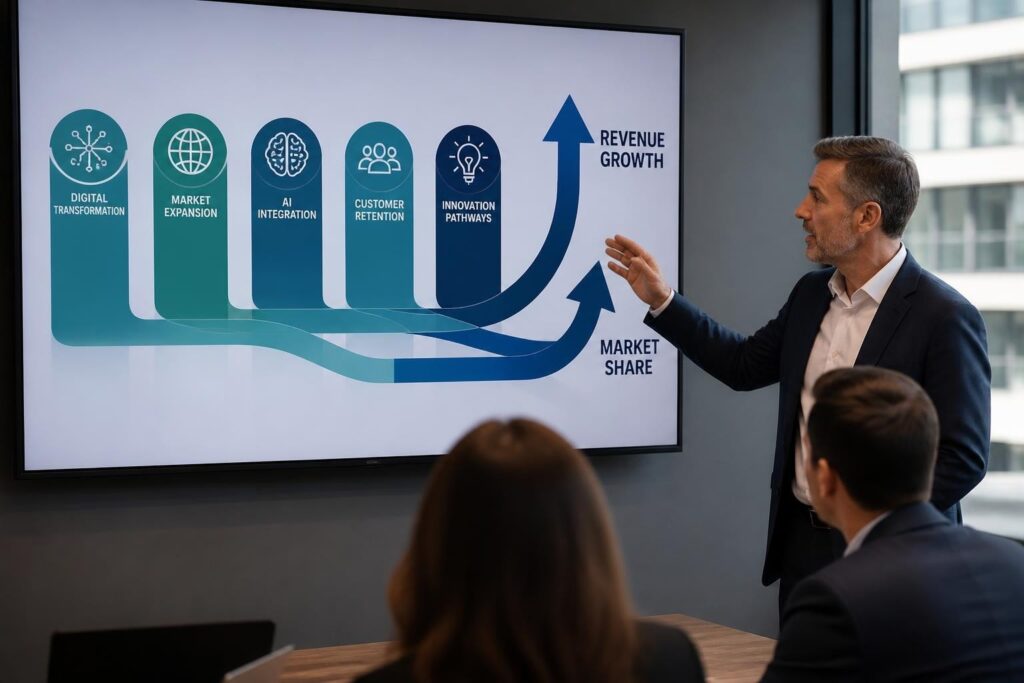
The landscape of business growth UK has transformed dramatically over recent years, with digital innovation and strategic adaptability becoming essential drivers of success. As we progress through 2026, British businesses face both unprecedented opportunities and distinct challenges, from economic shifts to technological disruption. Understanding how to navigate these waters whilst maintaining sustainable expansion requires a comprehensive approach that balances traditional business fundamentals with cutting-edge digital strategies.
Understanding the Current Business Growth UK Landscape
The state of business growth UK in 2026 reflects a resilient yet evolving ecosystem. According to government business statistics, the UK continues to demonstrate strong entrepreneurial activity, with new business formations reaching impressive levels across multiple sectors. This vitality signals confidence amongst founders and investors alike, despite global economic uncertainties.
Regional variations play a significant role in shaping growth trajectories. NatWest’s Regional Growth Tracker highlights how different areas of the UK experience distinct patterns of business activity, with some regions demonstrating remarkable resilience whilst others face structural challenges. London, Manchester, Edinburgh, and other major hubs continue to attract significant investment, yet smaller cities are emerging as competitive alternatives with lower operational costs and untapped talent pools.
Key Growth Metrics That Matter
Business leaders need to focus on metrics that genuinely reflect sustainable expansion rather than vanity numbers:
- Revenue growth rate (year-on-year and quarterly trends)
- Customer acquisition cost versus lifetime value
- Market share within target segments
- Profit margins and operational efficiency
- Employee productivity and retention rates
- Digital engagement metrics across owned channels
Understanding these indicators provides a foundation for making informed strategic decisions that drive meaningful business growth UK outcomes.
Digital Transformation as a Growth Accelerator
Digital capabilities have shifted from being optional enhancements to becoming fundamental requirements for business growth UK success. Companies that embrace comprehensive digital strategies consistently outperform those that maintain primarily offline operations. This transformation encompasses multiple dimensions, from customer-facing platforms to internal operational systems.

A professional online presence forms the cornerstone of modern business growth. Web design has evolved beyond aesthetics to become a strategic tool that influences conversion rates, customer perception, and search visibility. Businesses investing in responsive, high-converting websites position themselves to capture market share in an increasingly digital-first economy.
| Digital Channel | Growth Impact | Implementation Priority |
|---|---|---|
| Professional website | High | Essential |
| Search engine optimisation | High | Essential |
| Email marketing | Medium-High | Important |
| Social media presence | Medium | Important |
| Mobile applications | Medium | Conditional |
| Marketing automation | Medium-High | Growth stage |
The data clearly demonstrates that businesses with integrated digital strategies achieve superior growth outcomes compared to those with fragmented or minimal digital presence.
Artificial Intelligence and Business Growth UK Opportunities
Artificial intelligence has emerged as perhaps the most significant growth enabler for UK businesses in 2026. Research on AI adoption in UK businesses demonstrates measurable productivity improvements across sectors, with early adopters gaining competitive advantages that compound over time. The question is no longer whether to adopt AI, but rather how quickly and effectively businesses can integrate these capabilities.
SMEs particularly benefit from AI technologies that were once accessible only to large enterprises. UK businesses are increasingly turning to AI to navigate economic uncertainty and operational challenges, automating routine tasks whilst enhancing decision-making processes.
Practical AI Applications for Growth
Forward-thinking businesses implement AI across multiple functions:
- Customer service automation through intelligent chatbots that handle routine enquiries
- Predictive analytics for inventory management and demand forecasting
- Personalised marketing that adapts content and offers to individual customer preferences
- Financial forecasting with improved accuracy and scenario modelling
- Process optimisation identifying efficiency improvements across operations
The emergence of agentic AI represents the next evolution, with systems capable of autonomous decision-making within defined parameters. This technology promises to unlock further productivity gains for businesses pursuing aggressive business growth UK targets.
Strategic Market Positioning and Differentiation
Achieving sustainable business growth UK requires clear positioning that distinguishes your offering from competitors. Generic positioning leads to price-based competition and eroding margins, whilst distinctive positioning enables premium pricing and customer loyalty. The challenge lies in identifying and communicating genuine points of difference that resonate with target audiences.
Effective differentiation strategies might focus on specialisation within niche markets, superior customer experience, innovative product features, or exceptional service delivery. Creative strategy plays a crucial role in articulating these differences through compelling brand narratives that connect emotionally with customers whilst communicating rational benefits.
Market research underpins successful positioning. Understanding customer needs, competitor weaknesses, and emerging trends allows businesses to identify white space opportunities where they can establish leadership positions before markets become saturated.
Customer Acquisition and Retention Strategies
Balanced growth requires mastery of both customer acquisition and retention. Whilst acquisition generates headlines and expands market presence, retention drives profitability and sustainable expansion. The most successful businesses optimise both simultaneously rather than focusing exclusively on either dimension.

Acquisition Channels That Drive Growth
Modern customer acquisition leverages multiple channels in coordinated campaigns:
- Search engine optimisation capturing high-intent organic traffic
- Paid advertising across search and social platforms for rapid scaling
- Content marketing establishing thought leadership and organic reach
- Strategic partnerships accessing complementary customer bases
- Referral programmes leveraging existing customer networks
- Email marketing nurturing prospects through consideration stages
Strategic SEO services have proven particularly effective for business growth UK objectives, delivering compounding returns as domain authority and keyword rankings improve over time. Unlike paid advertising that stops generating traffic when budget depletes, organic search visibility provides ongoing customer acquisition with decreasing marginal costs.
Retention Tactics That Compound
Customer retention receives insufficient attention from many growth-focused businesses, despite research consistently demonstrating that retaining existing customers costs significantly less than acquiring new ones:
- Onboarding excellence ensuring customers achieve early wins with your product or service
- Proactive communication addressing potential issues before they escalate
- Value-added services that increase switching costs and deepen relationships
- Loyalty programmes rewarding continued patronage with tangible benefits
- Regular feedback loops demonstrating responsiveness to customer input
The combination of effective acquisition and strong retention creates growth momentum that accelerates over time as the customer base expands whilst churn remains controlled.
Operational Efficiency and Scalability
Sustainable business growth UK demands operational systems capable of scaling without proportional cost increases. Businesses that fail to address scalability constraints often experience quality deterioration, customer service failures, or margin compression as they expand. Planning for scale from early stages prevents these growth-limiting bottlenecks.
Process documentation forms the foundation of scalable operations. Capturing standard operating procedures enables consistent execution, facilitates training, and identifies automation opportunities. Many businesses operate with tribal knowledge residing in key individuals, creating fragility and limiting growth potential.
| Operational Area | Scalability Factor | Common Bottleneck |
|---|---|---|
| Customer service | High | Manual processes |
| Order fulfilment | Medium-High | Physical capacity |
| Financial management | High | Reporting systems |
| Marketing execution | High | Creative production |
| Product development | Medium | Specialist skills |
| Sales processes | Medium-High | Lead qualification |
Technology investment enables scalability across most operational functions. Cloud-based systems provide elasticity that matches capacity to demand, whilst automation handles routine tasks with consistent quality at minimal marginal cost.
Financial Strategy for Growth Investment
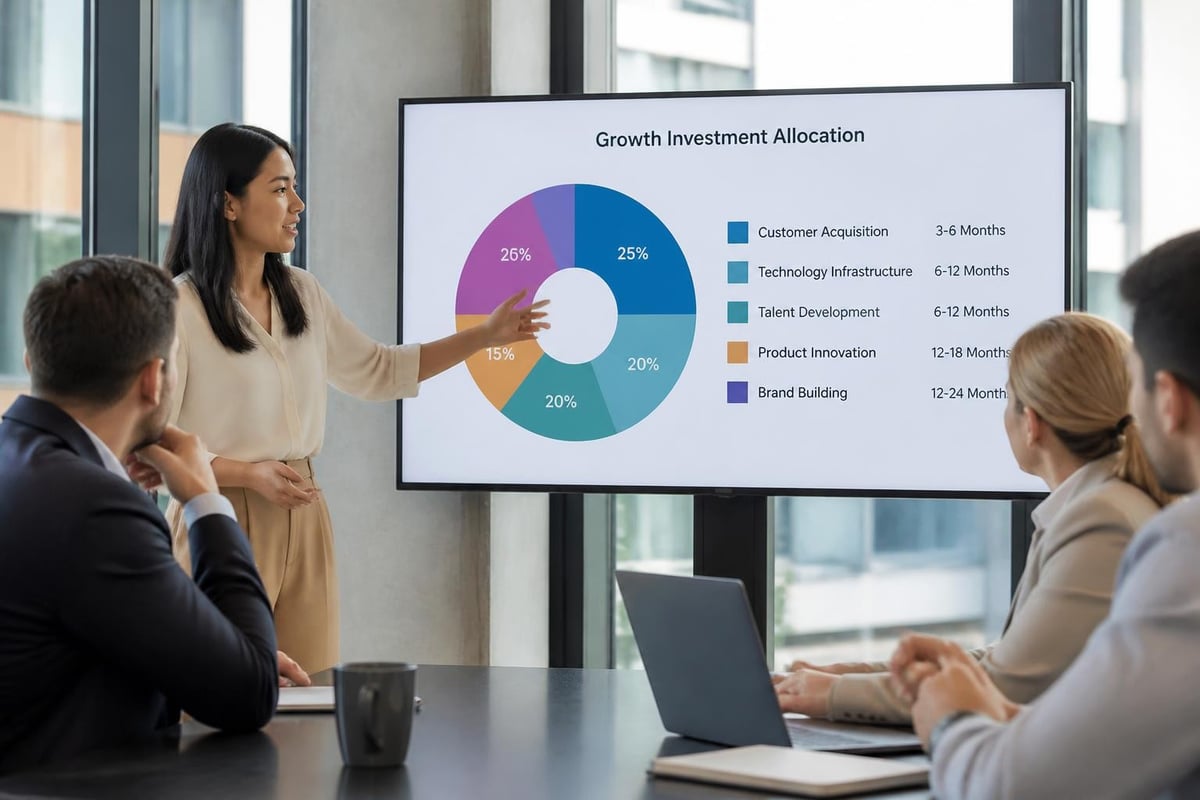
Business growth UK ambitions require appropriate financial strategies that balance investment against sustainability. Aggressive growth often demands capital injection beyond operating cash flow, necessitating external funding or reinvestment of profits that might otherwise be distributed.
Funding Options for Growth-Stage Businesses
Different funding sources suit different growth stages and business models:
- Bootstrapping maintaining full control whilst constraining growth speed
- Bank lending providing cost-effective capital with repayment obligations
- Equity investment offering larger sums whilst diluting ownership
- Government grants supporting specific activities without repayment requirements
- Crowdfunding validating market demand whilst raising capital
- Revenue-based financing aligning repayment with business performance
The Business.gov.uk portal offers comprehensive guidance on funding options, eligibility criteria, and application processes for businesses at various stages. Understanding these alternatives enables leaders to make informed capital structure decisions that support growth objectives without creating unsustainable obligations.
Financial discipline remains essential even during growth phases. Monitoring cash flow, maintaining adequate reserves, and understanding unit economics prevents the common scenario where businesses grow themselves into insolvency through inadequate working capital management.
Building High-Performance Teams
People capabilities ultimately determine whether ambitious business growth UK plans succeed or fail. Attracting, developing, and retaining talent represents one of the most significant challenges facing growing businesses. Concerns about AI talent shortages highlight how skills gaps can constrain growth even when market opportunities exist.
Competitive talent strategies encompass multiple dimensions beyond compensation. Whilst fair remuneration matters, factors including company mission, career development opportunities, work flexibility, and culture often prove equally influential in attracting high performers.
Talent Development Priorities
Growing businesses need structured approaches to developing capabilities:
- Clear career pathways showing progression opportunities within the organisation
- Continuous learning budgets supporting skill development aligned with business needs
- Mentorship programmes transferring knowledge from experienced to emerging talent
- Performance feedback systems providing regular developmental input
- Leadership development preparing individuals for expanded responsibilities as the organisation scales
Culture becomes increasingly important as businesses grow beyond founder-led stages. Deliberately cultivating values, behaviours, and working practices that align with strategic objectives prevents culture drift that can undermine cohesion and performance.
Measuring and Optimising Growth Performance
Data-driven decision-making separates businesses that achieve consistent business growth UK outcomes from those experiencing erratic results. Establishing measurement frameworks that track leading and lagging indicators enables course corrections before small issues become significant problems.
Dashboard systems providing real-time visibility of key metrics empower leaders to make informed decisions rapidly. These should balance financial metrics with operational and customer indicators that provide early warning of emerging trends.
Regular performance reviews create accountability whilst identifying improvement opportunities. Monthly or quarterly business reviews examining performance against targets, competitive developments, and strategic initiatives ensure the organisation remains focused on growth priorities.
Key Performance Indicators by Business Function
| Function | Primary KPIs | Review Frequency |
|---|---|---|
| Sales | Pipeline value, conversion rates, average deal size | Weekly |
| Marketing | Lead generation, cost per acquisition, conversion rate | Weekly |
| Operations | Delivery time, error rates, capacity utilisation | Daily |
| Finance | Cash position, revenue growth, profit margin | Monthly |
| Product | Feature adoption, customer satisfaction, development velocity | Fortnightly |
| Customer Success | Churn rate, net promoter score, expansion revenue | Monthly |
The specific metrics vary by business model and growth stage, but the principle remains consistent: measure what matters and use data to drive continuous improvement.
Navigating Economic Uncertainty
The UK business environment in 2026 presents both opportunities and challenges shaped by economic conditions, regulatory changes, and market dynamics. KPMG analysis suggests that whilst growth may be modest at the macroeconomic level, this stability provides a foundation for well-positioned businesses to capture market share.
Scenario planning helps businesses prepare for multiple potential futures rather than betting exclusively on single outcomes. Developing strategies that remain robust across different economic conditions provides resilience whilst maintaining growth momentum.
Cost discipline becomes particularly important during uncertain periods. Businesses should regularly review expenditure, eliminating activities that fail to deliver measurable returns whilst protecting investments in capabilities that drive competitive advantage. This differs from across-the-board cost cutting that often damages long-term prospects whilst achieving short-term savings.
Partnership and Collaboration Strategies
Strategic partnerships can accelerate business growth UK objectives by providing access to capabilities, markets, or resources that would be costly or time-consuming to develop internally. Effective partnerships create win-win scenarios where both parties benefit from complementary strengths.
Partnership opportunities might include distribution agreements that access new customer segments, technology integrations that enhance product offerings, or co-marketing arrangements that share acquisition costs. The key lies in identifying partners whose capabilities and customer bases align with your strategic objectives.
Building a strong network of business support services enables you to access specialist expertise as needed without maintaining full-time capabilities in every area. This flexibility particularly benefits growing businesses that need to remain agile whilst accessing professional-grade capabilities across functions from legal to financial to marketing disciplines.
Achieving ambitious business growth UK targets in 2026 requires strategic clarity, operational excellence, and adaptive execution across multiple dimensions from digital transformation to talent development. The businesses that will thrive combine traditional fundamentals with modern capabilities, particularly in AI and digital channels. Whether you're scaling an established business or accelerating a startup, OxD PR provides the comprehensive digital marketing expertise needed to enhance your online presence, drive meaningful traffic, and convert that visibility into sustainable growth. Get in touch to discover how strategic digital capabilities can accelerate your growth journey.