Creative Services Agency Guide: Your Roadmap to Success 2026
Unleash your agency’s creative potential in today’s fast-moving digital world. The creative services agency sector is thriving, yet standing out in this competitive environment demands more than talent alone.
To succeed by 2026, you must master strategy, embrace technology, and build strong client relationships. This guide lays out a proven roadmap to help you build, scale, and future-proof your agency.
Read on for essential steps, expert insights, and actionable strategies. From positioning and service development to team building, client acquisition, and technology trends, discover how to secure sustainable success in the years ahead.
Defining Your Creative Services Agency’s Unique Value Proposition
In today’s competitive environment, a creative services agency must carve out a unique space to thrive. Defining your value proposition is the cornerstone for lasting growth, helping you stand out, attract ideal clients, and adapt to industry shifts.

Understanding the Market Landscape
The creative services agency sector is expanding rapidly in the UK and worldwide. By 2024, digital transformation, niche specialisation, and remote collaboration have become defining industry trends. Agencies are increasingly differentiating themselves through innovative strategies and tailored services.
Leading agencies closely monitor competitors, constantly refining their offerings. According to the Department for Digital, Culture, Media and Sport, creative industries contributed £115.9bn to the UK economy in 2023. This underlines the sheer scale and opportunity available for a creative services agency willing to innovate.
To compete, agencies must analyse changing client demands, embrace digital tools, and anticipate shifts in consumer behaviour. Staying agile and informed is vital for maintaining relevance.
Crafting a Standout Agency Identity
A successful creative services agency begins by defining its mission, vision, and values. These core principles shape your brand and guide every client interaction. Authentic branding and compelling storytelling are essential for building trust and recognition in a crowded market.
Consider the journey of a mid-size agency that rebranded to better reflect its evolving services and culture. This shift not only refreshed its visual identity but also clarified its market positioning, resulting in increased client engagement. For practical guidance on shaping your agency’s identity, explore these branding and identity services to discover proven strategies in action.
A clear and authentic identity helps your creative services agency resonate with clients and stand out from competitors.
Identifying and Targeting Your Ideal Clients
Understanding your ideal clients is crucial for any creative services agency. Begin by segmenting the market using factors such as industry, company size, and budget. Develop detailed personas that capture client goals, challenges, and decision-making processes.
Leverage analytics tools to refine your targeting and personalise outreach. For example, targeting SMEs may require a consultative approach, while enterprise clients often seek scalable, integrated solutions. Tailoring your message and services to each segment maximises engagement and conversion rates.
Effective client targeting enables your creative services agency to build lasting relationships and drive sustainable growth.
Developing a Compelling Service Portfolio
A creative services agency thrives on a well-structured service portfolio. Popular offerings include branding, digital marketing, content production, and UX/UI design. Leading agencies often bundle services to provide comprehensive solutions and greater value.
| Service Area | Description | Client Benefit |
|---|---|---|
| Branding | Identity, logo, and message | Recognition and loyalty |
| Digital Marketing | SEO, PPC, social, email | Online visibility, reach |
| Content Production | Video, copy, imagery | Engagement, storytelling |
| UX/UI Design | Web, app, interface design | User satisfaction, retention |
Analysing top-performing agencies reveals that bundling services and positioning signature offerings can increase client retention and profitability. Continually evolving your portfolio ensures your creative services agency meets emerging client needs.
Establishing Thought Leadership
To build authority, a creative services agency must invest in content marketing, webinars, and public speaking. Regularly publishing thought-provoking content positions your team as industry experts and attracts inbound leads.
For example, one agency doubled its inbound leads within a year by consistently updating its blog with insights, case studies, and actionable tips. Hosting webinars and speaking at conferences further cements credibility and expands your professional network.
Thought leadership not only boosts brand awareness but also creates trust, making your creative services agency a go-to partner for clients seeking expertise and innovation.
Building and Scaling a High-Performance Creative Team
Building a high-performance team is crucial for any creative services agency aiming to thrive in a competitive landscape. Your agency’s success depends on attracting, nurturing, and retaining the right people, as well as fostering an environment where creativity flourishes. Let us explore the essential steps to assemble and grow a team that will drive your creative services agency forward.

Recruiting Top Talent in 2026
Attracting top talent is more challenging than ever for a creative services agency. The demand for skilled professionals continues to rise, especially as the sector expands and diversifies. Agencies now source talent through a blend of in-house recruitment, freelance networks, and remote professionals.
To build a resilient team, consider the following approaches:
- Partner with universities and creative institutions for graduate recruitment.
- Utilise specialist job boards and talent marketplaces.
- Foster an inclusive hiring process to tap into wider talent pools.
Diversity is a proven driver of innovation. According to McKinsey, agencies with diverse teams outperform their peers by 35 percent. For the latest employment trends and job distribution data within the sector, review the Creative industries employment statistics 2024. By prioritising diversity and flexibility, your creative services agency can secure the skills needed for future growth.
Fostering a Collaborative Culture
A creative services agency thrives on seamless collaboration. With remote and hybrid work now standard, investing in the right tools and processes is essential. Platforms like Slack, Asana, and Miro enable teams to communicate, manage projects, and brainstorm ideas effectively.
Encourage creativity in daily workflows by:
- Scheduling regular cross-functional brainstorming sessions.
- Creating open channels for feedback and idea sharing.
- Recognising and celebrating creative contributions.
A collaborative culture not only enhances productivity but also unlocks innovation. When every team member feels empowered to contribute, your creative services agency becomes a hub for original ideas and outstanding client solutions.
Upskilling and Professional Development
Continuous learning is the backbone of a successful creative services agency. The rapid evolution of technology and design trends means your team must stay ahead of the curve. Prioritise ongoing training in emerging tools, platforms, and methodologies.
Effective strategies include:
- Partnering with industry bodies for accredited courses.
- Hosting internal workshops and knowledge-sharing sessions.
- Encouraging attendance at conferences and webinars.
A case study reveals that targeted upskilling can increase productivity by 20 percent within a creative services agency. Investing in professional development boosts both team performance and staff satisfaction, positioning your agency as a leader in innovation. Make learning a core value, and your creative services agency will attract ambitious talent eager to grow.
Retaining and Motivating Staff
Retaining top performers is vital for any creative services agency. High turnover disrupts client relationships and stalls growth. To keep your team motivated, implement robust incentive programmes, clear career progression pathways, and regular feedback loops.
Consider these retention strategies:
- Offer flexible work arrangements and mental health support.
- Recognise achievements with awards and bonuses.
- Foster a transparent culture where staff feel valued and heard.
Benchmark data shows that average agency staff turnover is high, but agencies with strong retention strategies consistently outperform competitors. By prioritising your people, your creative services agency can sustain long-term success and build an enviable reputation in the industry.
Developing Profitable and Future-Proof Service Offerings
Staying ahead in the creative services agency landscape requires constant evolution. To secure profitability and future-proof your agency, you must anticipate shifts in client demand, embrace new technologies, and refine your value proposition. Strategic service development is the cornerstone of lasting agency growth.
Analysing Market Demand and Service Gaps
Understanding where the market is heading is essential for any creative services agency. In 2024, demand is rising for AI-driven design, immersive content, and advanced analytics. Agencies must regularly assess client needs and identify gaps using market research, competitor analysis, and customer feedback.
Segmenting your target market helps reveal untapped opportunities. For example, SMEs may prioritise affordable branding, while enterprise clients seek holistic digital transformation. Tools such as surveys, social listening, and Digital marketing insights for agencies can provide data-driven direction.
Adapting quickly to these trends ensures your creative services agency remains relevant and competitive.
Innovating with Technology and Tools
A forward-thinking creative services agency leverages technology to enhance delivery and efficiency. Integrating AI, automation, and advanced analytics into your workflow enables smarter decision-making and more personalised client solutions.
Generative AI can speed up content creation, while automation tools streamline repetitive tasks such as reporting and scheduling. Investing in cloud-based platforms ensures scalability and supports remote work, both increasingly vital for modern agencies.
Regularly trialling new tools and collaborating with tech partners keeps your creative services agency at the leading edge of innovation.
Pricing Models and Value-Based Selling
Choosing the right pricing model is critical for a creative services agency aiming for profitability. Each model offers distinct benefits and challenges:
| Pricing Model | Pros | Cons |
|---|---|---|
| Hourly | Transparent, flexible | Limits earning potential |
| Project-based | Clear scope, upfront fees | Scope creep risk |
| Retainer | Predictable revenue | Commitment required |
Value-based pricing is gaining traction, where fees reflect the business impact delivered rather than hours worked. This approach positions your creative services agency as a strategic partner, not just a service provider.
Evaluate client needs and project complexity to select the most profitable approach for your agency.
Packaging and Productising Services
Bundling services into packages or creating signature offers can set your creative services agency apart. Productised services enable clients to understand exactly what they are buying, simplifying the sales process and making pricing more transparent.
Consider offering tiered packages, such as starter, growth, and premium, tailored to different client segments. Signature offerings, like a brand refresh package or a digital audit, can become your agency’s hallmark.
Benefits of productised services include easier scaling, consistent delivery, and improved client satisfaction.
Ensuring Service Quality and Consistency
Maintaining high standards is non-negotiable for a creative services agency seeking long-term success. Implement robust quality assurance processes, such as regular peer reviews and project checklists, to catch errors early.
Encourage client feedback at key project milestones. Use this input to refine your processes and address recurring issues. Continuous improvement is vital for sustaining your agency’s reputation.
By embedding quality and consistency into every project, your creative services agency builds trust and secures repeat business.
Mastering Client Acquisition and Relationship Management
In a competitive market, client acquisition and relationship management are the backbone of any creative services agency. By mastering these areas, agencies not only win new business but also build a loyal client base that drives sustainable growth. Let’s explore the essential strategies for success in each stage of the client journey.
Building a Robust Lead Generation Engine
A creative services agency must establish a lead generation engine tailored to its target market. Inbound marketing, such as SEO, high-value content, and active social media engagement, attracts prospects seeking expertise. Outbound efforts, like personalised cold outreach and attending industry events, expand reach and create new opportunities.
For agencies looking to refine their approach, exploring creative advertising agency strategies can provide actionable techniques to stand out in a crowded marketplace. Leveraging platforms like LinkedIn to connect with decision-makers has proven effective, with some agencies reporting a 40% increase in qualified leads.
Diversifying lead sources ensures a steady pipeline, reducing reliance on any single channel. Regularly reviewing analytics helps optimise campaigns and improve conversion rates for your creative services agency.
Winning Proposals and Pitching Effectively
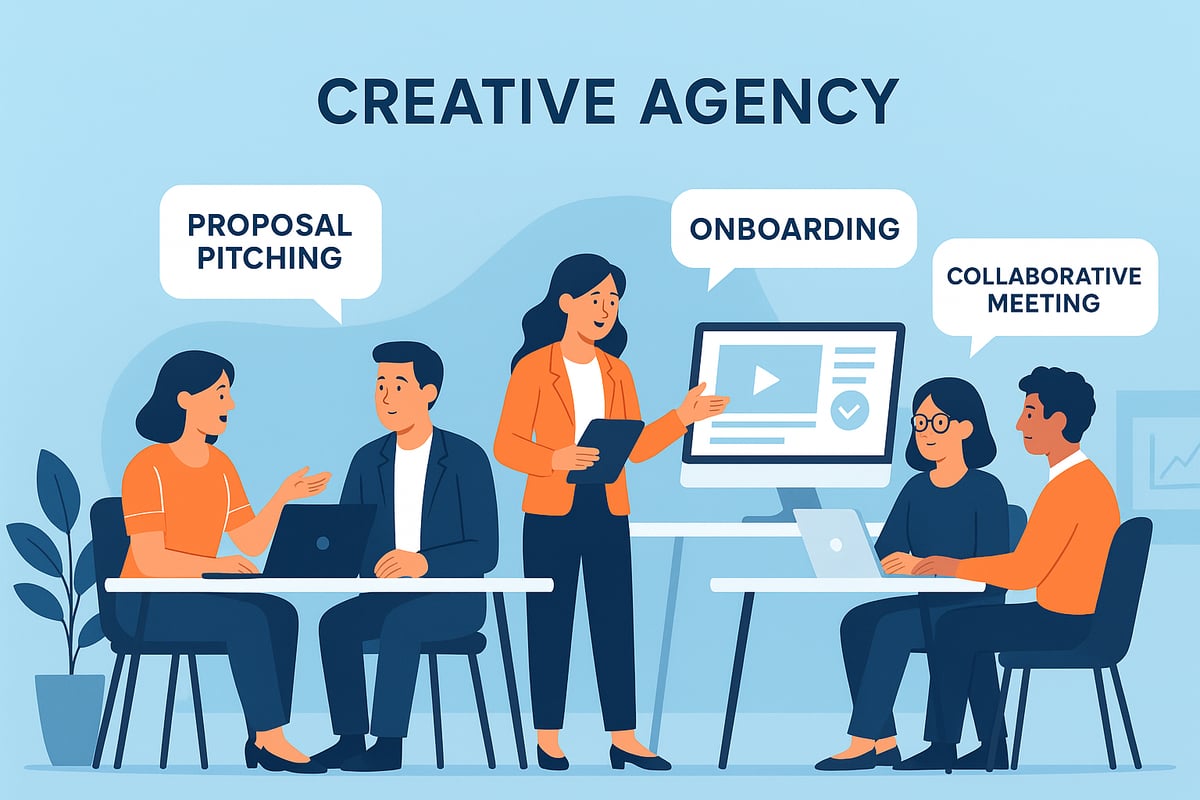
To secure clients, a creative services agency must craft proposals that directly address client needs. Begin by researching the prospect’s industry, challenges, and goals. Tailor each proposal to showcase relevant experience and clear solutions.
Effective pitches focus on clarity and value. Present your process, expected outcomes, and timelines in a visually engaging format. Use storytelling techniques to make your agency memorable. Incorporate testimonials or brief case studies to build trust.
The average win rate for new business pitches in the sector is competitive, so rehearsing presentations is crucial. Practice active listening during client meetings to adapt your pitch in real time. This approach sets your creative services agency apart from generic competitors.
Onboarding and Managing Client Expectations
A smooth onboarding process sets the tone for successful partnerships. For a creative services agency, this means providing a structured welcome, clear deliverables, and agreed communication protocols from the outset. Use a detailed onboarding checklist to ensure nothing is overlooked.
Transparency is vital. Share timelines, introduce key team members, and outline project milestones. Regular check-ins during the first weeks help address concerns early and reinforce your agency’s commitment to client success.
By managing expectations upfront, you reduce the risk of misunderstandings and lay the groundwork for a positive long-term relationship. This process reflects the professionalism and reliability of your creative services agency.
Building Long-Term Client Relationships
Long-term relationships are the most valuable asset for a creative services agency. Regular communication, proactive reporting, and demonstrating ongoing value keep clients engaged. Schedule periodic reviews to discuss results and identify new opportunities.
Upselling and cross-selling additional services can deepen partnerships. Data shows that 70% of agency revenue comes from repeat clients, highlighting the importance of nurturing these connections. Personalise your approach by understanding each client’s evolving needs.
Delivering consistent results builds trust and encourages referrals. A creative services agency that prioritises relationship management often sees higher retention rates and stronger growth.
Handling Difficult Clients and Conflict Resolution
Occasionally, a creative services agency will encounter challenging clients or project conflicts. Address issues promptly with open, solution-focused communication. Acknowledge concerns and use a structured framework to resolve disagreements.
Establish escalation processes for situations that require additional support. Document all discussions and agreed actions to maintain clarity. Proactive expectation management can often prevent conflicts before they escalate.
Training your team in conflict resolution builds confidence and fosters a positive agency culture. By handling difficult situations professionally, your creative services agency enhances its reputation and client satisfaction.
Leveraging Technology and Data for Creative Agency Success
In 2026, technology is not just a support function — it is the backbone of every creative services agency. The right mix of digital tools, smart data practices, and emerging tech can transform agency workflows, elevate client delivery, and unlock growth. Here is how your agency can harness technology and data to stay ahead in a competitive landscape.
Essential Agency Tech Stack for 2026
Selecting the right tech stack is the foundation of a high-performing creative services agency. Leading agencies rely on a blend of project management platforms, CRM systems, creative suites, and collaboration tools. For example, integrating Slack for communication, Asana for task management, and Adobe Creative Cloud for design ensures seamless operations.
A key decision is choosing between cloud-based and on-premises solutions. Cloud tools offer flexibility, remote access, and scalability, while on-premises options provide greater control over data security. Here is a quick comparison:
| Feature | Cloud-Based | On-Premises |
|---|---|---|
| Accessibility | Anywhere, anytime | Office only |
| Cost | Subscription | Upfront investment |
| Security | Vendor-managed | Agency-managed |
| Scalability | High | Limited |
According to the Creative industries growth and productivity report, agencies embracing digital transformation report higher productivity and greater client satisfaction. For any creative services agency, investing in a robust tech stack is a critical first step.
Harnessing Data Analytics for Growth
Data is the fuel powering every successful creative services agency. Tracking key metrics like client acquisition cost, project profitability, and retention rates allows agencies to make informed decisions and optimise their services.
Using analytics dashboards, agencies can visualise performance in real time. Data-driven insights help identify which campaigns deliver the best ROI and where resources should be allocated. For example, a digital campaign driven by precise analytics recently achieved a 3x return on investment for an agency client.
Regularly reviewing KPIs and acting on findings is essential. A creative services agency that leverages data analytics will consistently outperform competitors and deliver measurable results for clients.
Embracing Automation and AI
Automation and AI are transforming the creative services agency sector. By automating repetitive tasks like client reporting, scheduling, and asset management, teams can focus on high-value creative work. AI-powered tools for design, copywriting, and campaign optimisation streamline processes and boost productivity.
In fact, 80% of agencies plan to increase AI adoption by 2026, reflecting the growing importance of these technologies. For example, generative AI can accelerate content creation without sacrificing quality, enabling agencies to scale quickly.
For any creative services agency, embracing automation not only drives efficiency but also opens new avenues for service innovation.
Cybersecurity and Data Privacy Best Practices
With greater reliance on technology, protecting client data and intellectual property is more important than ever for a creative services agency. Agencies must implement robust security protocols, including encryption, regular software updates, and staff training.
Compliance with GDPR and other data regulations is non-negotiable. Establishing clear processes for handling data, responding to incidents, and managing permissions helps prevent breaches and builds client trust.
A recent example saw an agency avoid a major data loss by following strict backup and access control guidelines. Making cybersecurity a priority ensures your creative services agency remains a trusted partner.
Staying Ahead with Tech Trends
To maintain a competitive edge, every creative services agency must keep pace with rapid technological change. This means continuous tech scouting, early adoption of promising tools, and fostering a culture of experimentation and learning.
Encourage your team to explore new platforms, attend industry events, and share insights. Regular tech reviews and pilot projects help agencies anticipate shifts and adapt quickly.
By staying agile and open to innovation, a creative services agency can lead the market and deliver exceptional value to clients in 2026 and beyond.
Preparing for the Future: Trends and Challenges Facing Creative Agencies
The creative services agency landscape is evolving rapidly, shaped by shifting client expectations, new technology, and global events. To secure sustainable growth through 2026, agencies must anticipate and adapt to emerging trends. Let us explore the essential factors that will define success for every creative services agency in the years ahead.
Navigating Industry Disruption and Change
Economic fluctuations, regulatory changes, and cultural shifts are testing the resilience of every creative services agency. Agencies must develop scenario plans and business continuity strategies to weather uncertainty. For example, during market downturns, some agencies successfully pivoted their service portfolios to meet new client demands.
Industry statistics show the UK creative sector’s contribution reached record highs in 2023, highlighting both its potential and vulnerability to disruption. For further insights, see the UK creative industries economic contribution 2023. Proactive agencies constantly monitor external factors and adjust their strategies to remain competitive.
Sustainability and Ethical Considerations
Sustainability is no longer optional for a creative services agency. Clients and stakeholders increasingly demand environmentally responsible practices and ethical marketing. Integrating sustainable materials, energy-efficient workflows, and transparency into campaigns enhances brand reputation.
Recent data reveals that 62 percent of clients prefer working with agencies demonstrating strong ESG commitments. By embedding ethical considerations and responsible data use in their operations, agencies can build trust and long-term client loyalty.
The Rise of Niche and Specialist Agencies
As the market matures, hyper-specialisation offers a strategic advantage. A creative services agency that hones expertise in a micro-niche, such as immersive media or sustainability branding, can dominate its sector. This approach not only differentiates the agency but also attracts clients seeking tailored solutions.
Consider the case of a boutique agency that captured a majority share in a niche market by focusing solely on eco-conscious branding. Specialisation enables agencies to command premium pricing and build deeper client relationships.
Talent Shortages and Remote Work Evolution
Talent remains a critical asset for every creative services agency. The sector faces ongoing skills gaps, particularly in digital and emerging technologies. Adapting to hybrid and remote work models is now the norm, requiring robust management tools and inclusive practices.
For a deeper analysis of workforce challenges, explore Skills mismatches in UK creative industries. Agencies that invest in training, flexible policies, and diverse hiring are best positioned to attract and retain top talent in a competitive market.
Globalisation and Cross-Border Collaboration
Global expansion offers new growth opportunities for the creative services agency sector. However, managing international teams and projects introduces challenges around cultural intelligence, communication, and localisation. Leading agencies invest in cross-border collaboration tools and cultural training to ensure seamless delivery.
By embracing global perspectives and adapting to regional nuances, agencies can broaden their client base and deliver impactful campaigns across multiple markets.
Adapting to Client Demands and Expectations
A successful creative services agency must remain agile and responsive to evolving client needs. Personalisation, speed, and value-driven partnerships top the list of client priorities. Agencies that foster open communication, continuous feedback, and proactive problem-solving build resilience into their operations.
Ultimately, those who anticipate change and invest in innovation will thrive, turning future challenges into lasting opportunities.
As you look to position your agency for sustainable success in 2026, having the right partners and services in place is crucial. We’ve explored how standout branding, exceptional client experiences, and future ready digital strategies can set you apart in a competitive market. If you’re ready to elevate your agency’s online presence and drive measurable growth, let’s take the next step together. Discover how our tailored solutions at OxD PR can help you achieve your goals—whether you need a fresh website, SEO expertise, or a comprehensive digital strategy. Start your journey today and Get a Quote.