Digital Marketing Services Pricing Guide: Insights for 2026

Digital marketing investments are becoming more complex and vital for business growth in 2026. As technology evolves and consumer behaviour shifts, companies must carefully assess digital marketing services pricing to optimise their budgets.
The landscape is shaped by rapid advancements in AI, new advertising channels, and increasing competition. These forces drive changes in digital marketing services pricing, making it essential for businesses to stay informed and adaptable.
Understanding digital marketing services pricing is key to maximising your return on investment and maintaining a competitive edge. This comprehensive guide will break down pricing models, explore the main cost factors, and highlight emerging trends for 2026.
You will gain practical insights into service-by-service costs, what influences pricing, and how to select the right digital marketing partner. By the end, you will be equipped to plan your 2026 digital marketing budget with confidence.
The Digital Marketing Landscape in 2026
Navigating the digital marketing landscape in 2026 demands a clear understanding of industry shifts, emerging technologies, and global trends. As businesses strive to optimise digital marketing services pricing, staying informed about the evolving environment is crucial for strategic planning and maximising returns.
Key Trends Shaping Digital Marketing
The digital marketing sector in 2026 is defined by rapid technological advancements and changing consumer expectations. Key trends include:
- AI and automation becoming integral for campaign management and personalisation.
- Emergence of new platforms, such as voice search and AR/VR, expanding advertising opportunities.
- Heightened focus on data privacy, with stricter updates to GDPR and CCPA.
- Omnichannel strategies that merge digital and traditional marketing for a cohesive customer journey.
- A strong push towards hyper-personalised experiences and enhanced customer engagement.
For a deeper dive into these trends, see Top Digital Marketing Trends to Watch in 2026, which explores how predictive analytics and short-form video content are shaping the future. Understanding these trends is vital to making informed decisions about digital marketing services pricing as the market continues to evolve.
The Growing Demand for Digital Marketing Services
Global demand for digital marketing services is surging, with Statista projecting ad spend to surpass $800 billion by 2026. Small and medium-sized enterprises are increasing their digital budgets to stay competitive against larger brands.
The expansion of e-commerce and the dominance of mobile-first strategies are driving more businesses to seek expert guidance. As digital marketing services pricing becomes more complex, companies must evaluate their options carefully to ensure resources are allocated effectively.
The Role of Agencies and In-House Teams
Businesses face a strategic choice between outsourcing digital marketing to agencies or building in-house teams. Agencies offer comprehensive solutions with access to specialised talent and technology, often streamlining the management of complex campaigns.
In contrast, in-house teams provide direct control and deeper brand alignment, but may lack the breadth of expertise found in agencies. Hybrid models, which combine internal resources with agency partnerships, are gaining traction. The selection impacts digital marketing services pricing, as each approach comes with its own cost structures and value propositions.
The Impact of Technology on Service Delivery
Technology is revolutionising the way digital marketing services are delivered. Automation tools are reducing the need for manual intervention in routine tasks, allowing marketers to focus on strategy and creative work.
Advanced analytics and machine learning enable real-time campaign optimisation, improving performance and efficiency. These innovations influence digital marketing services pricing by shifting value towards strategic planning and technical expertise rather than manual labour.
Regional Variations in Digital Marketing Adoption
Digital marketing adoption and pricing vary significantly across regions. The UK market, for instance, is leading in omnichannel integration, while the US and emerging economies show different rates of technology uptake and service demand.
Pricing models also differ, with UK agencies often providing flexible solutions tailored for local businesses. Understanding these regional nuances is essential for determining digital marketing services pricing and ensuring campaigns are optimised for specific market conditions.
Common Pricing Models for Digital Marketing Services
Understanding digital marketing services pricing is crucial for businesses planning their 2026 budgets. The landscape is diverse, with agencies and consultants offering a range of pricing structures to fit different needs. By demystifying these models, you can choose the most cost-effective approach and maximise your return on investment.
Hourly vs. Project-Based Pricing
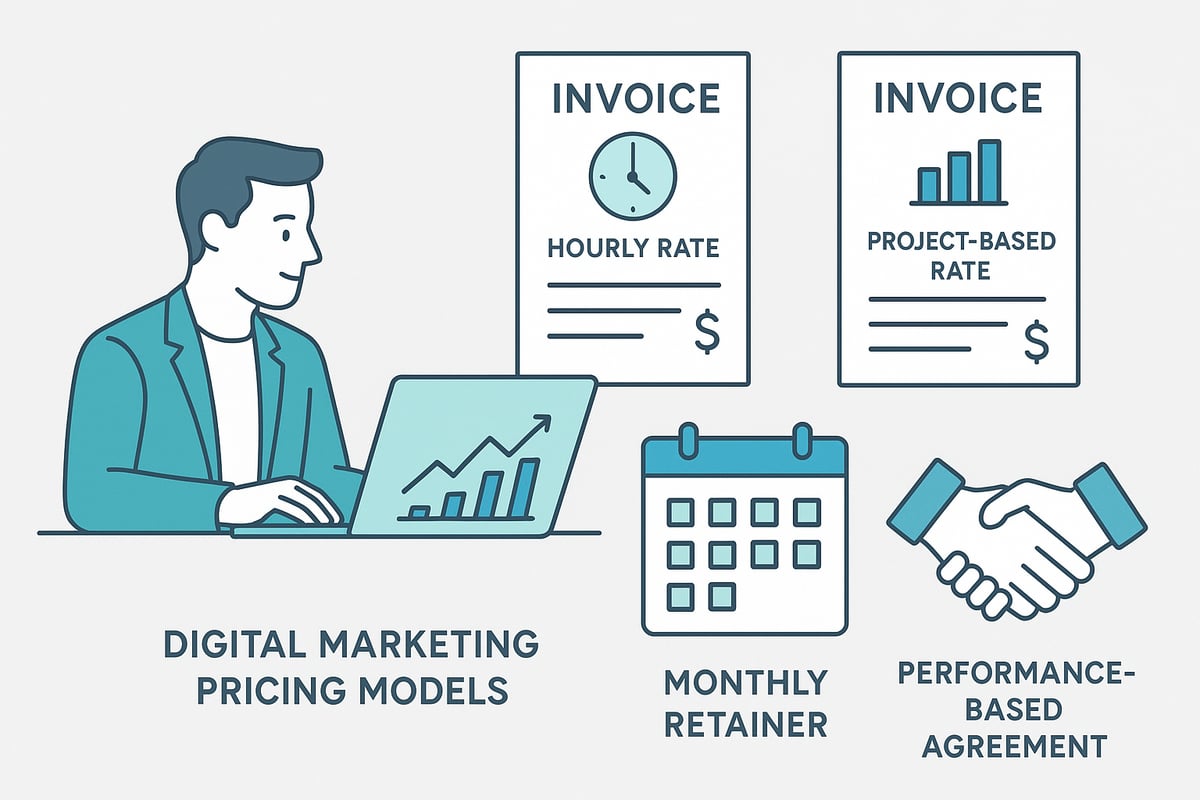
Hourly and project-based pricing are two of the most common models in digital marketing services pricing. Hourly rates are typically used for consulting, strategy sessions, or ad hoc work, offering flexibility and straightforward billing. Project-based pricing is well-suited for defined deliverables, such as website builds or one-off campaigns.
Choosing between these methods depends on your project scope and need for predictability. Hourly pricing offers granular control over costs, while project-based fees provide a clear budget from the outset. For more detail on how agencies approach these structures, see Advertising agency marketing insights.
Retainer Agreements
Retainer agreements are popular in digital marketing services pricing, particularly for ongoing partnerships. With this model, clients pay a fixed monthly fee for a set range of services, from campaign management to reporting. This ensures continuous support and helps businesses plan their budgets with confidence.
Retainers are ideal for brands requiring consistent digital marketing activity. They foster strategic collaboration and long-term growth. In 2026, typical monthly retainers range from £2,000 to over £10,000, depending on service scope and complexity.
Performance-Based Pricing
Performance-based pricing structures are gaining traction in digital marketing services pricing. Here, agency fees are tied to key performance indicators (KPIs) such as leads, conversions, or sales. This model aligns agency incentives with client outcomes, sharing both risk and reward.
Examples include pay-per-lead campaigns in PPC or affiliate marketing, where costs are directly linked to results. While this model can deliver impressive ROI, it requires clear goal-setting and robust tracking to ensure transparency and fairness for both parties.
Hybrid Pricing Models
Hybrid pricing models blend elements of hourly, project-based, and performance-based structures. This approach suits businesses with complex or evolving digital marketing needs, where flexibility is essential.
For instance, an agency might charge a base retainer for core services, with additional fees for special projects or bonuses tied to specific performance milestones. Hybrid models are increasingly popular in digital marketing services pricing, as they offer a bespoke solution tailored to unique business objectives.
Factors Influencing Pricing Model Selection
Selecting the right pricing model within digital marketing services pricing depends on several factors. Business size, industry, campaign complexity, and overall objectives all play a role. Startups may prefer project-based models for one-off needs, while established brands often benefit from ongoing retainers.
Other considerations include the desired level of control, need for flexibility, and appetite for risk-sharing. Ultimately, aligning the pricing structure with your goals is key to achieving both value and performance.
Industry Benchmarks and Data
Industry benchmarks provide valuable context for digital marketing services pricing. On average, SMEs allocate between 7% and 12% of their annual revenue to digital marketing. In the UK, agency retainers and project fees continue to rise, reflecting growing demand and increased service sophistication.
The table below summarises typical 2026 pricing ranges:
| Pricing Model | Typical Range (2026) |
|---|---|
| Hourly | £75 – £250 per hour |
| Project-Based | £1,500 – £50,000+ |
| Monthly Retainer | £2,000 – £10,000+ |
| Performance-Based | Varies, often % of results |
Staying informed about these benchmarks helps businesses negotiate fair rates and set realistic budget expectations for digital marketing services pricing.
Service-by-Service Pricing Breakdown
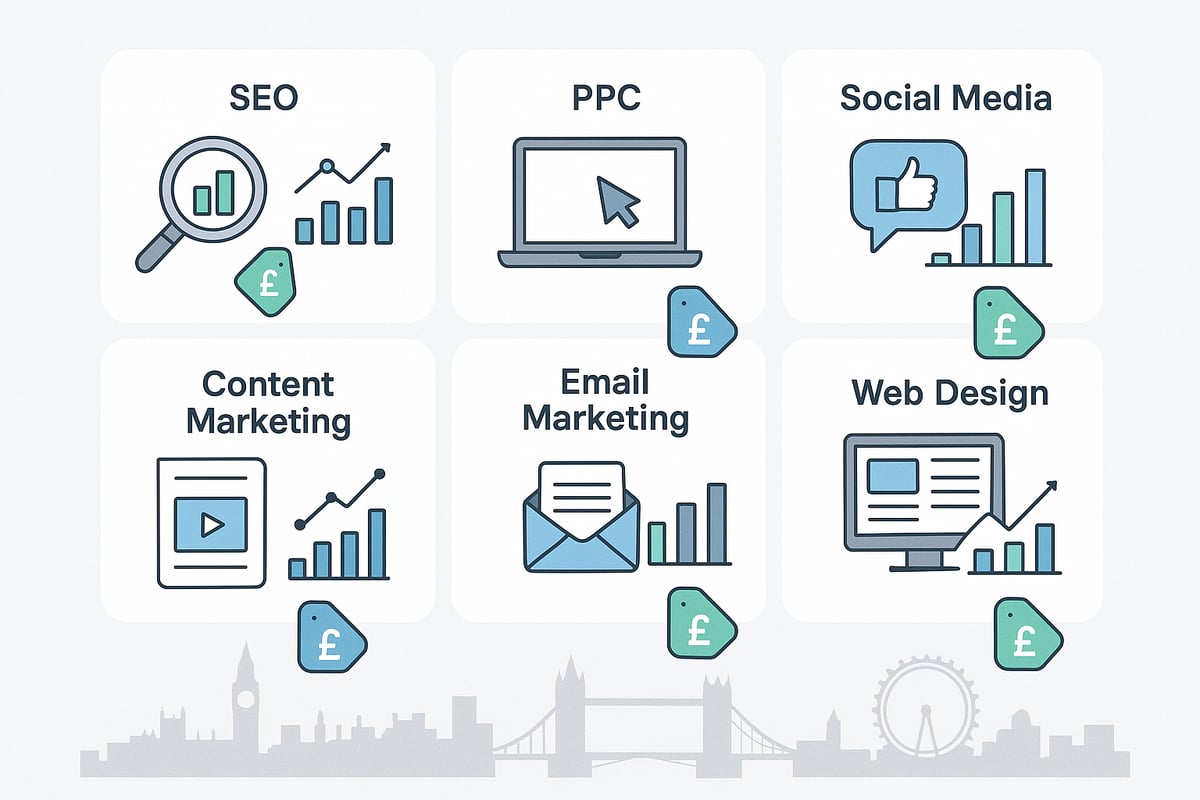
Selecting the right digital marketing services pricing structure begins with understanding how costs can vary by service. Each area of digital marketing comes with its own pricing models, influenced by complexity, competition, and business goals. Below, we break down the most common digital marketing services pricing for 2026, providing transparency for your budget planning.
SEO (Search Engine Optimisation)
SEO remains a cornerstone of digital marketing services pricing in 2026. Agencies typically offer monthly retainers, one-off audits, or hourly consulting. Average costs range from £1,000 to £8,000 per month, depending on factors such as website size, technical requirements, and competition. E-commerce sites and highly competitive industries can expect higher fees, while local SEO may be more affordable. For a detailed view of typical packages and costs, see this SEO services and pricing breakdown.
PPC (Pay-Per-Click Advertising)
PPC is a flexible component of digital marketing services pricing, with agencies charging a flat monthly fee, a percentage of ad spend (often 10–20%), or a hybrid model. Minimum monthly management fees are standard, with additional costs for creative assets or landing page development. Google Ads campaigns may have different pricing compared to social PPC, reflecting platform complexity and required expertise. Always account for both management and ad spend in your budgeting.
Social Media Marketing
Social media is a vital part of digital marketing services pricing, covering both organic and paid strategies. Monthly management fees typically range from £800 to £5,000, influenced by the number of platforms, content volume, and campaign complexity. Influencer marketing is often priced per campaign or post, with costs varying based on reach and engagement. For example, an Instagram campaign for a UK brand may cost more due to competitive market rates and high demand for creative content.
Content Marketing
Content marketing is an essential element of digital marketing services pricing, encompassing blog writing, video production, and infographics. Blog posts generally cost between £100 and £500 each, while professional videos start from £1,000. Many agencies offer bundled content packages or ongoing retainers for businesses seeking regular content. The final pricing depends on content type, quality, and the strategic goals of your campaign.
Email Marketing
Email marketing continues to deliver strong ROI and is often included in digital marketing services pricing. Setup fees can apply, followed by campaign management and automation costs. In 2026, average monthly fees range from £500 to £3,000, based on list size, segmentation needs, and campaign frequency. For e-commerce, automated email flows and personalisation features may increase costs but drive better results.
Web Design & Development
Web design and development represent a significant part of digital marketing services pricing, especially for businesses requiring a bespoke online presence. Project-based pricing typically starts at £2,000 and can exceed £25,000 for complex sites. Ongoing maintenance and hosting are additional considerations, usually billed monthly or annually. For SMEs, a website redesign in 2026 may fall in the lower to mid-range if requirements are straightforward.
Additional Services (Branding, App Development, Analytics)
Digital marketing services pricing also covers branding, app development, and analytics. Branding packages range from £1,500 to £10,000, depending on the depth of strategy and creative work required. App development is more variable, with costs between £10,000 and £100,000 or more, reflecting functionality and integration needs. Analytics and reporting may be bundled or charged separately, especially if advanced tools or custom dashboards are involved.
Summary Table: Service Pricing Overview (2026)
| Service | Typical Pricing (2026) | Common Model |
|---|---|---|
| SEO | £1,000–£8,000/month | Retainer, Audit |
| PPC | 10–20% of ad spend, min fees | Flat, Percentage |
| Social Media Marketing | £800–£5,000/month | Retainer, Campaign |
| Content Marketing | £100–£500/post, £1,000+/video | Per piece/Retainer |
| Email Marketing | £500–£3,000/month | Retainer, Campaign |
| Web Design & Development | £2,000–£25,000+ (project) | Project-Based |
| Branding | £1,500–£10,000+ | Package |
| App Development | £10,000–£100,000+ | Project-Based |
| Analytics | Varies, often included | Add-on/Included |
Understanding digital marketing services pricing by category allows businesses to allocate budgets more effectively and maximise ROI. Use this breakdown as a reference when comparing proposals or planning your digital strategy.
Key Factors Influencing Digital Marketing Pricing in 2026
Understanding the factors that shape digital marketing services pricing is essential for businesses planning their 2026 budgets. Multiple variables impact costs, from campaign complexity to the latest technology trends. By breaking down these influences, you can make informed decisions that maximise value and ROI.
Complexity and Scope of Work
The complexity and scope of a project are primary drivers of digital marketing services pricing. If your campaign spans multiple channels, targets diverse audiences, or requires advanced integrations, expect higher costs.
For example, a comprehensive omnichannel strategy demands more planning and coordination than a single-channel campaign. The number of deliverables, such as ads, landing pages, or content pieces, also increases project scope. Businesses should define their needs clearly to receive accurate estimates and avoid unnecessary expenses.
Industry and Competition
The industry you operate in significantly affects digital marketing services pricing. Highly competitive sectors like finance, legal, or e-commerce typically command premium fees due to increased demand and the need for sophisticated tactics.
Niche markets, on the other hand, may see lower pricing but often require agencies with specialised expertise. Analysing your competitors' digital presence can help set realistic expectations for budget and outcomes. Remember, the more competitive your industry, the more investment is needed to stand out.
Geographic Location and Target Audience
Geographic factors influence both pricing and service delivery. Digital marketing services pricing varies between local, national, and global campaigns. Targeting audiences in multiple countries often involves additional costs for localisation, translation, and cultural adaptation.
For UK-based companies, targeting domestic customers may be more cost-effective than international expansion. However, global campaigns can deliver greater reach and long-term growth if budgeted appropriately. Always consider where your target audience is located and adapt your strategy accordingly.
Agency Reputation and Expertise
The reputation and expertise of your chosen agency play a pivotal role in digital marketing services pricing. Agencies with proven track records, industry awards, or high-profile clients often command higher fees, reflecting their ability to deliver superior results.
Choosing an experienced team can reduce risk and enhance campaign effectiveness. However, smaller agencies or freelancers may offer competitive pricing for less complex projects. Evaluate portfolios, testimonials, and case studies to ensure alignment with your business goals.
Technology and Tools
The use of advanced technology is reshaping digital marketing services pricing in 2026. Agencies increasingly leverage automation, AI-driven analytics, and proprietary tools to optimise campaigns and boost efficiency. These innovations add value but may also increase costs.
Staying informed about The 6 Marketing Trends to Watch in 2026 can help you anticipate how technology will affect your marketing spend. Investing in cutting-edge solutions can yield higher ROI, especially as personalisation and data-driven insights become industry standards.
Customisation and Personalisation
Customised strategies often lead to better results, but they also influence digital marketing services pricing. Bespoke campaigns require more research, planning, and creative input compared to standard packages.
Personalisation, such as tailored messaging or dynamic content, increases relevance for your audience and can drive higher engagement rates. However, the added complexity typically comes with increased costs. Weigh the benefits of customisation against your budget and desired outcomes.
Contract Length and Commitment
The terms of your agreement can affect digital marketing services pricing. Longer contracts or retainer agreements often come with discounted rates, providing better value for ongoing support and strategic partnership.
Short-term or project-based contracts offer flexibility but may result in higher per-project fees. Consider your long-term marketing objectives when negotiating terms. Balancing flexibility with cost savings is key to building a sustainable relationship with your chosen provider.
Choosing the right balance of these factors ensures your digital marketing investment delivers measurable results in 2026. By understanding what drives digital marketing services pricing, you can budget with confidence and stay ahead in a competitive marketplace.
How to Choose the Right Digital Marketing Service Provider
Selecting the right partner for your digital marketing services pricing strategy is crucial for long-term growth. The process begins by understanding your business objectives and identifying what you want to achieve. Whether you are looking for lead generation, increased brand awareness, or improved online sales, defining precise goals will guide your selection. Establishing KPIs and budget limits upfront ensures you only consider agencies whose offerings align with your expectations. This clarity streamlines the decision-making process and prevents wasted time on unsuitable proposals.
Assessing Your Business Needs and Goals
Before exploring digital marketing services pricing, assess your unique requirements. Consider your target audience, preferred channels, and the results you want to achieve. Are you focused on local SEO, comprehensive PPC, or multi-channel campaigns? Pinpointing these details will help you filter agencies that specialise in your industry and offer tailored solutions. By matching your goals with agency strengths, you maximise the likelihood of a successful partnership.
Evaluating Agency Expertise and Track Record
Experience matters when it comes to digital marketing services pricing. Review each agency’s portfolio, client testimonials, and case studies. Look for proven success in your sector or with similar challenges. Agencies with industry recognition, awards, or long-standing client relationships often deliver greater value. Prioritise those who demonstrate up-to-date knowledge and a proactive approach to ongoing industry changes.
Comparing Proposals and Pricing Structures
When comparing digital marketing services pricing proposals, scrutinise the breakdown of costs and deliverables. Transparent agencies will detail what is included, such as campaign management, creative assets, and reporting. Beware of hidden fees or vague contract terms. For example, when reviewing services like email marketing service costs, confirm whether automation, copywriting, and analytics are covered. Use a comparison table to evaluate value, not just price.
| Criteria | Agency A | Agency B | Agency C |
|---|---|---|---|
| Service Inclusions | Yes | Partial | Yes |
| Transparent Pricing | Yes | No | Yes |
| Reporting Frequency | Monthly | Quarterly | Monthly |
The Value of Transparency and Communication
Strong communication is essential for effective digital marketing services pricing relationships. Choose providers who offer clear, regular reporting and set expectations for collaboration. Agencies that are open about their processes and results foster trust and ensure you remain informed throughout the campaign lifecycle. This transparency is key to building a partnership that adapts to changing needs and market conditions.
OxD PR – London Digital Marketing Agency
OxD PR stands out by delivering comprehensive digital marketing services pricing solutions, including web design, SEO, branding, app development, and integrated campaigns. Their approach is grounded in measurable ROI, creative excellence, and tailored strategies for SMEs, startups, and global brands. With a reputation for end-to-end support and proven results, OxD PR offers direct consultations and bespoke quotes. Before you commit, ask about included services, reporting methods, and post-campaign support to ensure your needs are fully met.
Future-Proofing Your Digital Marketing Investment
Staying ahead in digital marketing requires more than keeping up with trends. To maximise value and maintain a competitive edge, businesses must anticipate changes that will influence digital marketing services pricing in 2026. This section explores key strategies and considerations to ensure your investment remains effective and adaptable.
Emerging Technologies and Their Impact on Pricing
Artificial intelligence, automation, and advanced analytics are transforming the way digital marketing campaigns are planned and executed. As these technologies mature, they are reshaping digital marketing services pricing by reducing manual tasks and enabling sophisticated targeting.
For example, AI-driven content creation tools can streamline the production process, allowing agencies to deliver high-quality outputs at greater speed. Automation in campaign management also leads to efficiency gains, though it increases demand for skilled strategists and data analysts.
To stay updated on these shifts and how they affect your investment, consult resources like Digital Marketing Trends for 2026, which highlight the latest developments in paid advertising and performance marketing.
Preparing for Regulatory Changes
Data privacy regulations are continuously evolving. The introduction of new updates to GDPR and CCPA in 2026 will influence how agencies collect, store, and use consumer data.
Businesses must factor in the potential costs of compliance, including investing in secure data management systems and updating privacy policies. Non-compliance can result in fines and reputational damage, making it essential to choose partners who prioritise regulatory adherence.
Adapting your strategy early can reduce risks and prevent costly adjustments down the line.
Budgeting for Flexibility and Scalability
The digital landscape is unpredictable, with new platforms and consumer behaviours emerging rapidly. Allocating part of your digital marketing budget for experimentation ensures you can test innovative channels without jeopardising core campaigns.
Flexible budgeting also allows you to scale successful initiatives quickly or pivot when market conditions change. This approach is central to optimising digital marketing services pricing and keeping your business agile.
- Set aside a contingency fund for new platform trials.
- Regularly review campaign performance to reallocate funds effectively.
- Use scalable tools that grow with your needs.
Measuring ROI and Adjusting Spend
Accurate measurement is crucial for evaluating the effectiveness of your digital marketing activities. Implement robust tracking and attribution models to understand how each channel contributes to your objectives.
By analysing performance data, you can make informed decisions about where to increase or reduce spend. This continuous adjustment process helps align your digital marketing services pricing with real business outcomes.
Tools that offer real-time reporting and clear KPIs are invaluable for this purpose.
Building Long-Term Partnerships
Establishing strong relationships with digital marketing agencies leads to better results over time. Long-term partnerships foster a deeper understanding of your brand, enabling agencies to develop more effective, bespoke strategies.
Committed partnerships often come with benefits such as priority support, access to new technologies, and collaborative growth planning. These factors can enhance the value you receive from your digital marketing services pricing.
Investing in Skills and Training
Internal teams play a critical role in successful digital marketing. Upskilling your staff in areas like AI, analytics, and content creation ensures they complement agency efforts and adapt to new tools quickly.
Regular training keeps your business at the forefront of industry developments. Investing in education supports better decision-making and can lead to cost savings by reducing reliance on external providers.
Scenario Planning for 2026 and Beyond
Future-proofing your investment means preparing for economic shifts, evolving consumer behaviours, and technological disruptions. Scenario planning helps you identify potential risks and opportunities, allowing you to adjust your digital marketing services pricing strategy proactively.
Consider factors such as market volatility, the rise of new competitors, and changes in consumer expectations. By staying adaptable and forward-thinking, your business will be well-positioned to thrive in a rapidly changing digital landscape.
As you plan your digital marketing budget for 2026, understanding the latest pricing models and industry trends is key to making informed, strategic decisions. We’ve explored how technology, competition, and agency expertise shape costs—so you can maximise your ROI and stay ahead of the curve. If you’re ready to see how these insights translate into tailored solutions for your business, you don’t have to navigate the process alone. Let’s take the next step together—discover transparent pricing and bespoke strategies designed for your goals by requesting a Get a Quote from OxD PR today.