Media Agency Guide: Strategies for Digital Success

The digital landscape has fundamentally transformed how businesses communicate with their audiences, creating unprecedented opportunities for brands to connect with consumers across multiple touchpoints. A media agency serves as the strategic partner that navigates this complex ecosystem, coordinating campaigns across television, digital platforms, social media, and traditional channels whilst ensuring every pound spent delivers measurable returns. As advertising budgets shift and consumer behaviours evolve, understanding the role and value of professional media planning has become essential for businesses seeking sustainable growth in 2026.
Understanding the Modern Media Agency Landscape
A media agency specialises in planning, negotiating, and purchasing advertising space across various channels on behalf of clients. Unlike traditional advertising agencies that focus primarily on creative development, these specialists concentrate on ensuring messages reach the right audiences at optimal times and costs.
The distinction between different agency types has become increasingly important as the marketing ecosystem grows more complex. Whilst creative agencies develop compelling messages and visual content, media specialists focus on distribution strategy and audience targeting. This division of labour allows businesses to benefit from deep expertise in both creative execution and strategic placement.
Core Services and Capabilities
Modern media planning extends far beyond simply purchasing advertising slots. Today's agencies provide comprehensive services that span the entire campaign lifecycle:
- Strategic media planning that aligns channel selection with business objectives
- Audience research and segmentation to identify high-value customer groups
- Media buying and negotiation to secure optimal rates and placements
- Campaign tracking and optimisation using real-time performance data
- Cross-channel integration ensuring consistent messaging across touchpoints
The shift towards creator economy advertising has added another dimension to agency capabilities. As spending in this sector now exceeds traditional media industry budgets, forward-thinking agencies have developed expertise in influencer partnerships, sponsored content, and platform-specific creative adaptations.
| Service Area | Traditional Approach | 2026 Best Practice |
|---|---|---|
| Audience Targeting | Demographic segments | Behavioural and psychographic profiles |
| Media Mix | Predetermined allocations | Dynamic, data-driven adjustments |
| Performance Measurement | Post-campaign reporting | Real-time dashboard monitoring |
| Creative Adaptation | One-size-fits-all assets | Platform-specific optimisation |
Strategic Media Planning in the Digital Age
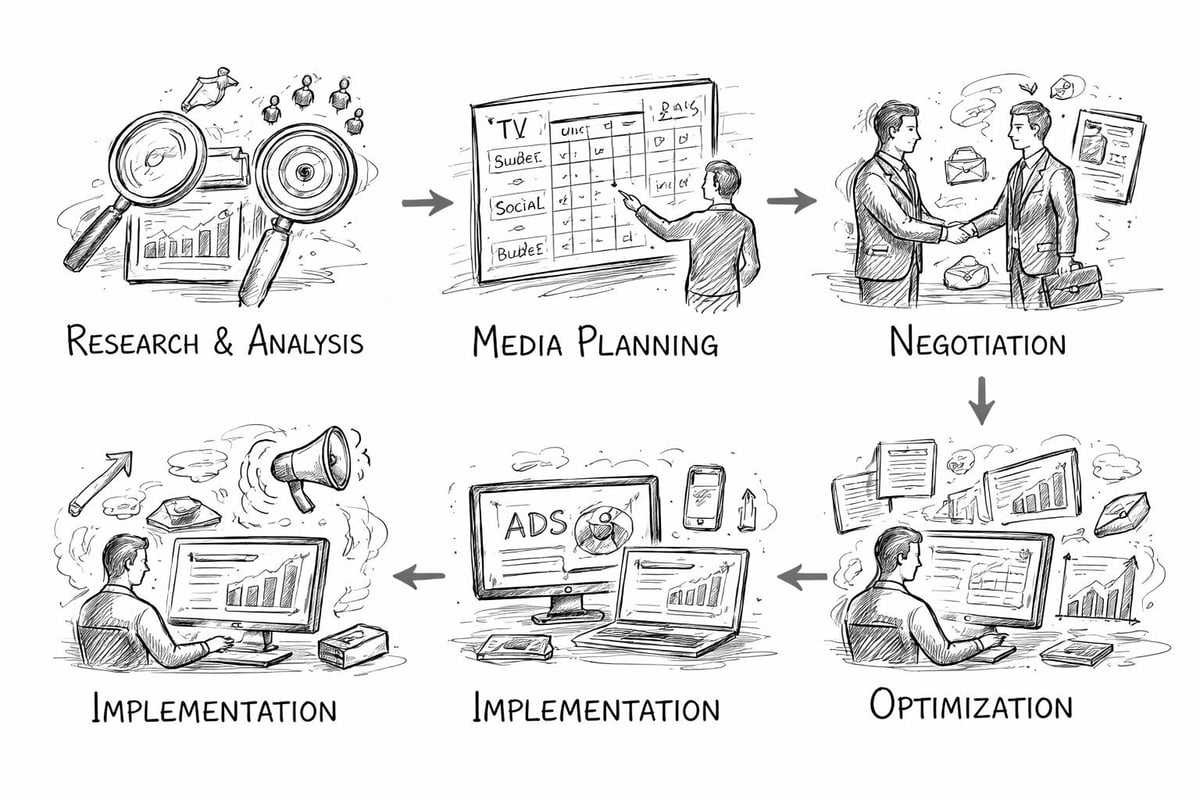
Effective media planning begins with thorough research and clear objective setting. A professional media agency conducts comprehensive market analysis, examining competitor activities, audience behaviours, and emerging platform trends before recommending channel investments.
The planning process typically follows a structured methodology. First, agencies establish campaign goals aligned with broader business objectives, whether those involve brand awareness, lead generation, or direct sales conversion. Next comes audience definition, identifying not just demographic profiles but psychographic characteristics and media consumption habits.
Channel Selection and Budget Allocation
Determining the optimal media mix requires balancing multiple factors: audience reach, engagement potential, cost efficiency, and strategic fit. Businesses often struggle with this complexity, particularly as key trends in media agencies for 2025 emphasise the growing importance of AI-driven decision-making and cloud-based operations.
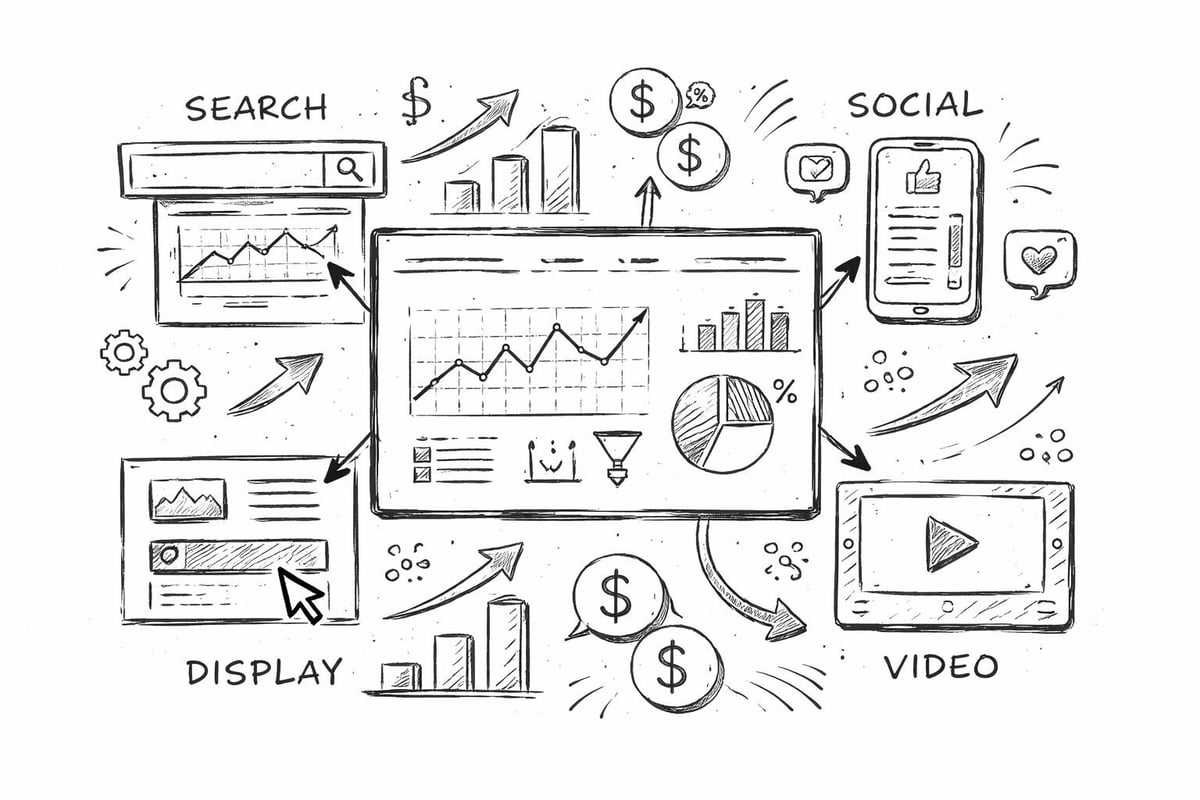
Digital channels offer unprecedented targeting precision and measurement capabilities. Search advertising reaches consumers actively seeking solutions, whilst social platforms enable detailed audience segmentation based on interests, behaviours, and demographics. Connected television (CTV) combines the impact of video storytelling with digital targeting precision.
Traditional media maintains relevance for specific objectives:
- Television delivers mass reach and brand-building impact
- Radio provides cost-effective frequency in local markets
- Print publications reach engaged, affluent demographics
- Out-of-home advertising creates unavoidable brand presence
The most sophisticated campaigns integrate multiple channels synergistically. Creative strategy agencies understand that consistent messaging across touchpoints amplifies impact whilst allowing platform-specific optimisation to maximise engagement.
Media Buying and Negotiation Excellence
Securing optimal value requires expertise, relationships, and market knowledge that most businesses cannot develop internally. Professional media buyers leverage their purchasing power and platform relationships to negotiate rates significantly better than individual advertisers could achieve independently.
The buying process has evolved considerably with programmatic advertising technology. Automated platforms now handle much of the transaction mechanics, enabling real-time bidding for digital inventory. However, premium placements and traditional media still require direct negotiation with publishers and broadcasters.
Programmatic Versus Direct Buying
Understanding when to use automated versus negotiated approaches represents a critical agency competency. Programmatic excels for reaching specific audiences at scale across numerous websites and apps, whilst direct buying secures exclusive placements or sponsorships that carry additional brand value.
| Buying Method | Best Use Cases | Key Advantages | Typical Channels |
|---|---|---|---|
| Programmatic | Audience targeting at scale | Efficiency, precision, real-time optimisation | Display, video, mobile, audio |
| Direct | Premium placements, sponsorships | Brand safety, exclusivity, context alignment | Television, print, major digital publishers |
| Hybrid | Integrated campaigns | Combines reach with premium positioning | Cross-channel initiatives |
Agencies also navigate the increasingly complex landscape of advertising technology platforms. From demand-side platforms (DSPs) that automate media buying to data management platforms (DMPs) that enhance audience targeting, digital marketing services now require technical expertise alongside strategic thinking.
Performance Measurement and Optimisation
The value of professional media management extends well beyond initial campaign setup. Continuous monitoring and optimisation separate exceptional results from mediocre performance, particularly as media agency trends emphasise the importance of platforms like YouTube and TikTok that require ongoing content and targeting refinement.
Modern measurement frameworks track multiple metrics across the customer journey:
- Awareness metrics including reach, impressions, and brand lift
- Engagement indicators such as click-through rates, video completion, and social interactions
- Conversion tracking from initial lead capture through final purchase
- Customer lifetime value showing long-term relationship development
Attribution and ROI Analysis
Determining which touchpoints deserve credit for conversions represents one of marketing's most challenging analytical problems. A customer might see a television advertisement, research the brand through organic search, click a social media advert, and finally convert through a retargeting campaign. Which channel should receive credit?
Sophisticated attribution modelling attempts to distribute value appropriately across the customer journey. First-click attribution credits the initial touchpoint, whilst last-click emphasises the final interaction. Multi-touch models recognise that multiple channels contribute to conversion outcomes.
The most effective media agencies provide transparent reporting that helps clients understand not just what happened, but why specific channels performed as they did. This analytical capability enables informed budget reallocation towards highest-performing tactics whilst identifying underperforming elements requiring adjustment.
Navigating Industry Challenges and Disruption
The media landscape faces significant headwinds that test even established agencies. Challenges facing advertising companies include artificial intelligence disruption, brands bringing capabilities in-house, and industry consolidation reducing agency independence.
AI technologies now automate tasks that previously required human expertise. Programmatic buying platforms optimise bids across millions of ad impressions, natural language processing analyses sentiment in social conversations, and machine learning predicts which creative variations will perform best with specific audiences.
The In-Housing Debate
Many large brands have established internal media teams, questioning whether external agencies remain necessary. This trend reflects several factors: desire for greater control over data and customer relationships, potential cost savings, and concerns about agency transparency in media transactions.
However, in-housing presents significant challenges. Building comprehensive capabilities requires substantial investment in technology, talent, and training. Few organisations achieve the scale to negotiate rates competitive with agency buying power. External specialists also provide objective perspectives unburdened by internal politics or legacy assumptions.
Businesses benefit most from hybrid models that combine:
- Internal strategic oversight and brand knowledge
- Agency expertise in specialised channels and tactics
- Technology platforms that enable transparency and collaboration
- Flexible structures that adapt as capabilities develop
The agencies demonstrating greatest resilience focus on delivering genuine strategic value rather than simply executing tactical programmes. They invest in proprietary technology, develop deep vertical expertise, and demonstrate clear ROI through sophisticated measurement frameworks.
Selecting the Right Agency Partner
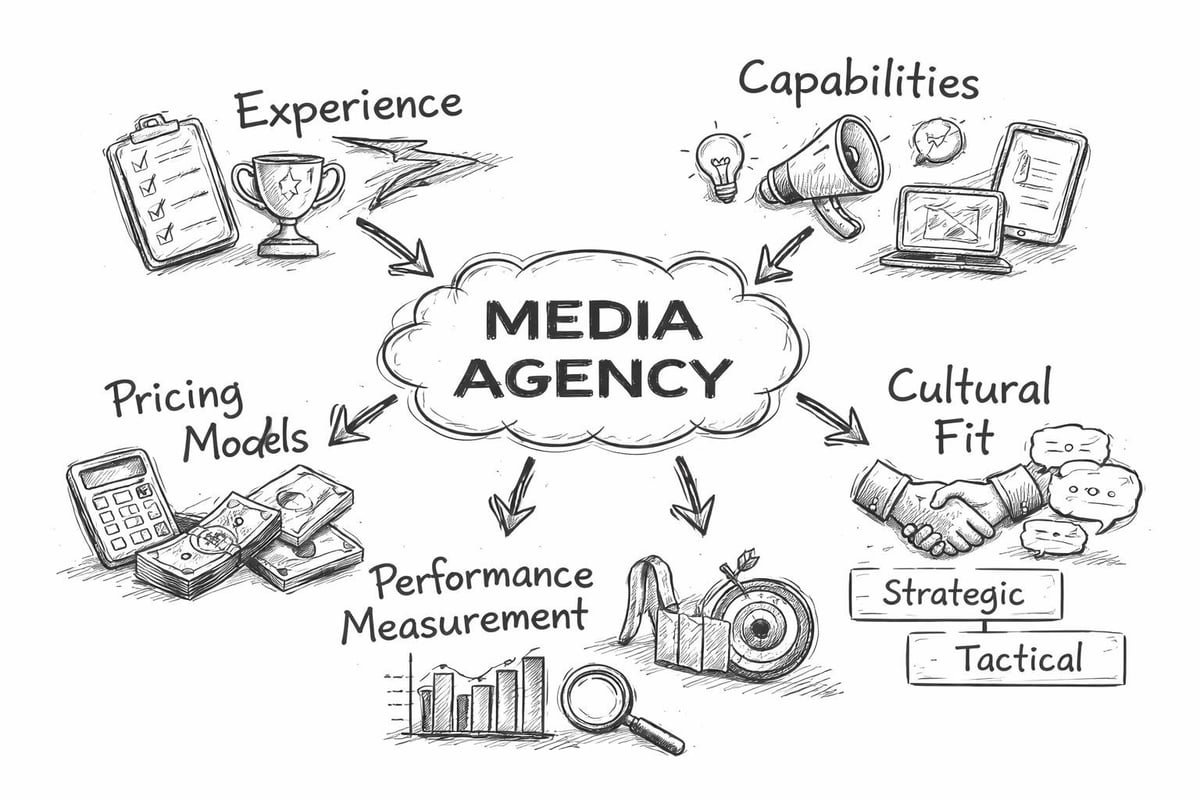
Choosing a media agency represents a significant decision that impacts marketing effectiveness for years. The selection process should evaluate multiple dimensions beyond simply comparing rate cards or reviewing client rosters.
Start by defining your specific needs and objectives. Businesses requiring comprehensive campaign management across multiple channels have different needs than those seeking specialist expertise in emerging platforms like TikTok or connected television. Understanding whether you need strategic planning, buying execution, or both helps narrow potential partners.
Evaluation Criteria and Due Diligence
Key factors in agency assessment include:
- Relevant experience in your industry and with similar business challenges
- Technical capabilities spanning both platforms and analytical tools
- Team expertise reflected in certifications, industry recognition, and retention
- Transparency regarding fees, media costs, and performance reporting
- Cultural alignment ensuring smooth collaboration and shared values
Request case studies demonstrating measurable results, not just creative awards or brand-name clients. The most impressive presentations often mask underlying performance issues. Dig deeper into methodology, asking how they approach audience research, optimise campaigns, and measure success.
Understanding agency compensation models prevents future misunderstandings. Some charge percentage-based fees on media spend, whilst others work on fixed retainers or project fees. Media commissions from publishers can create conflicts of interest unless fully disclosed. The most transparent partnerships involve clear discussions about all revenue sources.
Integration with Broader Marketing Efforts
Media planning cannot operate in isolation from other marketing activities. The most successful campaigns integrate media strategy with content creation, SEO initiatives, brand identity development, and customer experience design.
Consider how paid media amplifies owned channels like your website and social profiles. Search advertising directs traffic to optimised landing pages, whilst social campaigns drive followers to branded content. Display advertising builds awareness that increases branded search volume, benefiting organic visibility.
Content marketing and media planning particularly benefit from integration. Agencies working alongside content agencies ensure promotional budgets support valuable content rather than promotional messages that audiences actively avoid. Sponsored articles, native advertising, and content amplification represent the intersection of these disciplines.
Cross-Functional Collaboration Models
Effective integration requires clear communication frameworks and shared success metrics. Weekly or fortnightly alignment sessions ensure media plans reflect content calendars, product launches, and seasonal initiatives. Shared dashboards provide visibility into how paid, owned, and earned media collectively drive business objectives.
Technology platforms increasingly facilitate this integration. Marketing clouds from major vendors connect media buying platforms with content management systems, customer relationship management tools, and analytics packages. Whilst these platforms require significant investment, they enable the seamless data flow necessary for truly integrated marketing.
| Integration Point | Coordination Mechanism | Expected Outcome |
|---|---|---|
| Media + SEO | Keyword research sharing, landing page optimisation | Higher quality scores, lower acquisition costs |
| Media + Content | Editorial calendar alignment, content amplification | Greater content reach and engagement |
| Media + CRM | Audience segment targeting, customer journey mapping | Improved conversion rates, customer lifetime value |
Emerging Opportunities and Future Directions
The media landscape continues evolving at remarkable pace, creating both challenges and opportunities for businesses and their agency partners. Retail media networks have emerged as significant advertising platforms, allowing brands to reach consumers on e-commerce sites where purchase intent peaks.
Connected television represents another high-growth area combining the brand-building power of video with digital targeting precision. As traditional linear television viewership declines, particularly amongst younger demographics, CTV enables advertisers to reach cord-cutters through streaming platforms.
Voice-activated devices and audio streaming platforms open new channels for reaching audiences during previously inaccessible moments. Podcast advertising delivers engaged listeners in intimate contexts, whilst smart speaker platforms enable transactional advertising where consumers can immediately act on offers.
The metaverse and immersive experiences remain nascent but potentially transformative. Whilst widespread adoption remains uncertain, forward-thinking agencies experiment with virtual world advertising, augmented reality campaigns, and gaming platform integrations.
Businesses positioning for future success should:
- Maintain flexibility in channel allocations as platforms rise and fall
- Test emerging channels systematically rather than chasing every trend
- Prioritise first-party data collection as privacy regulations tighten
- Develop capabilities in video content creation as format dominance increases
- Build measurement frameworks that accommodate cross-device, cross-platform journeys
Regardless of how specific platforms evolve, fundamental principles endure. Successful media strategies start with deep audience understanding, deliver relevant messages in appropriate contexts, measure results rigorously, and optimise continuously based on performance data. Agencies providing genuine strategic partnership in these areas will remain valuable regardless of tactical platform shifts.
Selecting and working with the right media planning partner can transform your marketing effectiveness, ensuring every pound invested delivers maximum impact across the channels where your audiences engage most actively. Whether you're exploring paid search, social advertising, traditional media, or emerging platforms, strategic expertise and buying power make substantial differences to both reach and return on investment. OxD PR brings comprehensive digital marketing capabilities alongside strategic media planning, helping London businesses and brands worldwide enhance their online presence through integrated campaigns that drive real traffic and measurable results.