Social Media Services: Strategy, Tools & Growth in 2026

In 2026, businesses face an increasingly complex digital landscape where organic reach is declining, platform algorithms evolve weekly, and audience expectations have never been higher. Professional social media services have emerged as essential infrastructure for brands seeking to cut through the noise, build authentic communities, and convert engagement into revenue. Whether you're a startup establishing your first digital footprint or an established enterprise refining your strategy, understanding what professional social media management entails and how to leverage it effectively can determine whether your brand thrives or fades into obscurity.
What Social Media Services Actually Include
Social media services encompass far more than posting updates and responding to comments. Professional offerings span strategic planning, content creation, community management, paid advertising, influencer coordination, crisis management, and comprehensive analytics.
At the strategic level, agencies develop platform-specific roadmaps aligned with business objectives. This includes competitive analysis, audience research, content calendars, and KPI frameworks. Strategy work also addresses brand identity consistency across channels, ensuring visual and tonal coherence whether audiences encounter you on LinkedIn, Instagram, or TikTok.
Content production represents a substantial component of most service packages. This includes:
- Copywriting optimised for each platform's unique culture and algorithm
- Graphic design for feed posts, Stories, Reels, and carousel content
- Video production ranging from short-form vertical content to long-form thought leadership
- Photography tailored to platform specifications and audience preferences
- Motion graphics and animation for attention-grabbing announcements
Community management often separates professional services from DIY efforts. Trained specialists monitor mentions, respond to enquiries, moderate discussions, and identify advocacy opportunities. They understand the nuance between a genuine complaint requiring escalation and routine feedback that can be addressed directly.

Platform Selection and Specialisation
Not all platforms deserve equal investment. According to Pew Research Center’s 2024 social media report, platform usage varies dramatically by demographics, with younger audiences gravitating toward TikTok and Snapchat whilst professionals cluster on LinkedIn.
Professional social media services help businesses allocate resources efficiently across platforms. A B2B software company might focus 70% of effort on LinkedIn and Twitter/X, whilst a fashion retailer could prioritise Instagram, TikTok, and Pinterest.
| Platform | Optimal Content Types | Typical Posting Frequency | Primary Demographics |
|---|---|---|---|
| Thought leadership, industry insights, company news | 3-5 posts/week | Professionals 25-54, B2B decision-makers | |
| Visual storytelling, behind-the-scenes, user-generated content | 4-7 posts/week, daily Stories | Adults 18-34, lifestyle-focused | |
| TikTok | Short-form video, trends, educational content | 3-7 videos/week | Gen Z and young Millennials |
| Community building, longer-form content, events | 3-5 posts/week | Adults 25-65, broad demographic | |
| X (Twitter) | Real-time updates, conversations, customer service | 5-15 posts/day | News-oriented, tech-savvy adults |
Specialisation extends beyond platform selection to content vertical expertise. Agencies serving creative strategy clients develop different competencies than those working with healthcare or financial services brands.
The Strategic Foundation of Effective Social Presence
Successful social media services begin with research, not posting. Before creating a single piece of content, professional teams analyse competitor positioning, audit existing assets, and map customer journeys.
Audience research in 2026 goes beyond basic demographics. Psychographic profiling identifies values, pain points, aspirations, and content preferences. Social listening tools track conversations around industry keywords, competitor mentions, and brand sentiment. This intelligence informs everything from content themes to optimal posting times.
Goal setting distinguishes strategic services from tactical execution. Vague objectives like "increase engagement" give way to specific, measurable targets: grow qualified followers by 25% in Q2, achieve 8% average engagement rate on Instagram, generate 150 monthly enquiries via social channels.
The digital marketing strategies employed by full-service agencies integrate social media within broader campaigns, ensuring consistency across email, search, display advertising, and content marketing. This holistic approach prevents silos and reinforces messaging across touchpoints.
Content Strategy Beyond the Calendar
Content calendars organise publication schedules, but content strategy determines what gets created and why. Professional services develop frameworks balancing promotional content with educational, entertaining, and community-building material.
The 70-20-10 rule remains relevant: 70% of content delivers value without directly selling, 20% shares curated industry content, and 10% promotes products or services. However, sophisticated strategies adapt ratios based on business cycles, product launches, and seasonal opportunities.
Narrative arcs transform disconnected posts into cohesive stories. A software company might structure monthly content around a customer success story, featuring the challenge (week one), solution discovery (week two), implementation (week three), and results (week four). This approach builds anticipation and demonstrates value more effectively than scattered feature announcements.
Paid Social Advertising and Performance Optimisation
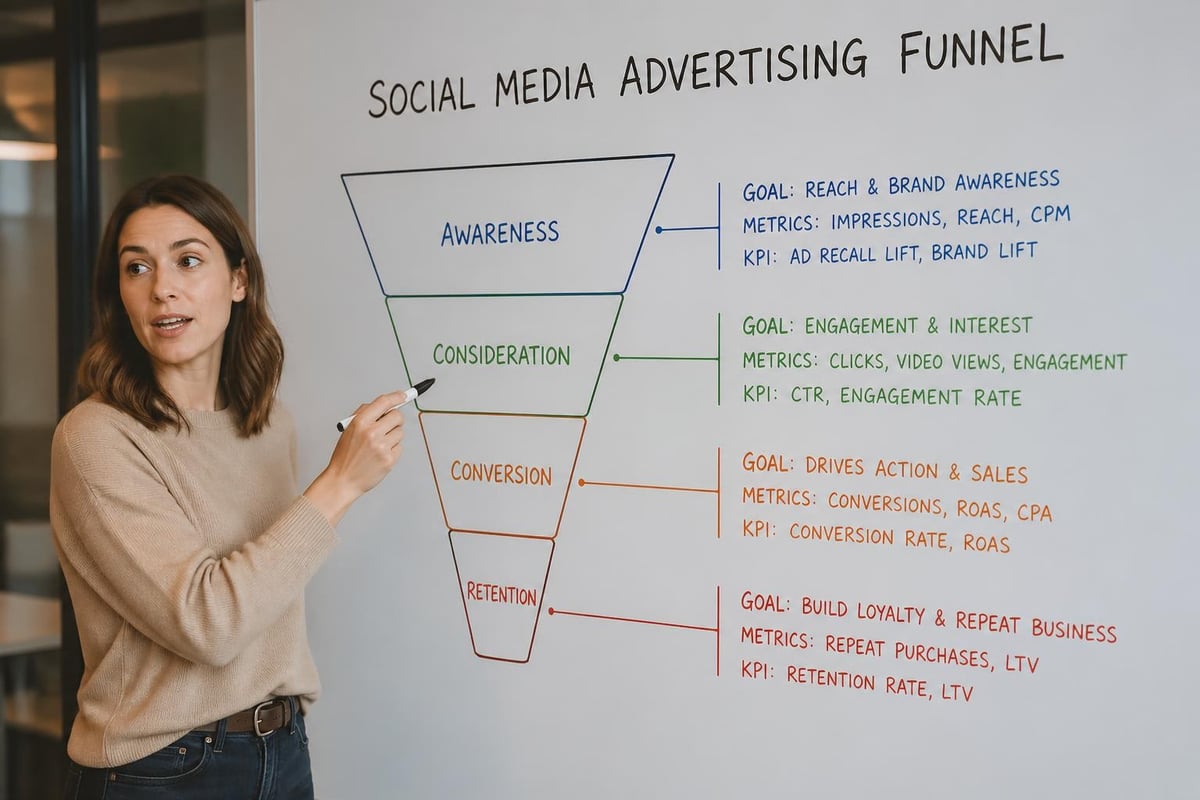
Organic reach limitations make paid social advertising essential for most businesses. Professional social media services integrate organic and paid strategies, using content performance data to inform ad creative and audience targeting.
Platform advertising ecosystems have grown remarkably sophisticated. Facebook and Instagram offer detailed targeting based on interests, behaviours, and life events. LinkedIn enables precision B2B targeting by job title, company size, and industry. TikTok's algorithm-driven discovery surfaces content to interested users even without explicit targeting.
Budget allocation requires both strategic thinking and tactical flexibility. Initial campaigns test multiple audience segments, ad formats, and creative approaches. Performance data then guides budget redistribution toward top performers. Monthly advertising budgets might range from £500 for local businesses to £50,000+ for national brands, with services typically charging 10-20% management fees.
Key metrics for paid social campaigns include:
- Cost per click (CPC) – What you pay each time someone clicks your ad
- Cost per thousand impressions (CPM) – Cost to show your ad 1,000 times
- Click-through rate (CTR) – Percentage of viewers who click
- Conversion rate – Percentage of clickers who complete desired actions
- Return on ad spend (ROAS) – Revenue generated per pound spent
- Customer acquisition cost (CAC) – Total cost to acquire one customer
Advanced services leverage platform APIs for automated reporting and optimisation. The Facebook Graph API and X API enable real-time campaign adjustments based on performance thresholds.
Community Management and Reputation Protection
Community management represents the human heart of social media services. Whilst automation handles scheduling and basic monitoring, skilled community managers bring empathy, judgement, and brand expertise to every interaction.
Response protocols ensure consistency across team members and time zones. These guidelines specify tone, typical response times, escalation procedures, and approval requirements for sensitive topics. A well-crafted protocol empowers team members to resolve routine enquiries quickly whilst flagging complex issues for senior review.
Crisis management capabilities distinguish professional services from amateur efforts. When negative content goes viral, having an experienced team makes the difference between contained damage and brand catastrophe. Crisis protocols include monitoring triggers, stakeholder notification chains, holding statements, and coordinated response strategies.
The Federal Trade Commission’s guidance on endorsements and influencers shapes how professional services handle sponsored content, partnerships, and user testimonials. Compliance requires clear disclosures, honest representations, and documented approval processes.
Influencer Partnerships and Advocacy Programmes
Influencer marketing has matured from celebrity endorsements to nuanced partnerships with micro and nano-influencers. Professional social media services vet potential partners, negotiate contracts, coordinate content creation, and measure campaign impact.
Effective influencer programmes align creator audiences with brand demographics whilst ensuring authentic fit. A sustainable fashion brand gains more value from an eco-conscious lifestyle influencer with 15,000 engaged followers than a generic fashion account with 150,000 disengaged ones.
Employee advocacy programmes amplify organic reach by empowering team members to share company content. Services provide shareable content libraries, guidelines for personal posting, and sometimes incentive structures. LinkedIn reports that content shared by employees receives eight times more engagement than content shared by company pages.
Analytics, Reporting and Continuous Improvement
Data distinguishes professional social media services from guesswork. Comprehensive analytics track performance across multiple dimensions: reach, engagement, sentiment, traffic, conversions, and revenue attribution.
Platform-native analytics provide baseline metrics, but professional services aggregate data across channels for holistic visibility. Custom dashboards combine social metrics with Google Analytics, CRM data, and sales figures to demonstrate business impact.
| Metric Category | Key Indicators | Business Value |
|---|---|---|
| Reach | Impressions, follower growth, share of voice | Brand awareness and market penetration |
| Engagement | Likes, comments, shares, saves, click-through rate | Audience interest and content resonance |
| Traffic | Website visits, landing page views, bounce rate | Top-of-funnel lead generation |
| Conversion | Form submissions, downloads, purchases, sign-ups | Direct revenue impact |
| Sentiment | Positive/negative mention ratio, comment tone | Brand health and reputation |
| Customer Service | Response time, resolution rate, satisfaction scores | Customer experience quality |
Monthly reporting transforms numbers into narratives. Rather than simply presenting metrics, professional reports analyse trends, identify opportunities, and recommend strategic adjustments. A spike in Instagram Saves might indicate content worth expanding into blog posts or guides. Declining LinkedIn engagement could prompt content format experiments.
Attribution modelling addresses the challenge of tracking customer journeys across touchpoints. Multi-touch attribution assigns credit proportionally to each interaction, revealing social media's role in conversions that might appear to originate from search or email.

Regulatory Compliance and Ethical Considerations
Professional social media services navigate an increasingly complex regulatory landscape. The European Commission’s Digital Services Act imposes transparency requirements on large platforms and advertisers operating in the EU, including content labelling, ad repository access, and risk mitigation obligations.
Data protection regulations like GDPR affect how businesses collect, store, and use social media data. Professional services ensure compliant consent mechanisms, data processing agreements with platforms, and user rights fulfilment procedures.
Industry-specific regulations add complexity. Financial services firms face FCA guidance on social media marketing. Healthcare organisations must navigate patient privacy rules. Alcohol and gambling businesses contend with advertising restrictions and age-gating requirements.
Ethical considerations extend beyond legal compliance. Research from the World Health Organization on social media and youth mental health highlights platforms' impact on wellbeing. Similarly, the New York City Department of Health’s 2024 report documents correlations between platform use and mental health outcomes. Responsible social media services consider these impacts when developing strategies targeting younger demographics.
Technology, Tools and Integration
Modern social media services leverage sophisticated technology stacks. Management platforms like Hootsuite, Sprout Social, and Buffer enable scheduling, monitoring, and basic analytics across multiple accounts. More advanced setups integrate customer relationship management systems, marketing automation platforms, and business intelligence tools.
API integrations streamline workflows and enable custom reporting. The IAB Tech Lab’s standards inform measurement practices, ad verification, and privacy-compliant data collection across the industry.
Artificial intelligence increasingly powers social media services. AI assists with:
- Content ideation and copywriting variations
- Image generation and creative testing
- Sentiment analysis across thousands of mentions
- Chatbot responses for routine enquiries
- Predictive analytics for optimal posting times
- Audience segmentation and lookalike modelling
However, professional services balance automation with human oversight. AI-generated content requires editing for accuracy, brand voice, and cultural sensitivity. Automated responses need escalation protocols for complex or sensitive issues.
Emerging Technologies and Future Trends
Augmented reality filters and virtual try-on experiences are becoming standard for retail and beauty brands. Social commerce features enabling direct purchasing within platforms reduce friction in the customer journey. Live shopping events combine entertainment and sales in formats particularly popular in Asian markets and gaining traction in the West.
Web3 technologies introduce new possibilities and challenges. NFT launches as community access tokens, decentralised social platforms, and blockchain-verified authenticity all represent emerging opportunities that forward-thinking social media services monitor and evaluate.
Selecting the Right Social Media Service Provider
Choosing a social media services partner requires evaluating expertise, cultural fit, and service structure. Essential selection criteria include:
Portfolio and case studies – Look for demonstrated success in your industry or with similar business models. Review both creative work and documented results.
Team composition – Understand who will actually manage your accounts. Agencies with dedicated strategists, creatives, community managers, and analysts deliver more comprehensive service than generalists juggling multiple roles.
Reporting and communication – Clarify reporting frequency, metrics included, and access to real-time dashboards. Establish meeting cadences and primary contact protocols.
Strategic capability – Distinguish between tactical execution services and strategic partners who challenge assumptions and drive innovation.
Service models vary significantly. Some businesses prefer fully outsourced management where agencies handle everything from strategy to execution. Others adopt hybrid models with internal strategy and external content creation. Still others bring specialists in-house and outsource only paid advertising management.
Pricing structures range from monthly retainers (£1,500–£15,000+ depending on scope) to project-based fees for specific campaigns or content packages. Many marketing and creative agencies offer flexible arrangements combining baseline services with additional capacity for product launches or seasonal peaks.
Integration With Broader Marketing Efforts
Social media services deliver maximum value when integrated with comprehensive marketing strategies. Coordinating messaging across channels reinforces brand positioning and guides prospects through consistent customer journeys.
Content created for social platforms can be repurposed for email newsletters, blog posts, and website updates. Similarly, long-form content pieces get fragmented into social snippets, quotes, and discussion starters. This efficient content ecosystem maximises return on creative investment.
SEO and social media share mutually beneficial relationships. Social signals may not directly influence search rankings, but social traffic, brand searches, and backlinks from shared content all contribute to organic visibility. Conversely, ranking content drives social sharing and discussion.
Paid social campaigns complement search advertising by maintaining brand presence throughout the consideration journey. Whilst search ads capture active intent, social advertising builds awareness and consideration among audiences who haven't yet searched for solutions.
Social media services have evolved from optional marketing extras to essential business infrastructure, requiring strategic thinking, creative excellence, technical expertise, and constant adaptation to algorithm changes and platform evolution. Whether you're building initial presence or refining mature strategies, the right approach transforms social platforms from cost centres into revenue drivers and community hubs. OxD PR helps businesses across industries develop and execute social media strategies that deliver measurable growth, combining creative storytelling with data-driven optimisation to build engaged audiences and convert followers into customers.