The Expert Guide to Media Design Agency Success 2026
The media design agency world is evolving at a breakneck pace, with competition intensifying as 2026 approaches. Staying ahead now requires more than creative flair; it demands strategic thinking and adaptability.
This guide is designed for agency owners, managers, and creative leads determined to thrive in a digital era defined by change. Here, you will find practical, expert-backed steps to secure long-term success.
Explore how to future-proof your agency, build high-performing teams, adopt cutting-edge tools, master client relationships, and scale with confidence. Now is the time to act—let's ensure your agency not only survives but leads the way.
Understanding the 2026 Media Design Agency Landscape
The media design agency landscape is undergoing rapid transformation as we approach 2026. Agencies are adapting to a world where technology, client expectations, and competition are evolving at unprecedented speed. To remain competitive, understanding the forces shaping this environment is not optional—it is essential.
Key industry trends and predictions for 2026
As 2026 approaches, several industry-shaping trends are defining what it means to be a successful media design agency:
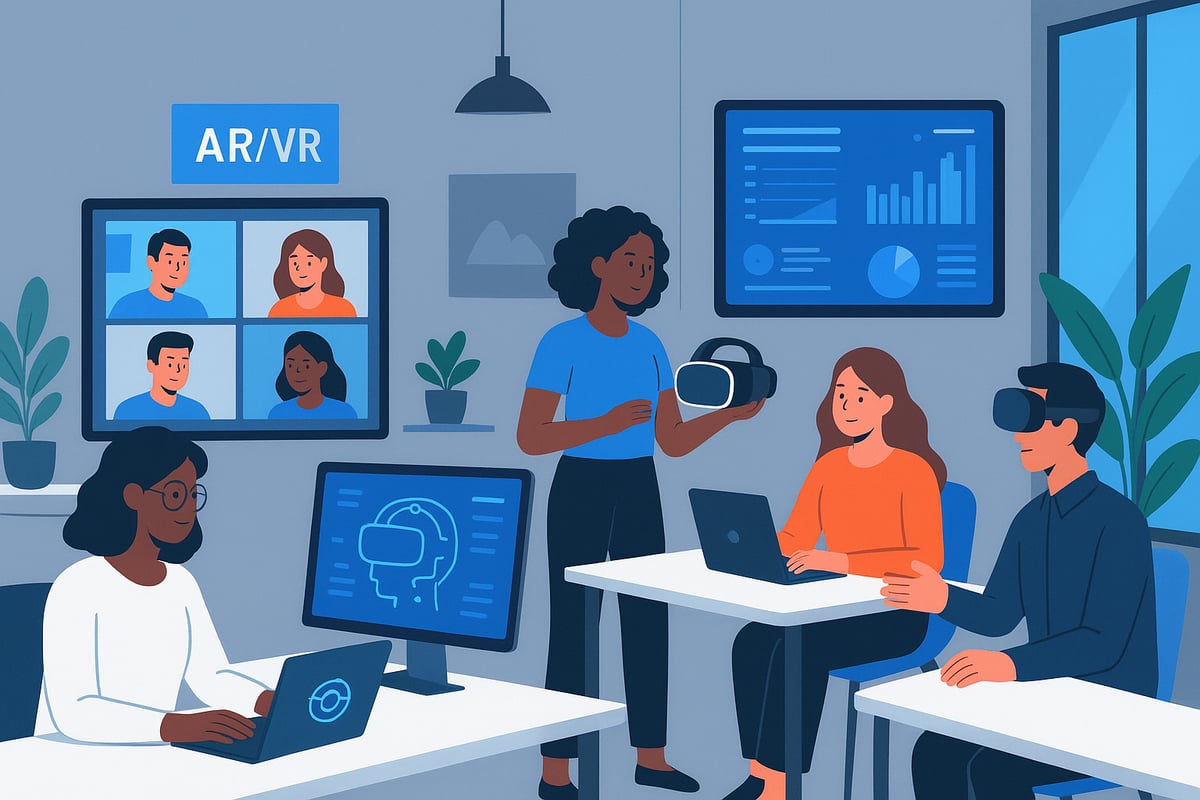
- Immersive media, such as AR, VR, and XR, is moving from novelty to necessity. Agencies are expected to create interactive, engaging experiences that capture audiences’ attention.
- Demand for personalisation is skyrocketing. Clients want hyper-targeted content that speaks directly to their audiences.
- AI and automation are becoming standard in the design process. By 2026, 68% of agencies plan to invest in AI-driven design tools, streamlining workflows and enhancing creativity.
- Remote and hybrid agency models are now mainstream, enabling access to a global talent pool and fostering flexibility.
- Data-driven creative strategies are dominating campaigns, with agencies leveraging analytics to inform every stage of design and delivery.
- Sustainability and ethical design are no longer optional. Clients and consumers expect agencies to prioritise eco-friendly practices and accessibility.
Here is a snapshot of key trends shaping the media design agency landscape:
| Trend | 2026 Prediction | Impact |
|---|---|---|
| Immersive Media (AR/VR/XR) | Core service for most agencies | New creative opportunities |
| AI/Automation | 68% plan to invest by 2026 | Faster, smarter workflows |
| Personalisation | Hyper-targeted campaigns | Greater client ROI |
| Remote/Hybrid Models | Industry standard | Diverse, global teams |
| Sustainability & Accessibility | Essential differentiators | Client trust, legal compliance |
Evolving client expectations and market demands
Clients of a media design agency in 2026 are more discerning than ever. They expect measurable ROI and transparent reporting at every campaign stage. Beyond creative flair, agencies must provide data-backed results that prove value.
There is also a growing emphasis on full-service solutions. Brands now prefer agencies that can manage everything from branding to multi-channel campaigns. Cross-platform expertise is a must, as clients want their message to be cohesive across web, mobile, and emerging media.
For example, agencies that demonstrate robust cross-platform capabilities are seeing increased demand from brands seeking unified marketing strategies.
Key client expectations include:
- Clear, data-driven reporting and ROI measurement
- Seamless integration across platforms and channels
- Access to innovative, immersive experiences
- Transparent communication and regular performance reviews
Competitive landscape and market saturation
The media design agency sector is experiencing significant shifts in competition. Boutique and niche agencies have surged in popularity, offering highly specialised services that attract clients looking for unique value.
Remote work and digital collaboration have erased geographic boundaries, exposing agencies to global competition. This shift is reflected in industry data, which shows a 35% increase in new agency registrations following 2023.
For a deeper analysis of how agencies are navigating this crowded landscape, industry resources such as Media and marketing companies insights provide valuable perspectives on current opportunities and challenges.
Regulatory and technological changes
Navigating regulatory and technological changes is now a core competency for any media design agency. Data privacy laws are evolving, requiring agencies to rethink how they collect, store, and use client and consumer information.
At the same time, accessibility standards are becoming both a necessity and a differentiator. Agencies that prioritise accessible design not only comply with regulations but also reach broader audiences and build client trust.
Opportunities and threats for agencies
The evolving landscape presents both opportunities and challenges for a media design agency. New revenue streams are opening up in areas such as immersive media, sustainability consulting, and AI-powered creative solutions.
However, agencies face risks of skill gaps as technology advances. Staying relevant requires ongoing upskilling and investment in emerging tools. There is also the threat of tech obsolescence, making agility and adaptability essential for long-term success.
Understanding these dynamics equips agency leaders to make informed decisions, positioning their teams for growth and resilience in 2026.
Building a Future-Ready Agency Team
Preparing your media design agency for 2026 means investing in the right people, skills, and culture. The next wave of industry disruption will reward agencies that anticipate talent needs and foster innovation at every level.

Essential roles and skills for 2026
To thrive, a media design agency must build agile teams with future-proof skills. Multi-disciplinary designers who excel in UI/UX, motion, and 3D are in high demand. Data analysts and AI specialists are now core members, helping agencies leverage insights for creative impact. Agile project managers ensure seamless collaboration, especially in remote or hybrid settings. For a comprehensive look at how to structure such a team and expand your agency's capabilities, explore this creative services agency expertise guide. With the right mix of technical, analytical, and creative talent, your agency will be equipped to lead in a competitive market.
Recruitment and retention strategies
Attracting and keeping top talent is a critical success factor for any media design agency. Flexible work policies, such as remote-first roles, have shown to boost retention rates by 25 percent, according to industry surveys. Agencies offering structured professional development, including access to training and mentorship, stand out to ambitious creatives. Competitive benefits, clear career progression, and a culture that values autonomy help secure loyalty. Recruitment should focus on both technical skills and cultural fit, ensuring new hires align with the agency's vision and future direction.
Fostering a culture of innovation and learning
A thriving media design agency champions continuous learning. Regular workshops, certifications, and mentorship opportunities ensure that team members stay ahead of emerging trends. Encouraging creative risk-taking and experimentation leads to breakthrough ideas and keeps agency work fresh and relevant. Leaders should foster environments where feedback is welcomed, failure is seen as a learning opportunity, and curiosity is rewarded. This commitment to growth empowers teams to adapt quickly to industry shifts and client demands.
Diversity, equity, and inclusion as a growth driver
Cultivating diverse teams is essential for any successful media design agency. Teams with varied backgrounds and perspectives produce more innovative solutions and appeal to a broader client base. Industry data shows that agencies prioritising diversity report a 33 percent increase in client satisfaction. Inclusive hiring, equitable pay, and active support for underrepresented groups should be central to agency culture. By nurturing diversity, agencies not only fulfil ethical obligations but also unlock creative and commercial advantages.
Performance management and team motivation
Effective performance management ensures a media design agency stays on track to meet its goals. Transparent KPIs, regular feedback sessions, and clear expectations drive accountability. Recognition programmes, from awards to peer shout-outs, motivate teams and reinforce a culture of excellence. Wellness initiatives, such as flexible schedules and mental health support, help maintain morale and productivity. By investing in both performance and well-being, agencies build resilient teams ready to overcome future challenges.
Adopting the Right Tools and Technologies
The pace of change in the digital sector means a media design agency must consistently evaluate and upgrade its toolkit. The right technologies can transform workflows, enhance creativity, and secure a competitive edge. Adopting a strategic approach to tools and platforms ensures your media design agency remains agile and future-ready.

Identifying must-have design and collaboration tools
For a media design agency, selecting the right mix of design and collaboration tools is foundational. AI-powered design suites like Adobe Sensei and Canva AI are becoming standard, offering intelligent suggestions and automating repetitive tasks.
Cloud-based project management platforms, such as Asana and Trello, facilitate smooth communication, especially for remote and hybrid teams. These tools help ensure projects stay on track and deadlines are met.
| Tool Type | Example | Key Benefit |
|---|---|---|
| Design Suite | Adobe Sensei | AI-driven creative support |
| Collaboration | Trello | Real-time team management |
| Communication | Slack | Instant updates and sharing |
Choosing software that integrates seamlessly with your workflow is vital for a media design agency aiming to scale.
Leveraging automation for efficiency and creativity
Automation is rapidly reshaping how a media design agency operates. By automating routine processes, teams can dedicate more time to creative thinking and innovation.
For example, automated asset generation, version control, and template management can reduce design time significantly. Studies show automation can cut task duration by up to 40 percent, freeing resources for high-impact projects.
Leveraging these systems is not just about efficiency. Automation also supports consistency and quality, ensuring a media design agency delivers at scale without compromising creativity.
Data analytics and reporting platforms
Data analytics have become indispensable for any media design agency striving to provide measurable value. Real-time dashboards offer insights into campaign performance, helping teams adjust strategies proactively.
Integrating analytics with creative processes allows for evidence-based decisions. Platforms like Google Data Studio and Tableau simplify reporting, making it easier to present results to clients.
A focus on data-driven insights enables a media design agency to demonstrate ROI and build client trust. Regular performance reviews powered by analytics ensure continuous improvement and competitive advantage.
Ensuring cybersecurity and data privacy
With increasing volumes of sensitive client data, cybersecurity is now a top priority for every media design agency. Secure file sharing, encrypted communications, and strict access controls are essential.
Compliance with data privacy laws, such as GDPR, is not optional. Agencies must invest in solutions that protect both internal and client information. Regular security audits and employee training further reduce risks.
Prioritising cybersecurity safeguards a media design agency’s reputation and fosters confidence among clients, especially in a landscape where data breaches can be costly.
Evaluating and adopting emerging tech
Staying ahead means a media design agency must continually assess and pilot emerging technologies. AR, VR, and generative AI tools are transforming client experiences and creative outputs.
AI adoption has accelerated, with 67 percent of design firms now integrating AI tools to boost efficiency and creativity, according to AI integration in design firms. Regular reviews of the tech stack keep your agency agile and prepared for shifts in the market.
Experimentation with new platforms, even on a small scale, ensures a media design agency does not fall behind competitors embracing innovation.
Budgeting and ROI considerations for technology investments
Investing in technology is a balancing act for any media design agency. While innovation is crucial, it must align with financial goals and sustainability.
Allocating 15 to 20 percent of the annual budget to tech upgrades is now standard among top-performing agencies. Regularly tracking ROI ensures that each investment drives measurable results and supports growth.
A disciplined approach to budgeting helps a media design agency remain resilient, adaptable, and ready to seize new opportunities.
Mastering Client Acquisition and Retention in 2026
In 2026, the success of any media design agency hinges on its ability to attract, convert, and retain clients in a competitive environment. With shifting expectations and digital-first buyers, a robust strategy for acquisition and long-term loyalty is essential. Let’s explore the strategies agencies will need to master for sustainable growth.
Evolving client acquisition channels
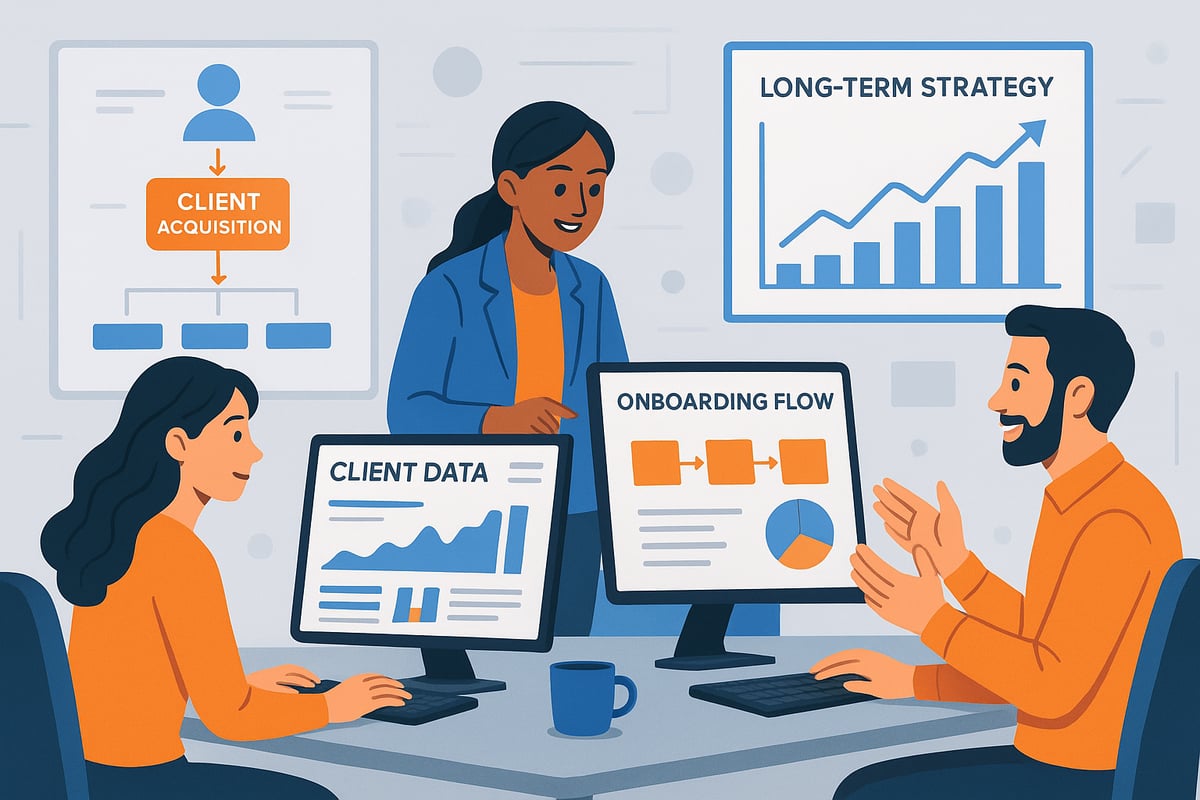
Standing out as a media design agency requires a dynamic approach to client acquisition. In 2026, agencies are leveraging a mix of social proof, thought leadership, and case studies to build trust with prospects. Content marketing, webinars, and industry events serve as powerful lead generation tools, while partnerships and referrals continue to play a significant role.
Consider harnessing platforms like LinkedIn and niche forums to showcase your expertise. Agencies that consistently share success stories and innovative projects attract higher-quality leads. For a deeper dive into proven techniques, explore these marketing and creative agency strategies to refine your approach and stay ahead of the competition.
Personalised client onboarding and communication
A smooth onboarding process sets the tone for every client relationship. Media design agency teams in 2026 tailor onboarding workflows to client segments, ensuring each new partnership feels valued and understood. Automated welcome kits, detailed project roadmaps, and transparent timelines create confidence from day one.
Effective communication is equally vital. Agencies prioritise regular check-ins and use client portals for seamless updates. Notably, those with structured onboarding see a 20% increase in client satisfaction, underscoring the value of a thoughtful, personalised approach for every media design agency.
Building long-term client relationships
Long-term loyalty is built on trust, transparency, and consistent value delivery. A successful media design agency schedules regular performance reviews, sharing campaign results and inviting client feedback. These sessions foster a collaborative environment where clients feel heard and involved in their project’s evolution.
Continuous improvement is key. Agencies that act on feedback and proactively suggest new ideas keep clients engaged. Implementing feedback loops and celebrating shared wins further strengthens the partnership, making your media design agency the go-to choice for future projects.
Delivering measurable results and ROI
Clients in 2026 expect more than creative output—they demand clear, measurable impact. A media design agency must define KPIs at the start of each project and provide transparent, data-driven reporting throughout the campaign lifecycle. Using dashboards and visual analytics helps clients understand the value delivered.
Regular ROI reviews not only build credibility but also open discussions for optimisation. Agencies that consistently demonstrate results stand out, earning client trust and referrals, which are crucial for sustained growth in the media design agency market.
Handling difficult clients and conflict resolution
Every media design agency will encounter challenging clients or project disputes. The key is to address issues early by setting clear contracts, defining project scopes, and communicating expectations upfront. When conflicts arise, trained team members use negotiation and empathy skills to navigate tough conversations.
Timely, honest dialogue prevents misunderstandings from escalating. By documenting agreements and maintaining professionalism, agencies protect their reputation and ensure smoother project outcomes, reinforcing their value as a trusted media design agency partner.
Client retention strategies for competitive markets
Retaining clients is more cost-effective than acquiring new ones. Successful media design agency leaders implement loyalty programmes, offer exclusive services, and provide value-added consultations. Agencies with structured retention programmes report a 30% increase in recurring revenue.
Personal touches—such as anniversary gifts or priority support—make clients feel appreciated. Regular check-ins and proactive recommendations demonstrate ongoing commitment, helping your media design agency stand out in a saturated market.
Upselling and cross-selling services
Maximising client value is a strategic advantage for every media design agency. By identifying opportunities to cross-sell complementary services—like branding paired with web design—agencies can increase average client spend by 18%. Upselling new features or ongoing support packages strengthens client relationships and drives growth.
Success lies in understanding client needs and timing offers appropriately. Agencies that educate clients on the benefits of bundled solutions position themselves as indispensable partners for evolving business challenges.
Scaling and Future-Proofing Your Agency
In the rapidly shifting creative sector, scaling and future-proofing a media design agency is both a challenge and an opportunity. Success in 2026 will depend on proactive planning, adaptive processes, and strategic decision-making. Let us explore the pillars that will ensure your media design agency remains resilient and ready for the future.
Strategic planning for sustainable growth
A robust strategic plan is the foundation for any successful media design agency looking to thrive in 2026. Begin by setting both short and long-term goals that align with your agency’s vision. Diversify your service offerings to adapt to market shifts and meet emerging client needs. Regularly review your objectives and adjust based on industry trends, ensuring your agency remains agile.
Incorporate market research and competitor analysis to identify new opportunities. Strategic planning should be an ongoing process, not a one-time exercise. By embedding flexibility into your planning, your media design agency can respond swiftly to changing conditions and stay ahead of the competition.
Building scalable processes and systems
To scale effectively, your media design agency must invest in robust processes and systems. Document workflows and standard operating procedures to maintain quality as your team grows. Implement project management tools that support collaboration and remote work, making it easier to track progress and deliver on time.
Automate repetitive tasks where possible, freeing up creative resources. Regularly review your systems for efficiency, ensuring they are adaptable as your agency expands. A focus on scalability will help your media design agency serve more clients without sacrificing quality or creativity.
Expanding into new markets and verticals
Growth often means venturing into new markets or verticals. Analyse industry trends to identify sectors with rising demand for media design agency services, such as healthtech or edtech. Tailor your offerings to the specific needs of these markets, demonstrating expertise through targeted case studies and thought leadership.
Build partnerships with local experts or businesses to ease the transition into unfamiliar sectors. This approach not only opens new revenue streams but also strengthens your media design agency’s reputation as an innovative and adaptable partner.
Mergers, acquisitions, and strategic partnerships
In a crowded marketplace, mergers, acquisitions, and partnerships can accelerate growth and expand capabilities. Evaluate opportunities to join forces with complementary agencies or acquire niche firms that fill gaps in your service portfolio. Strategic partnerships can provide faster market entry and access to new client bases.
According to Marketing agencies reshaping strategies, agencies embracing collaboration and business model innovation are better positioned for long-term stability. Approach each opportunity with due diligence, aligning cultural values and long-term goals to maximise the benefits for your media design agency.
Financial management and funding options
Effective financial management is essential for scaling a media design agency. Manage cash flow closely, forecast revenue, and monitor profit margins. Allocate budgets wisely, balancing innovation with sustainability. Explore funding options such as venture capital, grants, or bootstrapping to support growth.
Measuring and maximising ROI is crucial for agency leaders. For deeper insights, refer to ROI in digital marketing for agencies to ensure your investments deliver measurable growth. A disciplined financial approach keeps your media design agency resilient during periods of rapid change.
Navigating risks and industry disruptions
Risk management is vital for future-proofing a media design agency. Develop scenario plans for potential disruptions, from technological shifts to economic downturns. Establish crisis management frameworks to respond quickly and minimise impact.
Encourage a culture of agility and open communication, empowering teams to adapt to unexpected challenges. By anticipating risks and preparing contingency plans, your media design agency can navigate uncertainty with confidence.
Leadership development and succession planning
Sustainable growth requires strong leadership at every level. Invest in leadership development programmes and mentorship to cultivate future leaders within your media design agency. Clear succession planning ensures continuity during transitions, reducing operational risks.
Foster a culture where leaders are empowered to make decisions and drive innovation. Agencies with well-developed leadership pipelines consistently outperform during periods of change, securing their position in a dynamic industry.
Measuring Success: KPIs and Continuous Improvement
Success for a media design agency in 2026 is not just about creative output, but about measurable progress and continuous refinement. To stay ahead, agencies need robust metrics, transparent feedback processes, and a culture that values learning from both wins and setbacks. Let’s break down how your media design agency can master success measurement and drive ongoing improvement.
Defining success metrics for media design agencies
The foundation of progress is clear, actionable metrics. For a media design agency, success goes beyond revenue. It includes client retention, project delivery timelines, and satisfaction scores.
Key metrics include:
- Revenue growth and profitability
- New client acquisition and retention rates
- On-time project delivery percentages
- Average client satisfaction scores
Aligning these metrics with your agency’s vision ensures every team member understands what matters most. Regularly reviewing and updating these KPIs keeps your media design agency focused and agile.
Tracking and analysing campaign performance
To thrive, a media design agency must track campaign outcomes in real time. Analytics platforms enable teams to assess creative effectiveness, optimise strategies, and demonstrate value to clients.
Modern agencies increasingly rely on AI-powered analytics for campaign tracking. As highlighted by AI adoption in U.S. ad agencies, over 90% are using or exploring generative AI, which accelerates data-driven insights and competitive benchmarking. This empowers your media design agency to identify trends and act swiftly for optimal results.
Client feedback and satisfaction measurement
Client perspectives are a critical indicator of agency performance. A successful media design agency uses regular surveys, Net Promoter Score (NPS), and testimonials to gather actionable feedback.
Consider these methods:
- Post-project client surveys
- Quarterly NPS assessments
- Requesting testimonials for case studies
Monitoring satisfaction helps your media design agency fine-tune services and strengthen client relationships.
Internal performance reviews and benchmarking
Internal benchmarking ensures your media design agency maintains high standards and identifies improvement areas. Peer reviews and 360-degree feedback foster a transparent, learning-focused environment.
Effective strategies include:
- Scheduled peer review sessions
- Comparing performance against industry benchmarks
- Analysing project outcomes to set future goals
This approach drives accountability, motivation, and professional growth within your team.
Continuous improvement frameworks
Agencies that thrive in 2026 commit to continuous improvement. Agile retrospectives, process optimisation workshops, and a feedback-rich culture are essential for a media design agency aiming for excellence.
Popular frameworks:
- Regularly scheduled retrospectives after each project
- Implementing process improvement cycles
- Encouraging open dialogue for innovative ideas
Such systems transform feedback into tangible growth and creative breakthroughs.
Staying ahead with industry research and networking
A forward-thinking media design agency invests in industry research and professional networking. Attending conferences, joining associations, and analysing competitors keep your agency on the pulse of emerging trends.
Staying connected with thought leaders and participating in industry events helps your media design agency adapt strategies and maintain relevance in a fast-paced market.
Celebrating wins and learning from failures
Celebrating achievements fuels morale and motivation. Equally, analysing failures provides lessons that drive future success for your media design agency.
Best practices include:
- Sharing success stories across the team and with clients
- Conducting failure analysis sessions to extract lessons
- Recognising individual and team contributions regularly
This balanced approach nurtures a resilient, growth-focused agency culture.
Example KPIs for 2026 agencies
| KPI | Target Value |
|---|---|
| Year-on-year revenue growth | 20% |
| Client retention rate | 90% |
| Project on-time delivery | 95% |
| Average client satisfaction score | 4.7/5 |
By setting clear KPIs, tracking performance, and embracing feedback, your media design agency can achieve sustainable growth and continuous innovation in 2026.
As we’ve explored, staying ahead in the media design agency world means combining innovative strategy with high quality execution—especially as we approach 2026. If you’re ready to put these insights into action and want a partner who understands responsive design, smart SEO, and integrated marketing, now’s the perfect time to take the next step. Let’s work together to elevate your agency’s digital presence and set you up for measurable growth in a rapidly changing landscape. Explore how we can help you succeed—get started today and Get a Quote.